Showing posts with label CBA. Show all posts

July 27, 2017

Hall of Famer Yao Ming is in India for the FIBA Women's Asia Cup in Bengaluru!


In what turned out to be a pleasant surprise, Chinese basketball legend and Basketball Hall of Famer Yao Ming arrived on India on Wednesday night to attend the FIBA Women's Asia Cup 2017 in Bengaluru. Yao, 36, indisputably the most successful Asian basketball player in history, retired from the game in 2011 and is currently the president of the Chinese Basketball Association (CBA).

The FIBA Women's Asia Cup 2017 is the biggest competition for teams from Asia and Oceania, and is being held in India for the first time in eight years from July 23-29. Yao's country-women from China are once again one of the favourites at this tournament and have most-recently defeated the Philippines at Bengaluru's Sri Kantaveera Stadium to make it to the semi-finals.

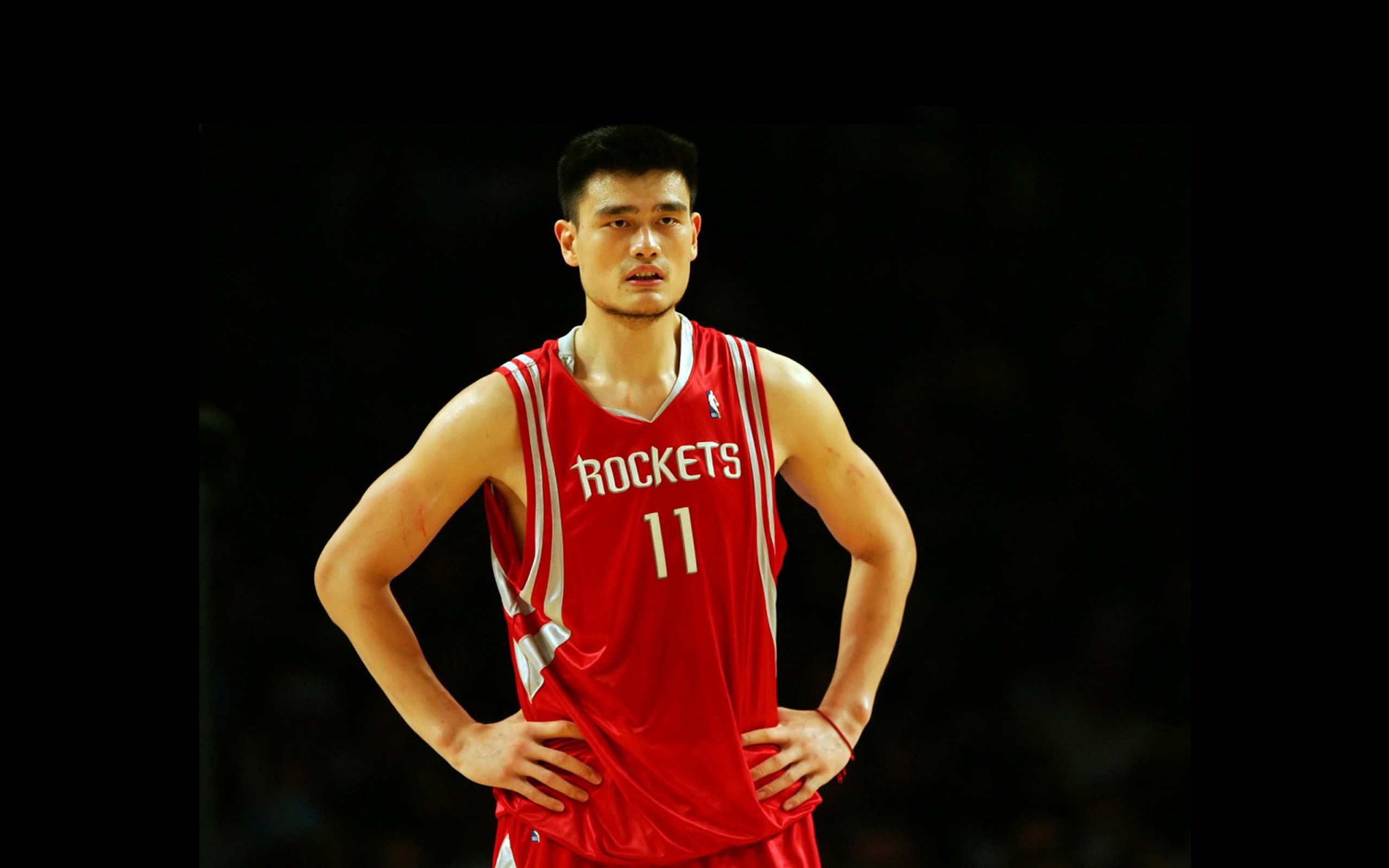
This is huge news, metaphorically and literally. Despite ending his playing years early to chronic foot injuries, the 7-foot-6 Yao enjoyed a successful career. He excelled in the CBA with the Shanghai Sharks in his youth, became number one pick in the 2002 NBA Draft by the Houston Rockets, dominated the paint to become one of the league's best big men (he just happened to be playing in the Shaq era, unfortunately), and became one of the most popular basketball players worldwide. The Chinese sports icon won three FIBA Asia gold medals for his country and carried China's national flag for his delegation during the opening ceremony of the 2008 Beijing Olympics. In 2016, he was inducted into the Basketball Hall of Fame.

This is Yao's second trip to India. Before he got into the fast-lane to superstardom, Yao took an early step to success in Calcutta at the FIBA Asia U18 Championship back in 1998, as an 18-year-old. Yao was the best player in Team China at the tournament and helped with win the gold medal and took home the tournament's MVP trophy. He was a rookie with the Shanghai Sharks then, and a few years later won the CBA MVP award, the CBA title, and was drafted to the NBA, and the rest is history. During an interview I did with Yao in Shanghai for SLAM Magazine in 2014, he told me that he still harboured great memories of India because of his early success.

China will be hoping that Yao's presence proves to be their good-luck charm as they look to end Japan's recent dominance at this competition and win the gold medal. Meanwhile, India is in Division B of the tournament and have a starkly different ambition: just to qualify for the higher Division A.

What makes Yao's trip even more special is that he arrived in India less than 24-hours before another worldwide super-duper basketball star, Kevin Durant. Durant, however, is spending in time in the north, where he will be training players at the NBA Academy India in Greater Noida.

May 11, 2017

My Other Home


When his NBA career ended, Stephon Marbury ventured to China and impacted the country beyond his wildest dreams.

I originally wrote this article for SLAM Magazine's website on May 1, 2017. Read the original feature on SLAMOnline.com here.

On a cool October evening some five years ago, I was among the approximately ten thousand fans that flocked into the Wukesong Sports Center—now known as the LeSports Center—in Beijing for an exhibition game. I had moved from India to China just a few months before and this was my first chance to see my new “local” team, the Beijing Ducks, in preseason action. There was a special sense of electricity in the air: the visiting team was a troupe of retired and amateur American players, headlined by the almighty Allen Iverson and the ever-entertaining Jason Williams.

But even the presence of The Answer and White Chocolate himself wasn’t enough to steal the spotlight from the home team. The Ducks feature a rabid base of perhaps the Chinese Basketball Association’s most passionate fans and a few months before this game, these fans were rewarded with their first CBA title.

When the starting line-ups were announced, the biggest cheers were reserved for the new messiah of Chinese basketball. In my beginner’s Chinese, only three syllables stood out from the PA announcer: “Ma Bu Li”, the man who rose to heroic heights to deliver Beijing their elusive title, whose statue now stood by the parking lot outside the famous arena.

Stephon Marbury.

A pregame incident gave the first hint of true lore of Marbury in one of the world’s most populous cities. A few young fans were called midcourt to answer questions from the hype-man at the game, and a friend translated for me. One girl, aged around 10 or so, was asked who was her favorite Chinese player on the Ducks—each CBA team is allowed only two or three foreigners and the rest of the roster is packed with China’s finest. With little hesitation, the girl screamed out, “Ma Bu Li”.

Everyone laughed, then cheered, and there was no clarification or follow-up. Her answer immediately made complete sense. Born in Coney Island, Brooklyn, in another time, in another life, Stephon Marbury was once the quintessential great New York City player. At the height of his NBA career, he was a scoring superstar point guard years ahead of his time, and one of the most loved and complicated players of his generation. But now, he was here. He was in China.

And he was one of them.

I spent three more years in Beijing and during the course of this time, Marbury brought two more championships to the Ducks, made memorable playoff runs every year, and became a cultural icon in China. He was featured on Chinese national stamps, acted in a musical about his own life, became the first foreign athlete to receive a Chinese permanent residency (green card), named a ‘Model Citizen’ of Beijing, and a museum was built in his honor.

But after six years with Ducks, the 40-year-old is parting ways with the organization. Unlike some of his previous basketball breakups, the goodbye to Beijing has been congenial; Marbury was grateful for what the team and the city meant to him, and hopes to continue playing basketball elsewhere.

Beijing and Marbury forged a city-to-player relationship like no other. The playoff nights at the Wukesong in particular, were epic, where fans in those ubiquitous white and light-blue Marbury Ducks jerseys (I bought one, too!) roared for him pregame, chanted his name at every heroic moment, cried in joy alongside him when he shed tears over the championships.

“I’ve said it once and I’ll say it again: I think they – Beijing – are the best fans on the planet,” Marbury told me in an interview I conducted with him for SLAM at his apartment in Beijing two years ago. “The energy that they bring towards the players and the atmosphere in Wukesong is different and it’s rare. And it’s consistent throughout the whole game. They’re very knowledgeable, they understand the game, they know when someone’s shot isn’t going, and they know when someone needs to be encouraged. You can’t really put a price tag on that or compare it to anything.”

Former NBA players had taken their talents to China before, including the great lockout journey to the East that included JR Smith, Wilson Chandler, Patty Mills, and Kenyon Martin, and during my time in the country, former All Stars like Tracy McGrady and Gilbert Arenas. But none of them embraced the ‘Middle Kingdom’ like Starbury. He embraced the culture, food, language, and the people like none other, and they embraced him back. For him, China was not just a stepping stone, it was the destination. Later this year, he will even release a film called My Other Home about his journey East, from New York to Beijing.

This comfort in what he often called his ‘new home’ was evident when I met him. “Beijing is home,” he said. “I mean, America’s gonna always be home. But this is where I live at, this is home. This is where my life is at – here in China.”

“At first, it was a trying time because it was all brand new,” he said of his early years in China, when he played two losing seasons in for Shanxi and Foshan. “I was ready to do something different and be a part of something different. I wanted to evolve to a new area in my life and in basketball. It was a trying time because of the culture barrier and not being able to speak the language and not being able to communicate.”

“I understand the culture now. I love the food. I now know why people do what they do when they do it. Even though I can’t speak the language as well as I would like, I know a little bit more than when I first came here.

“It’s just growth.”

July 10, 2016

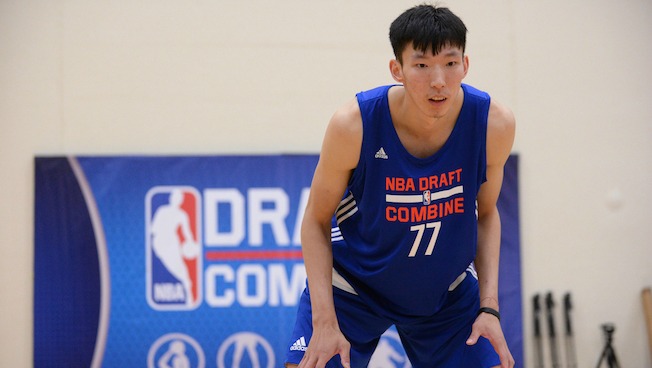
In Your Face: Zhou Qi


I originally wrote this article for the August 2016 edition of SLAM Magazine (SLAM No. 200).

Xinjiang, 7-2, C

When Yao Ming announced his retirement in 2011, he left a 7-foot-plus hole in the hearts of the world’s most-populous nation. But months before Yao’s career officially ended, China already got a promise of the future. Proudly wearing China’s colours at the little know Turk Telecom youth tournament in Turkey, 15-year-old Zhou Qi helped his country to an unlikely gold medal, putting up 41 points, 28 rebounds, and 15 blocks in the semi-final against Germany and providing a game-winning encore with 30-17-8 against the hosts in the Final.

For the next five years, Zhou slowly turned his promise to reality. He made his name in China’s youth circuits, destroyed Asian opponents, and become a young star in the Chinese Basketball Association.

But now, the skinny (listed at 218 lbs), 7-foot-2, 20-year-old from the city of Xinxiang is ready to bulk up into an even larger pair of shoes: after years of success in China, the young man must prove himself all over again in the United States.

“I want teams and fans in the US to know, first and foremost, that I’m a team player,” Zhou says. “I wanna be in an environment where I can help my teammates to be the best they can be.”

“Today’s NBA is asking so much more from a single player. To be more than a single position. The game is much faster. I need to adopt to different styles of play. On offense, I must learn to attack from the outside, be both a perimeter and a post player. On defence, I must learn to guard guards as well as centers.”

Zhou hopes to find long-term success in the league. But even before he ever steps on an NBA court, he’ll know that the weight of Yao be hanging over his slender shoulders.

“I don’t feel any pressure. If I can take the torch from Yao, I hope I can have a good career and pass the torch to someone to else. Right now, I just want to be myself.”

April 6, 2015

The Mighty Duck


This article was first published with the cover story of the 143rd edition (2015 - No. 4) of SLAM China magazine. Here is my original English version.

Stephon Marbury’s evolution has helped create a basketball dynasty in Beijing

It’s a rare moment when an icon and a community find perfect resonance with each other, a bond that eventually offers unconditional love from one to another. Watching a Beijing Ducks game in Beijing – especially during the playoffs at the MasterCard center – provides a glimpse of that type of resonance. On nights when Stephon Marbury is heroically carrying the Ducks to victory, pushing the team forward with big performances every night, the city parallels his passion and intensity off the court. Both of them feed into each other, until they make a monster that few in the CBA can conquer.

Last week, Marbury led Beijing to their second consecutive CBA title and their third in fourth years, deservedly winning the Finals MVP award. He’s now 38, and has played for nearly two decades professionally in Minnesota, New Jersey, Phoenix, New York, Shanxi, and Foshan. But it was in Beijing that the star point guard finally found fulfilment, and in return, the city made him a basketball deity.

“This is home,” he tells SLAM a few days after celebrating the title victory – his third – in Liaoning, “Beijing is home. America will always be home. But this is where my life is at, here in China.”

Marbury has shown Beijing and China love, and China has showed him love back. After over five years playing and living in the country, he has also overcome the early trials and tribulations to find peace, both on and off the court.

“It was a trying time because it was all brand new,” he says of his early years in China, when he went from being an NBA star to a point guard from Shanxi and Foshan, “I was ready to do something different and be a part of something different. I wanted to evolve to a new area in my life and in basketball. It was a trying time because of the culture barrier and not being able to speak the language and not being able to communicate. But for the most part it was cool, because I knew it was just part of the experience.”

“I understand the culture now,” he adds, “I love the food. I now know why people do what they do when they do it. Even though I can’t speak the language as well as I would like, I know a little bit more than when I first came here. It’s just growth.”

The growth off-the-court corresponded to success on-court, and with the Ducks, Marbury found a clique that finally brought him championship success. Part of the reason is team continuity, as the Ducks have had the same two foreigners (Marbury and Randolph Morris) and much of the same roster over the last four years.

When I ask him what the secret is to the team’s success, he says that it has always been about looking ahead. “[It’s about] our preparation from the beginning of the year. So now, our focus is on the next year. Everyone is aware of what we have to do for next year. We’re enjoying the championship but in the back of our mind we know that we have more work to do. We know where have to get better, where we have to improve. No one is relaxing right now. Everyone loves this feeling. We like winning. For the most part, everyone is conscious of living in the moment of now, but knowing in the future what we have to do to continue to stay stable as one of the top teams.”

And of course, having a city that resonates and encourages him and his teammates every moment of every game helps, too. “I’ve said it once and I’ll say it again,” Marbury stresses, “I think they – Beijing – are the best fans on the planet. The energy that they bring towards the players and the atmosphere in Wukesong is different and it’s rare. And it’s consistent throughout the whole game, not in spurts or just the fourth quarter, it’s all throughout the whole game. They’re very knowledgeable, they understand the game, they know when someone’s shot isn’t going, and they know when someone needs to be encouraged. All of that contributes to why they are the best fans. You can’t really put a price tag on that or compare it to anything. I know the energy that they gave me from the way that they go about cheering for us.”

NBA and foreign players have played in China before Marbury, and they’ll come to play in China after he retires, but there may never be anyone like him again, an individual who embraced the culture and a city and they embraced him back. And as he basks in the afterglow of another CBA title, Marbury sets his eye ahead for more success in China and with Beijing in the future.

“I wanna win more championships here,” he says, “It’s fun right now. It’s fun to be winning, and you’re driven to continue to work hard to keep winning”

February 1, 2015

Global Citizen


Having started his pro career in China, Congolese-American hoop star Emmanuel Mudiay has already shown he has the talent and courage that legendary careers are made of.

by Karan Madhok. Photos by Yin Di.

This feature was originally published in the March 2015 edition of SLAM Magazine (SLAM No. 185). You can also find it on SLAMOnline.com.

It’s 2014, and 18-year-old Emmanuel Mudiay is learning about a new city. As he tries to familiarize himself with Guangdong in Southern China, he dabbles in learning a little bit of Mandarin, embracing the new culture, dealing with the bumps and grinds on the basketball court and the attention a blossoming star gets off of it.

It’s 1999, and 3-year-old Mudiay has picked up a basketball for the first time in his life. He knows what the round object is, but beyond feeling the texture of the ball, he doesn’t think much of it. In Kinshasa, the capital of Congo and Mudiay’s birthplace, there are more pressing matters to consider, like the Second Congo War, which turns into the deadliest conflict on Earth since World War II.

It’s 2002, and Mudiay has a basketball in his hands again. He’s 6 years old and playing in his first organized game. The texture of the ball may not have changed as much, but everything else in his life has. Mudiay’s family has left the violence and the hunger of central Africa behind them. He’s in Dallas, TX, settling into a new country, a new culture.

We’re back in 2014, and that bouncy ball has changed his life. Mudiay has just wrapped up his stellar high school years as a consensus All-American, and convinced scouts that he is set to become one of the NBA’s top Draft picks. He seems to be destined to take the popular one-and-done route through college. He has even committed to the SMU Mustangs. Only, he decides to break from tradition, refuses to let NBA rules determine his chosen path, forgoes college and goes pro.

In November of 2014, Emmanuel Mudiay plays his first official professional game of basketball, representing the Chinese Basketball Association’s (CBA) Guangdong Southern Tigers. A few months before the start of the CBA season, Under Armour inks him to a lucrative, multi-year contract that will span his time in China and a (hopefully successful) early NBA career, reaffirming the faith of many in the young guard’s potential.

Before an ankle injury sidelines him just 10 days into the season, Mudiay shows glimpses of dominance for a team with championship aspirations.

Mudiay’s China adventure took a twist toward uncertainty after his injury. At the time of writing, Guangdong had replaced Mudiay in its lineup with former Detroit Piston Will Bynum, and there was no official confirmation from the team that Mudiay would take the floor again before the CBA season concludes. That said, we spoke to a source in the US who is close to Mudiay’s camp who assured us that Emmanuel has every intention of getting healthy and finishing his season in Guangdong, and that the Southern Tigers are (smartly) happy to have him.

Regardless of any uncertainty around Mudiay’s future, it’s guaranteed to be as interesting, if not more so, than his past.

You’ll hear from him a lot more in the coming months, whether he is helping Guangdong make a push for the CBA championship or impressing scouts at pre-Draft workouts in preparation for the NBA.

From Congo to Dallas to China, Mudiay has already charted a course that has taken him further at 18 years than most people get to go in their lifetime. But for the young phenom, this is just the beginning; With an ambitious, long-term plan for his future, Mudiay wants to leave no doubt that his tomorrow will be better than his yesterday.

In China, I speak to Mudiay about the journey and struggles of yesterday, the juncture at which he stands today, and his ever-so-bright tomorrow.

“It’s a blessing,” he says, “It makes me happy, but at the same time, I’m not satisfied. I’m still working as if I’m struggling. That’s my mindset and I’ll work like that ’til the last game I play in my career. I don’t wanna see nobody in my family, my kids, my grandkids, struggling for money. I know I’m still young, but I think that far ahead.”

***

Mudiay was just an infant in Kinshasha, capital of the country formerly known as Zaire, when he lost his father. After the First Congo War, Zaire became the Democratic Republic of Congo. Peace didn’t last much longer: By 1998 the large-scale Second Congo War displaced and destroyed the lives of millions in Congo and nearby nations, mostly from disease and starvation.

“I don’t remember much of that time,” Mudiay says. “I just remember that my mom and my brothers had to all take care of each other.”

In 2001 - when Emmanuel was 5 years old - his family was granted asylum to the USA and found a home in Dallas. The adjustment to a new culture was much easier for him as the youngest member of the family. “For me, it was OK,” he recalls, “but for my older and middle brother it was a little bit different. They were older. But eventually, we all settled.”

The rest has been pretty well-documented history. Mudiay grew into a 6-5 point guard, blessed with the explosiveness, strength, open-court athleticism to match the world’s best and the size to overpower many others who play his position. He excelled at Arlington (TX) Grace Preparatory and then Prime Prep (of Deion Sanders’ fame/infamy) in Dallas, capping off his high-school career with invites to the Jordan Brand Classic and the McDonald’s All-American Game, as well as a commitment to nearby SMU, where he could have had a chance a play for legendary head coach Larry Brown.

But instead of heading to SMU, Mudiay took the road less traveled to play professionally overseas to fill in the year between high school and the NBA. He chose China over college, a decision that came with its share of doubts and questions in the basketball world.

“I didn’t wanna see my mom and my family struggling no more,” Mudiay says. “They’re my motivation. My family is good now, but I’m thinking about their kids, my kids…I never wanna see them struggle.

“My goal is to be in the NBA, but right now, I’m just trying to get better and learn as much as I can to get to the next level. People are gonna talk, and whether it’s good or bad, I only care about my team and let God decide the rest.”

Mudiay’s decision has rubbed some critics the wrong way, as they fear his decision might boost the tide of young players choosing big money in leagues like China instead of a shot at college. Even Coach Brown—who still maintains a strong relationship with Mudiay—told a few publications back home that, although he was excited for the young Emmanuel’s future, he wasn’t too high on the precedent that it might set for others.

When I shared Brown’s comments with Mudiay, his response displayed a maturity far beyond his years. “He’s right,” Mudiay says. “I got a lot of respect for Coach Brown. I know he’s proud of me and what I’m doing. But this decision is not for everybody. The opportunity was there for me so I took it. Some people might wanna do it, some might not. It’s different for everyone.

“I’m here with my family and that’s helping me a lot. Your circle has to be strong. For the long run this was the better choice for me. [Coach Brown] is probably right: This is not for everybody. But for me it was the best thing. If more players do it, I hope that they’ll be mentally ready and have the right people around them.”

Before his ankle sprain in late November, Mudiay’s early performances in China displayed glimpses of the potential that has made so many scouts rank him as one of the top picks in the upcoming NBA Draft. By his third professional game, he had notched a triple-double. In Guangdong’s win over Qingdao, Mudiay had 29 points, 9 rebounds, 7 assists and 4 steals. Through the 10 games he played in before the ankle injury and before we went to press, Mudiay was averaging close to 18 points, 6 rebounds and 6 assists per game in China.

But CBA stats should be taken with a pinch of wei jing. This is a league where, a month into the new season, undrafted American Errick McCollum was averaging over 40 points per game. Former Brooklyn schoolboy hero and short-time Sacramento King Quincy Douby channeled his inner Wilt Chamberlain a couple seasons ago by dropping 75 points in a game, a CBA scoring record.

In most cases, the foreign or “import” players in the CBA (usually, each team is allowed only two) are handed the responsibilities of dominating every aspect of the team’s play on the court and the stat sheets. But Mudiay’s Guangdong has long been an exception to the rule. The Southern Tigers usually have a much more democratic approach, where each player—even the most talented imports, such as Mudiay—have had to play as a part of the system instead of becoming the system itself. Currently, Guangdong features seven players from the Chinese national team, including four-time CBA MVP and former NBA Lottery pick Yi Jianlian.

“Most teams want [the import players] to just score,” says Mudiay of his time with Guangdong. “But here, they want us to be part of the team, not just focus on scoring. We have a game-plan to follow, of course, but Coach [Du Feng] lets me play my game, whether that’s finding teammates or scoring myself. Whatever the ‘D’ shows me, that’s how I play. Being a point guard, you have to be a leader from Day One. I’m an 18-year-old, directing 30-year-old men on court.”

***

It’s the end of 2014 and as he tries to capitalize on the present moment, Emmanuel Mudiay—still a few months shy of his 19th birthday—is keeping a watchful eye on the future.

I ask Mudiay if he has already charted a vision for the rest of his career. He leaves no doubt that there is already a highly detailed blueprint. “Oh yeah, I know what I want by the time I’m 40 years old. I won’t be satisfied until I’m in the Hall of Fame. I won’t be satisfied until I’m that successful. Everybody says that they want to be the best, but when I say it, believe me, I really mean it,” Mudiay emphasizes.

“I love new challenges—I’m going through one right now. So anything that comes by way, I’ll be ready. No doubt, my goal is to be the No. 1 pick. It takes a lot of hard work, but I’m putting in that work and I’m keeping my faith. Honestly, it’s all faith. I’m a very spiritual person. Everything I do—sports, school—I just have to credit God before any decision. It’s been a blessed journey and it’s far from over. I’m only 18, but the best is yet to come. I’ll keep working.”

July 17, 2014

Semi-Pros: Despite having no professional basketball players, Team India are earning respect at FIBA Asia Cup


Yadwinder Singh, the most experienced current member of the Indian National Basketball team, has been travelling abroad for international tours with the squad for 12 years. And yet, despite some highlights in the past, he had never quite experienced something like this before. India had just defeated Asian powerhouses China in a game considered to be India's greatest basketball victory in history. A day later, they had easily blown out Indonesia to secure a spot in the Quarter-Finals of the 5th FIBA Asia Cup in Wuhan, China.

"We are starting to feel like a real team," Yadwinder said, "It feels great when we get into an elevator, and strangers see us and congratulate us. Now they know who we are. They know we are Team India"

India have won two and lost two games at the tournament so far, a record that sounds less flattering than it truly is. India's first victory came against China, the best team in the continent whom India had never defeated before. Their second loss was to Iran, Asian champions, who were made to sweat and stumble against the persistent Indians after amazingly, finding themselves down at halftime. On the court, India may have only had two victories; but off of it, they are winning fans, respect, media attention, and adoration.

And the primary reason for this growing attention on Team India's success has been that Head Coach Scott Flemming has made this team into a feared competitor, despite having any talents in his roster holding on to a professional contract. All of India's finest players, including Amjyot Singh, Vishesh Bhriguvanshi, Amrit Pal Singh, Pratham Singh, and more, are semi-professionals, holding various other day jobs back home in India and only participating in basketball tournaments to represent their state or the government that they work for. There is no professional league in India and none of these players has ever been paid to play basketball abroad. When they're not playing basketball, India's best players can be found employed employed on sports quotas with government agencies like the Railways, armed forces, public sector companies like ONGC and BSNL, or nationalized banks such as Indian Overseas Bank and Vijaya Bank, a trend that Gopalakrishnan R. went in greater depth writing about on his feature for Fountain Ink magazine earlier this year.

All of this is common knowledge to the average Indian basketball fan; but the media in attendance at Wuhan and fans across Asia closely following this tournament have expressed disbelief and pleasant delight over this bit of news. What's more, unlike many other Asian teams, India doesn't have a single 'naturalized' foreign player on their roster: every single one of these twelve 'Young Cagers' was born, bred, and learnt to dribble the basketball - for better or worse - in India. Naturalization in basketball is a race that may be leaving India far behind, and a lot of followers of the team - including the coach - believe that allowing interested NRI players into the national system may be an important step forward.

The surprising thing - which also saddens me a bit - is that this team has already received more mainstream media coverage in China than it probably ever would back home. A few days ago, China's national and most prominent sports channel CCTV covered India's rising profile and tried to comprehend how a team of semi-professionals could defeat China's team of young rising stars.

On their loss to India, China could (and many have) use the excuse that the team they sent to the FIBA Asia Cup was a younger squad, but even all these young players will be making big money and having prominent roles in the Chinese Basketball Association (CBA) from the coming season. And in this very tournament, this same Chinese team has defeated Iran (Asian champions at their best) and Japan. All three of these teams, whom India also played, are full of professional players who play in leagues either in their respective countries or abroad - like Iran's Hamed Haddadi who has played in the NBA or Japan's Takumi Ishizaki, who plays in Germany. India's quarter final today will be against Philippines, featuring players all in the PBA and the naturalized American Marcus Douthit who was drafted into the NBA ten years ago.

If Indian players can give a good fight to these professionals, why can't they play at a professional level themselves? Amjyot Singh should be good enough to play in the CBA, and should definitely dominate any of the smaller pro leagues in the continent. The likes of Amrit Pal Singh and Vishesh Bhriguvanshi have a shot, too.

And there are many other youngsters waiting in the wings. But the problem is that, in most Asian professional leagues, there is a cap on the number of foreign players any team can have - a cap on both Asian foreigners and those outside the continent. That is why most teams in China, Japan, Philippines, or elsewhere spend their foreigner slot on North American or European players and pick more talented Asian individuals for their 'other Asian' slot. Only the cream of the crop Indians will be recruited professionally by these leagues, and it has only happened to our women players so far, like Geethu Anna Jose and Anitha Paul Durai.

Unfortunately, many of our top men players will have to wait for Indian to launch a professional league of their own, something that I have argued in the past will completely revolutionize the sport in India over the long run. The onus is already on the Basketball Federation of India (BFI) and IMG-Reliance to launch this league, hopefully as soon as next year. Only then will our top players not have to hold faux-office jobs with the railways or with banks and focus on basketball alone. Only then will they get to play quality basketball games all year, games that actually hold some meaning and value, instead of small tournaments where they face the same talent, or lack of talent, and rarely grow as players.

India's improved performances are a perfect underdog story, but they shouldn't be. India have the population, the space, and enough wealth to take bigger strides in the sport than we have taken so far. The fact that our players have been successful despite being professional should be celebrated, but the fact that it's 2014 and we can still not provide a professional platform for the same players is a shame.

Cinderella Stories, such as Team India's performances here at Wuhan, usually come to an abrupt end. But through a better basketball future for our top players, let's hope that moments like these don't remain a surprise, but become the norm. And the next time our players are recognized for being members of 'Team India', it is by strangers back home in India itself.

July 14, 2014

Wonder of Wuhan: India should build on historic win over China to spark a basketball revolution


Sometimes, revolutions don't need pomp and noise, or confetti or loud celebrations. Some revolutions aren't greeted with cheering voices or waving flags. Some revolutions happen in stunned silence.

The last five minutes of India's historic first-ever win over China - perhaps the greatest win in 78 years of India's international basketball history - were played under an eerie hush. The game was talking place at the Wuhan Sports Center in Wuhan, the most populous city in Central China. This was the 5th FIBA Asia Cup, a biennial tournament held between 10 of the top teams on the continent. This is a relatively smaller tournament than the more highly-regarded FIBA Asia Basketball Championship (ABC), and the local Chinese fans only filled up a fraction of the 13,000-seat arena in Wuhan's Zhuankou suburb.

The hosts, favourites to win the tournament after winning their first two games and defeating Asian champions Iran in the process, were confident against India. The fans were out with vuvuzelas, balloon clappers, and there were animated MCs and scantily-clad cheerleaders to boost their spirits. Yet, nothing could divert their horrifically stunned attentions away from the upset on court. As the clock ticket away in the game's final minutes and it seemed that India would achieve the impossible, the arena grew quieter. Each squeak of a shoe sole on the polished wooden floor reverberated across the gymnasium. Each word of encouragement from the Indian bench to the heroes on court could be heard by every fan, media-person, and official in attendance.

And in this silence, India found joy: the team nicknamed the 'Young Cagers' - led by Head Coach Scott Flemming - finally grew up, and announced the coming of age of all of Indian Basketball with a memorable win. All the odds had been stacked against India, who are ranked 61st in the FIBA World Basketball rankings compared to China, who are 12th and are tops in Asia. India had lost their first game against Japan a day ago while China were riding a positive streak behind a talented youth movement. Yet, the final score read 65-58 in India's favour, and a milestone for Indian hoops was achieved.

Expectations, as they always are in such high-level Asian tournaments, were low for India. Always the minnows against other giants of the game, India returned without a win at bottom place in the previous iteration of the FIBA Asia Cup in Tokyo two years ago. In last year's FIBA Asia Championship in the Philippines, India showed some improvement, but were still defeated in blowout fashion against top teams like Iran, Korea, and of course, China, who beat India 79-45, just 11 months ago.

In the world of an Indian basketball follower, low expectations are the norm. We prematurely resign ourselves to embarrassing losses against the Chinas and the Irans of the continent, and hope for the best against teams ranked closer to our stature, like Kazakhstan or Bahrain. Rarely has India's senior men's team won a meaningful game of basketball in the past several decades, a hypnotizing lull of losses upon losses that numbed Indian media and fans into submission to the point of ignorance. China regularly expects to defeat India by 30, 40, or 50 points per contest. Coming into this tournament, India were once again ignored as outsiders with a seventh or eighth place finish (out of 10) as best-case scenario. Apart from the minuscule, almost-irrationally passionate fanbase of Indian basketball, the mainstream continued to not pay the team any attention.

Perhaps this was why, despite qualifying once more for a major Asian FIBA tournament, there were no mainstream media-houses from India covering the event, and the games itself weren't shown on any TV channel back home. China were stumped and India were absent, and, outside of the cheers and hoots from the victorious Indian locker-room, there was nothing but silence.

It was only through the power of the internet live commentary and social media that we were able to get the word out, and once the news leaked, it quickly went viral. Thousands of supporters of the Indian hoops cause were made aware of the news that no other traditional media outlet had covered. The players and the coaches who had made this achievement possible - ironically - couldn't even hear the online applause, finding themselves stuck behind the Great Firewall of China and unable to access the hysteria of Indian fans thousands of miles away.

One of those voices online was of Bobby Sharma, the senior VP of global basketball for IMG Worldwide, the company which, in their partnership with Reliance and the Basketball Federation of India (BFI) is hoping to usher in India's first professional basketball league in coming years. Sharma congratulated the BFI by calling this upset a 'monumental watershed moment'. Indeed, the achievements of those 12 men on court and their coaches in one simple game could be the springboard that India needs to finally take that basketball leap we have long been dreaming of.

Indian basketball will always remember the day - July 13, 2014 - that they eclipsed the mighty Chinese. This victory is set to change India's attitude and approach looking forward at all our basketball encounters in the future. If this team indeed has the ability to beat China, then it prepare with a realistic mentality of having a shot in every match-up, against any opponent. There are no reasons to throw in the towel before any game, and every Indian team from here on out should look up at Wonder in Wuhan on July 13 and find the motivation to do it again.

Perhaps, more young Indians back home, disillusioned that the game has no future in India, will start believing in the amazing possibilities of sport once again. The achievements of our best players should inspire countless others to remain geared towards a career in basketball, and motivated to recreate and build upon the success of the current squad.

Perhaps, with increased attention from the Indian mainstream after this victory will shine a spotlight on India's national teams and force our media and our sponsors to acknowledge them. Maybe this leads to greater financial rewards for our players, the majority of whom come from poor families and chose basketball as their only way to a stable job.

This win means a lot many of India's individual players, who are on various points in their careers. Vishesh Bhriguvanshi, India's captain and most consistent performer in recent years will relish this game forever. Pratham Singh was India's fourth-quarter hero, and sank several clutch three-pointers to give India the lead for good. Amjyot Singh played fantastically on both ends of the floor and showed elite athleticism against China's 7-foot-1 prodigy Zhou Qi. Yadwinder Singh, India's energy bar, lifted the team with his hustle on the defensive end. Amrit Pal Singh was a farmer at age 19 when he discovered basketball; just four years later, he was controlling the defensive paint against Chinese bigs. The likes of Joginder Singh, Narendar Grewal, Rikin Pethani, and more in the rotation have etched their names in Indian hoops history forever.

And the man who should be celebrated with special plaudits after this historical night is Head Coach Scott Flemming. After 32 years of coaching experience in the USA, most recently with the NBDL side Texas Legends, Flemming chose a different challenge, coming to India to try and make a difference in a country on the basketball hinterlands. Two years after his appointment, he isn't only the longest-serving foreign coach in India, he is also one of the most successful. Flemming led India to a gold medal victory at the Lusofonia Games this January and a first place finish at the South Asian Basketball Championship. But this was, by far, his biggest win with India.

The FIBA Asia Cup is still in process. India play their third and fourth Preliminary Round games against Indonesia and Iran on Monday and Tuesday respectively. They've almost ensured qualification for the Quarter-Final stage. Coach Flemming has spoken optimistically of India's ability to continue performing basketball miracles.

For now, this victory is a wake-up call for Indian basketball to start believing in its potential. We beat China on the court yesterday, but China basketball are miles ahead in the longer marathon. Our best basketball facility is only as good as 50-60 of what Chinese Tier 2 or Tier 3 cities possess. China's young talents are trained and developed from a young age to maximize their potential. All of the players in China's national team are professionals in the well-established Chinese Basketball Association (CBA). They have developed NBA talent in the past and have the resources to develop more such talent in the future. They have much better coaching down to the grassroots level and have much more money to pump into their various basketball federations. India, meanwhile, have an unbalanced and mostly disorganized grassroots nursing system, don't have the infrastructure to provide our top talents and don't have enough support from the common public that rarely looks beyond cricket (or the FIFA World Cup) when the word 'sport' is uttered. Worst of all, internal politics stunts any real growth and there is rarely any motivations from those who are in the basketball fraternity to rise higher, as many stay content to swivel around in lower mediocrity.

And yet, if India can beat China despite being completely overshadowed across every sphere in the basketball world, imagine what we could do if we actually put in an honest effort to improve hoops in the country, from the grassroots to the top, instead of making the sport into just another way for bureaucrats to enjoy a small morsel of power?

Team India's moment - this Wonder of Wuhan - was a silent revolution indeed; but let's hope that the reaction to this moment is loud, energetic, and points to a brighter future for Indian basketball.

UPDATE: Thanks to FIBA, now we have the entire game tape of India's historic win over China on YouTube. Check it out here:


October 13, 2013

Where European & Chinese hoops clash: Real Madrid beat Beijing Ducks in Beijing


It was a clash of two very different philosophies of basketball, and yet, once the referee sent the ball in the air for the tip off, the flow of the game itself took over to dominate all other cultural and philosophical differences. On Friday, October 11th, one of the Chinese Basketball Association's (CBA) most-popular franchises - the Beijing Ducks - hosted one of the most historically successful European basketball team's - Spain's Real Madrid - in a pre-season exhibition that turned out to be far more intriguing than anyone imagined. After a topsy-turvy encounter, Madrid used a timely fourth quarter run to speed past Beijing to a 92-86 victory.

The Euroleague's CEO Jordi Bertomeu was in attendance too, to overlook the game's proceedings.

The Ducks, who won the CBA title in 2012 and were in last year's semi-finals, hosted the game in Beijing's MasterCard Center. This game was the first time that Real Madrid - who were runner-up in the Euroleague last season - faced against a Chinese opponent in their long history. It was the last game of the pre-season for Real Madrid, who were coming off the Endesa Super Cup title against Barcelona.

A little over a month ago, the Chief Business Development Officer of the Euroleague Roser Queralto announced the game in Beijing with the proclamation that Chinese and European teams play quite a similar game, and an on-court interaction could strengthen the relations of both the leagues. While the playing styles rooting from Spanish and the Chinese tactics weren't exactly the same, the final result was an evenly-matched contest.

The Beijing Ducks of course feature former NBA All Star Stephon Marbury, who had been their hero and leader en route to their maiden CBA title in 2012. Marbury proved to be unstoppable for the Madrid defense, and slashed and shot his way to 25 points. The chief benefactor of Marbury's kick and drives or rebounding off his missed opportunities was his American teammate Randolph Morris, who kept the Ducks close with a game-high 28 point performance.

It was a back-and-forth contest throughout, and while Beijing mostly relied on their two American imports for offense, Madrid spread the ball around to keep their top contributors Jaycee Carroll, Sergio Rodriguez, and Tremmel Darden involved. The Ducks made a surprising third-quarter run to lead 63-57 before the final period began. The game continued to be close in the fourth quarter, and the score was tied 77 all with just five minutes left on the clock. Madrid finally broke out to a 13-3 run to put the game past Beijing, and settled on a 92-86 win.

Madrid will now begin their regular season back in Spain against Valladolid, while Beijing have to wait till the end of November for the start of the CBA season.

October 2, 2013

India wins bronze medal at KFC 3x3 International Challenge in China


India impressed competitors and fans en route to a bronze medal finish at the 2013 KFC 3x3 International Challenge in Shanghai, China, which was held from September 28-39. India were amongst 12 teams taking part in the under-23 men's tournament. Hosts China - who fielded four different teams - saw their '1' squad take the gold medal in the final against Australia.

India fielded a four-man unit that was led by Loveneet Singh, who was part of India's U18 3x3 squad that brought home a silver medal from the U18 FIBA Asia 3x3 Championship from Bangkok earlier this year. Also in Team India was exciting forward Ajay Pratap Singh, Amit Kanarjee, and Vijay Parthasarathy. The team was accompanied by coach Ashok Rangeen.

KFC has been hosting a massive nationwide 3x3 challenge in China for nearly a decade now (I had a chance to visit the Beijing City Finals last year) but this is the first time that they held an international tournament. The tournament was organized by KFC China, the Chinese Basketball Association (CBA), and Beijing Atlas Sports.

The participating teams were: Australia, China-1, China-2, China-3, China-4, Chinese Taipei, Germany, India, Indonesia, Lithuania, Malaysia, and USA.

India were grouped with USA, Chinese Taipei, and Indonesia. They made a bright start by shocking the Americans in a close battle that ended in a 16-14 win for India. They lost in their next game to Chinese Taipei 21-18, but ended the group stage on the tournament's first day by defeating Indonesia 19-16.

After earning a spot in the Quarter-Finals, India continued their rampage by defeating China-3 21-17 to enter the tournament's final four. It was here that they were stopped in their tracks by Australia, who emerged as 16-13 victors. There was no third-place playoffs but India won the bronze medal by having a better score differential than the other semi-final loser, Chinese Taipei. The final was a close contest between China-1 and Australia, and China-1 scraped by with a thrilling 19-18 victory.

In addition to the team success, India's Loveneet Singh also won an individual gold medal at a three-point shooting competition at the event.

Roopam Sharma, CEO of Basketball Federation of India (BFI) said, "I would like to congratulate the coach and the players on their excellent performance at the KFC 3x3 International Challenge 2013. Basketball as a competitive sport continues to grow in India and the improving results of team India at International competitions is a testimony to that growth."

June 30, 2013

Basketball Traveller - NBA’s Greg Stolt: “Our purpose in China is to have people go out to play and enjoy basketball!”


This feature was first published in the 109th edition (2013 - No. 12) of SLAM China Magazine. Here is my original English version of the story. 

Things change. From running alongside Mike Miller and Udonis Haslem and Florida, to playing in the sunny seaside of Spain. From feasting on sushi in Japan to hanging with the surfers in Australia. The smell of spicy curries in India and the taste of spicy Hot-Pot in Beijing. Basketball has taken Greg Stolt all across the world. And as NBA China’s Associate Vice President of Basketball Operations, Stolt is now bringing that wealth of experience to help develop the future of hoops in China.

Things change. But throughout the changes, through the different languages, cultures, continents and lifestyles, one thing brought them all together: basketball.

A former college star with the NCAA Division 1 side Florida in his college years, Stolt has played professionally across the world. But now, he is concentrating on a different role. The NBA has had a formal presence in China for several years now: they opened their first office in 1992 and the NBA has been on air on CCTV since 1987. The league has 300 million fans in China and NBA’s social media accounts in Sina and Tencent have 53 million followers. Their relationship with the Chinese Basketball Association (CBA) dates back nearly three decades ago. Today, the NBA helps run a state-of-the-art CBA Basketball School in Dongguan which has trained over a 1000 Chinese youth players. Stolt, who is now based in China full-time, has been involved in various different NBA-China activities which includes the school in Dongguan, coaches’ training programmes, and in promoting the NBA’s presence in China with events such as NBA’s preseason ‘China Games’ in the country.

Recently, Stolt – the head of NBA China’s Basketball Operations department – spoke to SLAM discussing his past journeys with basketball, his present involvement with the game in China, and his optimistic outlook about the future of basketball in the Middle Kingdom!

Things change. But the basketball remained the same.

SLAM: How long have you been working in China, and how has your experience been in the country so far?

Stolt: I’ve been here since August 2012. Prior to that, I was working with the NBA in New York for three years, and over those years, I made several visits abroad to places like China and India to work with basketball operations.

China has been fantastic. There have been great opportunities here because basketball is so integral to the culture here. China has good basketball fans and I’ve been able to learn many new things.

SLAM: Talk a little about your role with the NBA in China.

I work with the department of basketball operations with NBA China, and it has a different structure here than in the US. Our product – the NBA – is in the USA. Here, the aim is to support the passionate development of the game. We do that by collaborating with the Chinese Basketball Association (CBA) in various parts of the country.

SLAM: How do you feel that your background as a college star and your experience playing internationally helps to work with younger players now in China?

Stolt: Yes, I have had quite a unique background with basketball. I’ve been quite fortunate because I was surrounded by great coaches all my life. My father was a coach and player and he played with many great players himself. I had a great coach in college. I lived and played in Europe, Australia, Japan, and back in the USA with the D-League. The experience helped me truly broaden my horizons and show me a world that was very different to my upbringing.

When it comes to working with young players here, I’ve discovered that, up to a certain stage, kids learning basketball around the world are pretty much the same. They want to play, and they love the game, whether they are in China, India, or in the USA. That is the common denominator. Playing around the world has indeed given me an idea on how things in other countries work or don’t work. I’ve had experiences that you can’t get from books. It has given me great practical opportunities and prepared me to have more insight into the basketball world.

SLAM: You had quite a memorable career with the Florida Gators. How did that team prove to be such a good fit for your talents?

Stolt: I have to give credits to my coaches, who were both able to help my development. In my freshman year (1995-96), we had Coach Lon Kruger at the helm. After that, we had coach Billy Donovan – who is still the team’s Head Coach now. Coach Donovan let it be known that I could really get better and move on to the next level. With him, I saw new opportunities in a new system. The three years I spent with him (1996-99) were great. He was a phenomenal coach. He taught me about how to carry myself on and off the court, about conditioning, nutrition, and that teaching helped me be prepared with the building blocks to eventually play professionally in Europe.


1999 was my most successful season there, when we reached the Sweet 16 stage in the NCAA tournament – the only time I got to play in the tournament. We got some good players in my sophomore year like Mike Miller and Udonis Haslem, and we developed together to our full potential by the time I was a Senior. It was a nice nucleus of players and good teammates. The Coach stressed on improving our conditioning. A lot of us could play multiple positions and we shot a lot of threes – it made difficult for opponents to keep up with us!

SLAM: After College, you were an international basketball journeyman. In which countries have you played professionally?

Stolt: I played in the Dominican Republic, Spain, Belgium, then back in the USA during the first year of the NBA’s D-League, in the old CBA (Continental Basketball Association) in the States, France, Japan, Australia, and I ended my playing career in Japan. Those who play basketball internationally can play in different countries over a 12-month calendar – for example, I was in Australia during their season and back in Japan the same year. 2003-04 was my last playing season.

I didn’t have a chance to play in China, although I would have loved to do so!

SLAM: So what was your most interesting international basketball experience?

Stolt: They are all very unique, and all were phenomenal. And it is only when you leave a country that you realize how great the experience there was! In France, the level of play is phenomenal – they have the best athletes outside of the NBA. I had some great experiences in Japan, which is a country that I never expected to visit otherwise. They have hardworking players there and an interesting culture. Australia is another unique place to play and to live.

The bottom line is that these experiences are all about the people you meet and work with. And in each place, I met some great people.

SLAM: You have a unique vantage point towards basketball, from the perspective of having played or worked with the NCAA, the NBA, in Europe, in Australia, and in Asia. How do they all differ?

Stolt: For me, there was a little bit of a learning curve required after playing in the NCAA system. In the NCAA, a player is very well taken care of, and there, I didn’t have to worry about little things like where to eat, where to do my laundry, etc. On the professional level, you don’t have the same type of support system. Playing internationally, the general theme was to find one other American in every team, where (like China) usually two foreign players are allowed per team. In most cases, the foreign players stick with each other, but I made it a commitment to get to know my local teammates and coaches too. It helped my understanding of the local culture wherever I was and helped me get the most out of my experience.

The on-court learning curve was different, too. In Europe, for example, teams play a lot of preseason games, so there is a lot of opportunity to learn their style of play together. But in Japan, I had to find my place in the offense on the fly.

Foreign players like me had to do whatever the team asked us to do: in most cases, the focus was on getting statistics and scoring as much as possible. And at the same time, I had to ensure that the team was successful. There is more concern internationally than in the USA for foreign players to find a balance between big stats and winning games.

SLAM: From what you have seen here, how does basketball in China differ from your previous experiences?

Stolt: China is right there with the rest of the world in the level of basketball played and coaching. The CBA as made many great initiatives in recent years. Most importantly, people in China can’t get enough of basketball and are passionate about it! The country has the resources, the interest of the community, which is the total equation to help the game develop further here. In whichever country there is a passion in the people to learn and play more, then basketball will surely become better there.

SLAM: What are the NBA’s future plans in continuing to grow the game here?


Stolt: Our number one goal is to grow and develop the game alongside the CBA. The unique thing about China is that it is the only place in the world where we have a basketball academy – in Dongguan. 130 kids were admitted there this year! Our hope is that the players from the academy can play in the CBA one day or even in the USA.

Growing our relationship with the CBA also helps us to help develop coaches in China. We have an annual CBA Coaches Programme where we work with numerous CBA coaches. In late October or early November, we host 15 CBA coaches in the USA to provide them a look at how basketball coaching and operations works over there. Many of the top CBA coaches like Cui Wan Jun (Xinjiang), Min Lulei (Beijing), Gong Xiaobin (Shandong), and Qu Shaobin (Guangdong) have been part of our Coaches Programme in the past. We are also bringing eight coaches from the USA to China this summer to conduct clinics and camps. We’ve already done such clinics over the years across the country. We are reaching out to college/high school level coaches in our various grassroots programmes.

We will continue to look at opportunities to team up with local basketball stakeholders. Hopefully more exposure to the Chinese people to the NBA can continue to help grow the game here. The NBA’s purpose in China is to have people go out to play and enjoy basketball.

SLAM: Talk about the training Center in Dongguan and how it is benefiting young Chinese players.

Stolt: The CBA Dongguan Basketball School – An NBA Training Center, opened in 2011. It is very much like a full-fledged High-School for kids aged between 8-17. We have academic staff there to handle 130 children in five different grades. We have split them up by their basketball skill level. The whole curriculum has been brought together by Bruce Palmer, who is the technical director at the school. We have also been able to run numerous clinics for national and international teams over there.

It is a special place. Anyone who enters will feel like picking up a basketball and start playing!

The NBA’ basketball operations work to select kids for this training center with camps all across the country. We have camps in eight Chinese cities last year, and pick kids not only on their potential basketball skills, but also on their academic strengths and personality.

SLAM: And finally: what do you foresee for the future of Chinese Basketball?

Stolt: I think that the sky is the limit for basketball in China. China has enthusiasm and interest in playing the game amongst the fans. I think we will surely see more success stories of Chinese players who eventually make it to the NBA and the WNBA. And back here, we will see more Chinese who will become interested in playing basketball. It won’t be long before more young players from China can take help take the game to the next level.


March 31, 2013

Guangdong sweep Shandong to win 8th Chinese Basketball Association Championship


The Chinese Basketball league is now 18 years old, just entering its state in adulthood. And in its 18th season, the league took another big jump into respectability, featuring a better-than-ever mix of new superstar players and well-coached teams. But by the time the dust settled and the CBA Finals came to an end, the glory belonged to one of the league’s traditional powerhouses again. The Guangdong Southern Tigers, in their 11th consecutive trip to the CBA Finals (!), won the title in a dominating 4-0 sweep over the Shandong Lions. This victory gave Guangdong their eighth CBA Championship, tying them with the Bayi Rockets for most championships won in China.

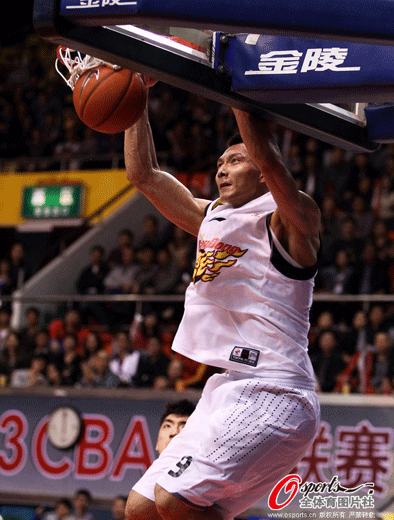
After a surprise loss to the Beijing Ducks in the Finals last year, Guangdong made sure that there will be no upsets this time around. Guangdong beat Shandong by an average of 13 points per game in the four-game sweep. Yi Jianlian of the Southern Tigers – who was named the domestic MVP of the league – also won the Finals MVP award, averaging 20 points and 11.3 rebounds per game in the Finals. In the clinching game at home in Guangdong, Yi had 24 and 13 to lead five players in double figures to win the game 94-74 and lift the trophy.

The result was never in doubt. Guangdong have been the most consistently dominant team in China for over a decade, and after a surprise loss to Beijing in the Finals last year, bounced back this season on a mission for redemption. Guangdong went 28-4 through the course of the season, finishing at top place in the league. Guangdong have the advantage of featuring the top Chinese players, many of whom comprise the backbone of China’s national team. Returning from an unsuccessful NBA stint, Yi Jianlian was back to becoming the poster-boy of the league and the best player for Guangdong. The team also featured Wang Shipeng and Zhu Fangyu. Unlike many other teams in China, Guangdong made better use of the foreigners in their squad, who weren’t asked to dominate but asked to become a part of the system. In the playoffs, Ike Diogu and Donald Sloan became an important part of their rotation, while Terrence Williams was cut at the end of the season and joined the Boston Celtics.

Guangdong continued their dominant run into the post-season, going undefeated throughout to win a championship, defeating Zhejiang and Xinjiang 3-0 and 3-0 in the first and second rounds respectively before the Finals sweep over Shandong.

It was the end of a fairytale season for Shandong. The Lions ended last season as one of the worst teams in the league, but the addition of Jordanian Zaid Abbas to the core of American players Jackson Vroman and Pooh Jeter helped this team finish in second place in the season and pull an surprising 3-0 victory over the defending champions Beijing in the semi-finals of the playoffs.

Guangdong’s victory once again highlights the disparity of talent and coaching in the league. Out of the 18 CBA seasons, two teams – Bayi and Guangdong – have won 16 of the titles. Bayi dominated the league in its early days, but ever since other teams began to pay big money to talented foreign players, Bayi – the Army team who doesn’t allow foreigners – slowed down. And ever since, the championship has mostly belonged to Guangdong. The only other teams in China to lift the titles have been the Shanghai Sharks with Yao Ming back in 2002, and the Beijing Ducks led by Stephon Marbury last year.

This season, which began with the hype of former NBA All Stars like Tracy McGrady and Gilbert Arenas joining the league, finally belonged to a Chinese player, Yi Jianlian. Yi, who got his start in Guangdong, tried his luck in the NBA, and then returned to Guangdong and to glory again. The scary thing about Guangdong’s dominance is that the team and the system seem to have gotten stronger as the season progressed, and there is no reason why they wouldn’t be at the top of the hill once again this time next year. Even a potential loss of Yi to the NBA (if he gets a chance to return) may not stand in their way.