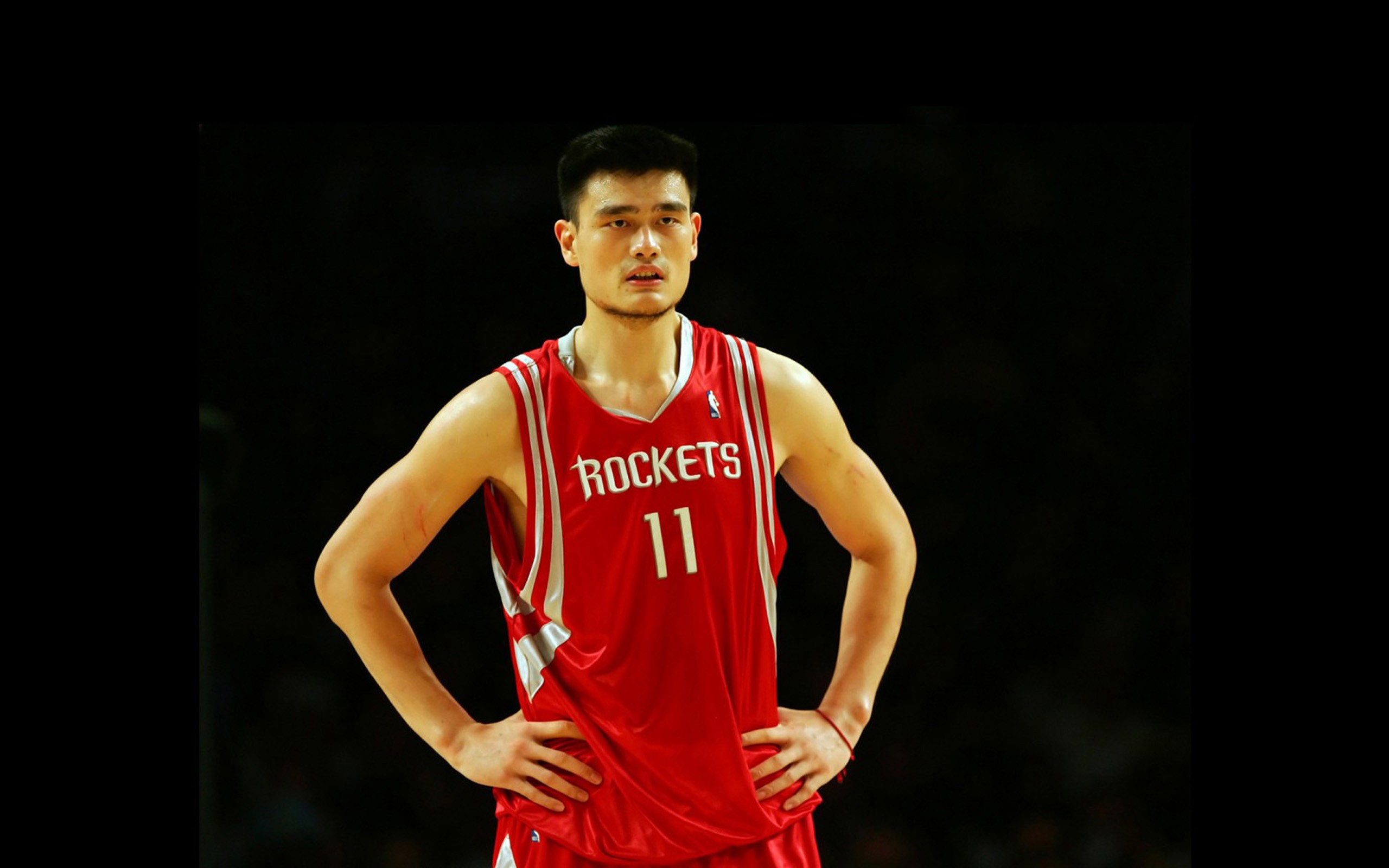
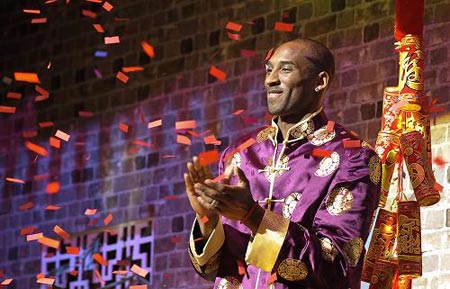
The Asian basketball world descended to Bengaluru - the new hoops capital of India - on Saturday, for the group stage draws of the FIBA Asia Cup 2021. India were of course one of the teams drawn into the qualifying draw. A number of great Asian basketball players were present for this event, including Basketball Hall of Famer Yao Ming, who made his third visit to India.
India were drawn in Group D alongside Bahrain, Lebanon, and Iraq.
2021 FIBA Asia Cup Qualifier Groups
Group A: Philippines, Indonesia, Thailand, Korea.
Group B: Chinese Taipei, Japan, Malaysia, China.
Group C: Australia, Hong Kong, New Zealand, Guam.
Group D: Bahrain, Lebanon, India, Iraq.
Group E: Saudi Arabia, Syria, Qatar, Iran.
Group F: Jordan, Kazakhstan, Sri Lanka, Palestine.
India will play each of the three teams in its group on a home and away basis over three qualifying windows - November 2019, February 2020, and November 2020. At the end of the three windows, the top two teams from each group directly qualify for the 2021 FIBA Asia Cup. The six third-placed teams qualify to participate in a final qualifier tournament in February 2021. The top four teams from that tournament will join the earlier 12 to complete the list of participating nations for the tournament.
Yao Ming, who was the star of China's basketball team, the Houston Rockets in the NBA, the Shanghai Sharks, and is now the chairman of the Chinese Basketball Association (CBA), made his third visit to India as one of the dignitaries at the draft. Yao had earlier come to Kolkata in 1998 to represent China at the FIBA Asia U18 Championship. Two years ago, he visited Bengaluru for the FIBA Asia Women's Championship.
Also present at the draw ceremony at the Shangri-La Hotel in Bengaluru: Former Philippines star player Jimmy Alapag, Japanese women’s professional player Asami Yoshida, FIBA President Horacio Muratore, FIBA Secretary General Andreas Zagklis, FIBA Asia President Sheikh Saud, Basketball Federation of India (BFI) President K. Govindraj, and Karnataka Governor Vajubhai Vala.
The General Assembly of FIBA's member federations was also held in Bengaluru on Sunday. Sheikh Saud Ali Al Thani was re-elected as President of FIBA Asia. India's BFI president Govindraj is the SABA (South Asian) sub-zone representative.
A ‘muhurat’ is an auspicious date, or series of dates, which bring good fortune to any venture. Hindu shaadis, for example, have been sticking rigorously to wedding muhurat days for centuries, ensuring that all the holy matrimonial unions are tied in the same two-week stretch in December when every citizen gains an extra six kilos on the laddoo overdose and bombastic brass bands become the soundtrack to every traffic jam.
There are muhurats for naming your child, muhurats for entering your new house, muhurats for that first haircut, and muhurats for buying a new car. Recently, however, it seemed that the basketball pundits finally shone their grace on the game: with major victories, star power, and record-breaking events, this past week ended up being one of the most auspicious weeks for basketball in India.
We should probably begin this propitious week down in Bengaluru, where India played host to the top women’s basketball teams from Asia and Oceania in the prestigious FIBA Women’s Asia Cup 2017. This was the first time that India was hosting a tournament of this magnitude since the same event was held in Chennai in 2009. India weren’t in the top tier at this championship and could only contend against lower pool teams in Division B. However, fans in attendance got to see several of the top players from the region hooped on Indian soil, including the Australian-American Kelsey Griffin (eventually the tournament’s MVP), China’s Li Yueru, Manami Fujioka and Moeko Nagaoka of Japan’s title-winning team, Korea’s Lim Yung-Hui and Danbi Kim, and more.
Team India, however, made the most of their circumstance in Division B and went on to top their group. Stars like Anitha Paul Durai, Jeena Scaria, Grima Merlin Varghese, and more all looked in top form with the hope to win the knockout stage and earn promotion to Division A.
By the time the knockout stage arrived, the tournament got ready to face a certain big distraction. Seven-foot-six-inches big, to be exact. In what turned out to be a pleasant surprise, Chinese basketball legend and Basketball Hall of Famer Yao Ming arrived on India to watch the Cup in Bengaluru. Yao, 36, indisputably the most successful Asian basketball player in history, retired from the game in 2011 and is currently the president of the Chinese Basketball Association (CBA). Without much fanfare, Yao sat in his corner at the Sree Kantaveera Stadium, took in some high-level basketball action, and briefly donned a turban and shawl in a traditional Indian welcome from the Basketball Federation of India (BFI).
Less than 24-hours later, the basketball excitement in India was about to tuned up to a fever pitch. Kevin Durant of the NBA’s Golden State Warriors-the reigning NBA champion, Finals MVP, former MVP, four-time scoring champions, and definitely the greatest player to set foot on Indian soil-landed in New Delhi. The 28-year-old’s mission was to help the development of the sport in India, and from raising public awareness to helping out in the grassroots, and he did all of that in a couple of short days.
Durant was greeted with a happy set of fans when he landed in Delhi, and the fandom got considerably more star-studded at a reception with some of India’s biggest sports and entertainment celebrities on his first night. The next morning: Durant got to work. His foundation donated two basketball courts to the Ramjas School in New Delhi and he interacted with young schoolkids at the courts’ inauguration. Later, Durant headed to the NBA’s state of the art elite India Academy in Greater Noida, where he trained several of India’s top teenage basketball prospects. Durant’s time at the Academy ended up as he was joined by hundreds of more young players from the Reliance Foundation Jr. NBA programme, as well has a few thousand who checked in via a live-stream from around the country, to create a Guinness World Record for “largest basketball lesson” (3,459 attendees).
While Durant was taking cheesy photographs at one of the seven wonders of the world in Agra, the basketball action was heating up down in Bengaluru. India had defeated Lebanon to reach the Division B final, and needed one more victory-against Kazakhstan-to ensure promotion. After falling to a 14-point deficit, India made a brave comeback to ensure that the game came down to one final shot. That shot was delivered by Pune-girl Shireen Limaye, who hit a clutch game-winner as time expired to give India a 73-71 victory and send the fans home more jubilant than a successful shaadi cocktail/sangeet party.
In the midst of all this, the BFI-Indian basketball’s governing body-were finally granted recognition among India’s National Sports Federations after spending a year outside this list by the government’s Ministry of Youth Affairs and Sports. Two years ago, a drama between two parties competing for the BFI’s executive committee role had split the federation and caused the committee leading Indian basketball to lose support of several national bodies. Last month, the Indian Olympic Association finally granted affiliation to this “new” BFI, and the Sports Ministry decision last week was a cherry on the cake of the successful FIBA Asia Cup.
All in all, yes, it’s been a great few days to be a basketball fan in India. But like every married person know, a successful shaadi is not made by the date of its muhurat; it’s about all the hard work that follows. Indian basketball has enjoyed a fantastic week: now, it’s time to build about this awareness and positive energy and help the game reach the potential it deserves.
The biggest women's basketball tournament in the continent - and beyond! - was held in our very own shores as India hosted the FIBA Women's Asia Cup 2017 from July 23-29 in Bengaluru. The top teams from the Asia and Oceania region took part in a week of memorable action at the Sree Kantaveera Indoor Stadium. The event came to a breathless end with two huge moments on Saturday: Japan defeated Australia in a nail-biter to win their third straight gold medal; and India were lifted in spectacular fashion with a game-winning shot to the Division B title and promotion to the higher Division A.
The FIBA Women's ABC was the first time India hosted a major FIBA event since the same championship was held in Chennai in 2009. A total of 15 teams took part this year in the two Divisions, featuring, for the first time, teams from the Oceania region, too. It was was the qualifying tournament for FIBA Asia at the 2018 FIBA Women's Basketball World Cup in Spain.
Japan landed in India as two-time holders of the title, including the most-recent win in 2015 at Wuhan, China. In Bengaluru, they finished another magical run with a thrilling final victory over Australia. In a contest truly befitting a final fight for the crown, Australia and Japan went through seven lead changes and several ties in the final. Shooting guard Saki Mizushima ended up being Japan's unlikely hero, exploding for 26 points in the final including a clutch three that broke the deadlock in the game's dying minutes. Australian superstar Kelsey Griffin scored 30 in the final, but her efforts weren't enough and Japan sneaked by to a 74-73 victory at the end of regulation.
This was Japan's fourth title overall and third in succession, cementing their place atop Asian women's basketball. Griffin was named the tournament's MVP. Australia's Griffin was named tournament's MVP.
China won the bronze medal on Saturday with a comfortable 75-51 victory over Korea. Sijing Huang and Yueru Li each scored 16 for China in the victory.
The top four teams from Division A - Japan, Australia, China, and Korea - qualified for the FIBA Basketball World Cup 2018.
After falling out of the top division at the tournament's previous iteration in 2015, India had to begin the 2017 competition at home from Division B. They would have no chance to compete for the title, but a Division B victory could secure them a place in Division A for the next FIBA Asia Women's Cup. With this mission in mind, India hired Serbian head coach Zoran Visic to lead a healthy and talented squad, featuring important players like the veteran Anitha Paul Durai, Jeena Scaria, Shireen Limaye, Kavita Akula, and more. India were placed in Group A of Division B along with Sri Lanka, Uzbekistan, and American Samoa, but American Samoa pulled out of the tournament before it began.
India opened their account on home floor against Uzbekistan in their first game, and captain Anitha Paul Durai ensured that the team got off to a positive start. A 19-9 run in the first quarter proved to be the big difference in the game. Paul Durai led all scorers with 28 points, five rebounds, and five assists. Grima Merlin Varghese, a late replacement to the squad in place of Poojamol KS, was India's surprise x-factor, scoring 17 in the victory.
India showed no mercy to South Asian neighbours Sri Lanka in their second preliminary group game, flying off to another quick start 23-10 and holding Sri Lanka to just three points in the second quarter. Varghese continued her dream run, pouring in 19 points and 10 rebounds for India's 88-42 win, which put them through to the Quarter-Final as group leaders.
The knockout stage began with another easy rout for India, an impressive 93-51 win over Fiji. Captain Paul Durai led India with 19, while Fiji's star player Miji Koiyamainavure (24) fell short despite a strong individual performance.
The semi-final presented India with their toughest challenge yet, against Lebanon. India had a hesitant start to the crucial match, and Lebanon, the more confident team from the get-go, marched to a 38-33 halftime lead. With Lebanon still leading by 2 at the end of the third quarter, India needed one last boost to carry them to the final stage. They got just that from Kerala's star Jeena Scaria, who went into beast mode in the fourth quarter, ultimately finishing with 20 points, 7 rebounds, and 6 assists to help India go on a late run and win the game 79-69. Raspreet Sidhu added 17 in the win. Lebanon's Rebecca Akl and Chirin El Charif scored 20 and 17 respectively in the loss.
India's biggest test, appropriately, came in the Division B final against Kazakhstan. Playing in-front of a sell-out home crowd in Bengaluru (which was a relief, after several days of sparse audience at the event), India once again started slow, and fell down by 14 points midway through the second half. Led by the amazing Nadezhda Kondrakova (who finished with 30 points and 18 rebounds) and Zalina Kurazova (17) Kazakhstan were up by 8 at the end of the third quarter. Once again, Scaria came to the rescue (20 points, 6 assists), helping ignite India's big comeback in the fourth quarter. In crunch time however, India's hero turned out to be All-Around talent Shireen Limaye. Limaye hit two huge baskets in the game's last minutes, including a memorable game-winning shot with just five seconds left on the clock that gave India the 73-71 victory. The heroics capped Limaye's biggest game of the tournament, as she finished with 17 points, 10 rebounds, and 6 assists.
A post shared by Jonathan Rego (@regosjonathan) on
The victory earned India promotion into Division A for the next iteration of the tournament in 2019. They will replace North Korea, who will fall to Division B.
This well be a tournament that basketball fans won't easily forget. Even though India played in the lower division, they delighted the fans and the Basketball Federation of India (BFI) by going 5-0 with incredible performances, and then winning the division in dramatic fashion. BFI announced a reward of Rs. 15 lakhs for the team for their efforts.
Coach Visic's contract technically expires at the end of this tournament, and the BFI will now decide whether or not they will choose to extend this successful coach to stay and build up Indian basketball for a longer period.
Paul Durai, who returned to this team after maternity leave, ended up as India's top scorer at the tournament (16.4 ppg). 22-year-old Varghese was the surprise package for the squad and should now feel confident of playing a major role in the team in the future, too. Raspreet Sidhu, Kavita Akula, Jeena Scaria, and Rajapriyadarshani Rajaganapathi were all part of India's main rotation throughout the tournament. And Limaye can return home safe knowing that she hit one of the biggest shots in Indian women basketball history!
In what turned out to be a pleasant surprise, Chinese basketball legend and Basketball Hall of Famer Yao Ming arrived on India on Wednesday night to attend the FIBA Women's Asia Cup 2017 in Bengaluru. Yao, 36, indisputably the most successful Asian basketball player in history, retired from the game in 2011 and is currently the president of the Chinese Basketball Association (CBA).
The FIBA Women's Asia Cup 2017 is the biggest competition for teams from Asia and Oceania, and is being held in India for the first time in eight years from July 23-29. Yao's country-women from China are once again one of the favourites at this tournament and have most-recently defeated the Philippines at Bengaluru's Sri Kantaveera Stadium to make it to the semi-finals.
This is huge news, metaphorically and literally. Despite ending his playing years early to chronic foot injuries, the 7-foot-6 Yao enjoyed a successful career. He excelled in the CBA with the Shanghai Sharks in his youth, became number one pick in the 2002 NBA Draft by the Houston Rockets, dominated the paint to become one of the league's best big men (he just happened to be playing in the Shaq era, unfortunately), and became one of the most popular basketball players worldwide. The Chinese sports icon won three FIBA Asia gold medals for his country and carried China's national flag for his delegation during the opening ceremony of the 2008 Beijing Olympics. In 2016, he was inducted into the Basketball Hall of Fame.
This is Yao's second trip to India. Before he got into the fast-lane to superstardom, Yao took an early step to success in Calcutta at the FIBA Asia U18 Championship back in 1998, as an 18-year-old. Yao was the best player in Team China at the tournament and helped with win the gold medal and took home the tournament's MVP trophy. He was a rookie with the Shanghai Sharks then, and a few years later won the CBA MVP award, the CBA title, and was drafted to the NBA, and the rest is history. During an interview I did with Yao in Shanghai for SLAM Magazine in 2014, he told me that he still harboured great memories of India because of his early success.
China will be hoping that Yao's presence proves to be their good-luck charm as they look to end Japan's recent dominance at this competition and win the gold medal. Meanwhile, India is in Division B of the tournament and have a starkly different ambition: just to qualify for the higher Division A.
What makes Yao's trip even more special is that he arrived in India less than 24-hours before another worldwide super-duper basketball star, Kevin Durant. Durant, however, is spending in time in the north, where he will be training players at the NBA Academy India in Greater Noida.
India's Senior Women's Team 2015. Photo Courtesy: Ekalavyas.com
In 2016, Yao Ming would be elected into the Naismith Basketball Hall of Fame, inducted the same night as basketball greats Shaquille O’Neal and Allen Iverson. In 2011, he would retire from basketball as a five-time NBA All Teamer and one of the greatest international basketball players ever. In 2002, he would be selected first into the NBA Draft by the Houston Rockets.
But before he achieved any of that, before he became a lynchpin for the Chinese Basketball Team, for the Rockets, or even the Shanghai Sharks back in the CBA, he was an 18-year-old basketball phenom about to announce his breakthrough moment to the rest of the world.
And he did it, of all places, in Kolkata.
Back in 1998, the Netaji Indoor Stadium in Kolkata hosted the 15th FIBA Asia U18 Basketball Championship. Top teams from all over the continent, including India, of course, took part. China, the reigning champions, went on to defend their title with a victory in the final against Qatar. A young seven-footer by the name of Yao Ming was named the tournament’s MVP.
Yao, the only Asian-born player to be in the Basketball Hall of Fame, is perhaps the greatest player to play competitive basketball in Indian soil. But there have been so many more. Over the years, the likes of Yuta Tabuse (Japan), Chen Nan (China), Jaber Rouzbahani (Iran), Bian Lan (China), Li Meng (China), and many more have played in major FIBA Asia tournaments in India. India’s opportunities to host such tournaments over the years – considering India’s past struggles with infrastructure and organisation – have been rare occurrences, but each major ABC or other international basketball event has ultimately boosted the game’s growth at home.
Fortunately, there’s good news for Indian basketball fanatics in the near-horizon. FIBA Asia – the game’s ruling body in the continent – announced India as hosts of two major continental tournaments in 2017: the 1st FIBA Asia Women’s Cup (a revamped version of the 27th FIBA Asia Championship for Women) and the 5th FIBA Asia U16 Championship for Women. The FIBA Asia Women’s Cup will be held in Bengaluru from July 23 to 29, while the U16 FIBA Asia ABC will be from October 22-28 in a soon-to-be-decided host city (apparently a toss up between Chennai and Hyderabad).
This will be the first time in seven years that India will be a host to a full-scale international basketball tournament. While India has regularly hosted tournaments at the South Asian stage and limited events like the 2014 Lusofonia Games, the last time that we had a major FIBA Asia Championship on home soil was 2009, when Chennai and Pune hosted the FIBA Women’s ABC and FIBA U16 Women’s ABC respectively.
Just years into becoming an independent nation, India was introduced to basketball. The country’s own basketball federation – the BFI – was formed in 1950, and less than a year later, at New Delhi’s National Stadium, independent India’s first national team strolled out as hosts to our first major tournament. India was hosting the first Asian Games in 1951 and five teams – Philippines, Japan, Iran, Burma, and India – participated in the event’s basketball competition. Led by captain Ranbir Chopra, India took just one victory from the tournament – a 50-47 triumph over Burma – and finished at fifth place; Philippines took the gold medal.
Unfortunately, we would have to wait three more decades to feature a major international basketball tournament in India. A year after a series of unexpected events landed India into their first (and only) Olympics basketball slot at Moscow 1980, FIBA Asia rewarded India by allowing the country to host the 11th FIBA ABC in 1981 in Kolkata. India’s men’s squad were near the peak of their basketball prowess in those days, having finished 4th in Asia in 1975 and 5th in 1979. Back in Kolkata, India made it to the championship round (top six) and finished at fifth place. Some of our greatest-ever players like Ajmer Singh, Paramjit Singh, Shyam Radhey, and more were a part of this talented era of Indian basketball.
A year later, India’s continued ‘Golden Generation’ would have another chance to defend their home court. After thirty years, the Asian Games returned to India, to New Delhi, where India took part in the thirteen-team basketball fray at the Jawaharlal Nehru Stadium. In a championship rematch from 1978, South Korea defeated China in the final to win their 2nd Asian Games basketball title. India qualified from the Preliminary Round but lost all seven of their Championship Round games to finish at 8th place.
Since the early 80s, India is yet to host a major international tournament featuring Senior Men’s teams, either in the form of a FIBA ABC or the Asian Games. In 1998, however, India did get a glimpse of Asia’s dominant future at the U18 ABC: this was the tournament where Yao Ming won the MVP award and carried China to another title. This is the tournament that also featured Japan’s legendary point guard Yuta Tabuse, who went on to become the first Japanese player to play in the NBA.
Boosted by the success of the Men’s U18 ABC, FIBA awarded India the Women’s edition of the same tournament two years later. The 15th FIBA U18 Women’s ABC was held in New Delhi in December 2000. India won one game against Sri Lanka in the Preliminary Round and one more in the classification stage against Hong Kong to finish at 9th place. China, led by a young Chen Nan on her way to greater glories, won the tournament, their eighth title in this competition.
In 2004, the Men’s U18 ABC was held in India again, and this time, Bengaluru was chosen as the host city. Held at the Rajiv Gandhi Sports Complex, this tournament proved crucial in a shift in the balance of power of Asian basketball. After decades of East Asian dominance over the title, Iran enjoyed their coming out party with their own golden generation, featuring tournament’s MVP Jaber Rouzbahani. This was Iran’s first title in this tournament, which they secured with a close win over South Korea in the final and finished a perfect 8-0. This Iran team went on to dominate many senior men’s ABCs and are still among the top teams in Asia. India did well in the Preliminary Round in front of their home fans but finished at the bottom of the Second Round group. Nevertheless, they ended the tournament at 7th place, which still stands as their best finish since 1972.
In 2009, for the first time, FIBA’s flagship tournament for Senior Women – the Women’s ABC – was held in India, at the Jawaharlal Nehru Stadium in Chennai. Representing her home team Southern Railways, India’s superstar Geethu Anna Jose led the entire tournament in scoring (22 ppg) and was fifth in rebounds (8.7 rpg). Once again, however, it was China who shone brightest, going perfect to win their tenth title in this event, led by MVP Bian Lan.
Later that same year, FIBA Asia launched its youngest event, the U16 FIBA ABC, and rewarded India the honour of being the host nation. At the Shree Shiv Chhatrapatri Sports Complex in Pune, India fielded a young squad of talented players, including Sneha Rajguru, Kavita Akula, Jeena Scaria, Navaneetha PS, and local girl Shireen Limaye. India finished third in Group A and had to finally settle for 5th place in the tournament. China debuted at this tournament by winning the gold, defeating Japan in the final.
New Delhi brought the Commonwealth Games to India for the first time in 2010. Basketball was introduced to this tournament in 2006 in Australia, but because of scheduling difficulties with other major international events, the Games’ basketball tournament was scrapped in 2010.
Many of the young talents from India’s 2009 U16 team have now become a part of our national team rotation, and as FIBA chooses India as the host for the Senior ABC again in 2017, it will be a chance for fans at home to see how they have developed into team leaders over the years. India’s national women’s squad has a promising mix of youth and leadership, featuring Scaria, Poojamol Subhashmon, Bhandavya Mahesha, Anitha Pauldurai, Limaye, and more. Two years ago, India had a disappointing outing at the FIBA Women’s ABC, losing all their Level 1 games and getting relegated to the lower Level II. Playing at home, this will be India’s chance to bounce back up to the higher stage.
This year, for the first time, the senior-level FIBA Asia Championships are transforming into the FIBA Asia Cup, a tournament that will feature the top teams from Oceania like Australia and New Zealand. The 2017 FIBA Asia Women’s Cup will be the qualifying tournament for FIBA Asia at the 2018 FIBA World Championship for Women in Spain. International stars like Ramu Tokashiki and Asami Yoshida (Japan), Danbi Kim (Korea), Shao Ting and Sun Mengran (China), Liz Cambage (Australia) and more could feature on court in Bengaluru this year.
India’s top performers from the domestic youth (U16) and sub-junior (U14) tournaments will comprise of our national U16 women’s team at the FIBA U16 ABC. Two years ago, India failed to win any games at the 2015 FIBA U16 ABC in Medan (Indonesia), while China secured the title with a win over Japan in the final.
It is rumoured that the tournament will be held either in Chennai or Hyderabad. It will be the qualifying tournament for FIBA Asia at the 2018 FIBA Under-17 World Championship for Women.
Hosting these two major tournaments will give our domestic players and fans a closer look at some of the best in the continent. Hopefully, the preparation leading up to the two tournaments in Bengaluru and the second city will force authorities to upgrade our facilities at home to handle events of this stature. Most importantly, fans will be hoping that the home-court advantage will lift up India’s own performances and help us bounce back to a better finish.
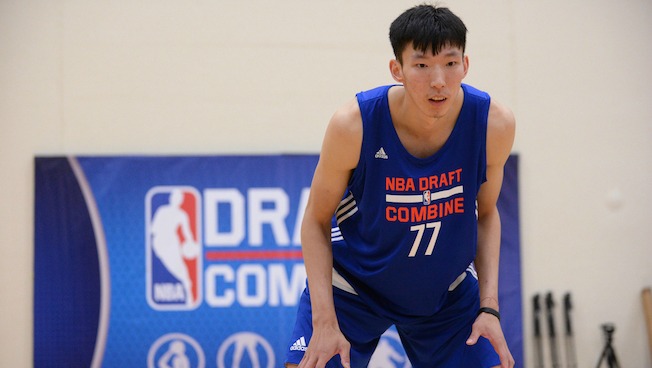
When Yao Ming announced his retirement in 2011, he left a 7-foot-plus hole in the hearts of the world’s most-populous nation. But months before Yao’s career officially ended, China already got a promise of the future. Proudly wearing China’s colours at the little know Turk Telecom youth tournament in Turkey, 15-year-old Zhou Qi helped his country to an unlikely gold medal, putting up 41 points, 28 rebounds, and 15 blocks in the semi-final against Germany and providing a game-winning encore with 30-17-8 against the hosts in the Final.
For the next five years, Zhou slowly turned his promise to reality. He made his name in China’s youth circuits, destroyed Asian opponents, and become a young star in the Chinese Basketball Association.
But now, the skinny (listed at 218 lbs), 7-foot-2, 20-year-old from the city of Xinxiang is ready to bulk up into an even larger pair of shoes: after years of success in China, the young man must prove himself all over again in the United States.
“I want teams and fans in the US to know, first and foremost, that I’m a team player,” Zhou says. “I wanna be in an environment where I can help my teammates to be the best they can be.”
“Today’s NBA is asking so much more from a single player. To be more than a single position. The game is much faster. I need to adopt to different styles of play. On offense, I must learn to attack from the outside, be both a perimeter and a post player. On defence, I must learn to guard guards as well as centers.”
Zhou hopes to find long-term success in the league. But even before he ever steps on an NBA court, he’ll know that the weight of Yao be hanging over his slender shoulders.
“I don’t feel any pressure. If I can take the torch from Yao, I hope I can have a good career and pass the torch to someone to else. Right now, I just want to be myself.”
Satnam Singh at the 65th Senior National Basketball
Basketball Championship 2014, in Bhilwara. Photo
Courtesy: Ekalavyas - Vishnu Ravi Shankar
The Present.
Dressed in a dapper, dark blue single-breasted suit, Satnam Singh Bhamara sat anxiously on the crowded floor of the Barclay’s Center in Brooklyn, New York. A single Thursday evening in late June had the potential to change the 19-year-old’s life forever, and forever make history for Indian Basketball and the NBA.
But nothing was certain. The previous few weeks had turned Satnam from an unknown 7-footer out of High School into a possible late Second-Round pick. His name had made its way on to the draft boards, but being a potential late Second-Round pick is too close to being undrafted, too close to a dream deferred. The NBA Draft has only 60 picks, which means only 60 dreams are guaranteed to come true on that night. And as the picks went on, and the teams who had worked out Satnam with chose other players, that number edged closer and closer to 60.
And then, after pick number 52 was announced, nothing was the same again.
*
The Past.
Dressed in a plain, striped white shirt and blue jeans, Satnam Singh Bhamara sat anxiously at the former office of the Basketball Federation of India (BFI) near Paharganj in New Delhi. A single basketball workout a few weeks ago had changed the 14-year-old’s life forever, and set into motion a new era for Indian Basketball.
But still, there was uncertainty. That day in the BFI office – in the summer of 2010 – was the first time I got to meet and get to know Satnam. Just a month before that meeting, Satnam was one among 50 boys and girls – all under 14 from every corner of India – who were invited to New Delhi by the BFI for trials hosted for IMG Reliance for a potential IMG Academy scholarship programme. The youngsters were chosen based on their performances at the recent Sub-Junior National Basketball championship.
Satnam was the centrepiece – literally and figuratively – of those trials. While the rest of the players were 13 or younger, a special exception was made for the 14-year-old 7-footer who was played for Punjab’s Youth (U16) team already and had recently led them to a national championship in Trichy, Tamil Nadu. A year earlier, at just 13, he had already played for India at the FIBA Asia U16 Championship in Malaysia.
IMG-Reliance had recently signed a sponsorship deal with the BFI to sponsor the federation events and provide this rare scholarship programme. After the tryouts, IMG’s coach Dan Barto chose four boys and four girls for the scholarship at his basketball academy back in Florida, USA. Unsurprisingly, Satnam was the biggest name among the eight.
So there he was at the BFI office in New Delhi, a few months before his semester of school was due to begin in Bradenton with the IMG Academy. He sat nervously in the office – barely being able to stretch his large legs on a bench in the tiny space – and waited for his paperwork to get cleared. He spoke only in thick Punjabi and needed by help to fill out his English visa form for the United States.
He had been handed a scholarship at one of the top youth sport academies in the world, but back then, he didn’t really know what it meant. In my earlier conversations, he talked with uncertainty about the future. Uncertainty about how he, a boy who grew up in a farming village with less than 700 people and trained at the squalor of the Ludhiana Basketball Academy in Punjab, a boy who was barely familiar with urban India, would now be exposed to a First World nation, exposed to some of the world’s best training facilities, and a culture at a polar opposite to his own. He didn’t know that the way he was educated and coached would change forever.
He had heard whispers – said wistfully rather than confidently – that he had the potential of becoming the first NBA player out of India. He told me that his dream was indeed to play in the NBA one day. His potential had been co-signed early by Troy Justice, the NBA’s Director of Basketball Operations in India back then. Here he was, a boy who played for Punjab’s youth teams and was being forced to pay his dues as a backup over less-talented seniors in the national team being told that he could do what no Indian had done in 60 or 70 years of history of both the NBA and Indian Basketball.
He was anxious about his visa process, sure, as every Indian applying for US visa ever is. But he was calmly confident about his chances with the NBA ‘one day’. No one knew when, of if, that ‘one day’ would ever come. Maybe the confidence was a virtue of his ignorance, of him not yet being aware of the low odds of making the world’s best basketball league, of the combination of hard work, opportunity, and luck that goes into making that dream a reality.
He got that visa, and along with seven other Indian basketball-playing kids, headed off to Florida. And nothing was the same again.
*
Aside from providing basketball fans with the greatest basketball players, teams, and moments in history, the NBA has also been at the forefront of social change and bringing the world closer through the sport. They featured the league’s first black player (Earl Lloyd) in 1950, drafted the first European players (Fernando Martin and Georgi Glouchkov) in 1985, brought in first Chinese player (Wang Zhi Zhi) in 1999, their first openly gay player (Jason Collins) in 2014, and of course, the first Indian-descent player (Sim Bhullar) earlier this year.
The seven-footed center Wang Zhi Zhi – the first Chinese player in the NBA – was drafted 36th by the Dallas Mavericks in 1999. 16 years later, it was these same Mavericks who were on the clock at the 2015 NBA draft with their second round pick – number 52 – and an Indian seven-footer waiting in the wings to become a part of history.
China always had a long history with basketball and success with the sport in Asia, but the game only became the nation’s favourite as the Chinese Basketball Association (CBA) was launched in the mid-90s and Wang’s drafting was followed by Yao Ming going number one to the Houston Rockets in 2002. Yao’s short but successful career thrust the spotlight on China’s billion-plus as they became the largest basketball market on Earth.
The NBA have been wishing for India – another billion-strong nation – to mirror that success, too. Of course, our nation has different complications. Over here, most other sports including basketball exist under cricket’s ever-dominating shadow. The NBA put in their efforts over the last half decade to have a bigger grassroots presence in India, bring NBA superstars closer to fans in the country, and accelerate the availability and broadcast of NBA content to Indians. The NBA had come to India, all that was left was for an Indian to go to the NBA.
*
Satnam Singh Bhamara – at 14 – came to America a complete stranger to the country’s culture, language, and educational system. He struggled in class and missed his family back in Punjab. But it helped to have the other prospects from India – his friends Sanjeev Kumar, Dinesh Mishra, and Ashiv Jain – with face the early cultural experiences together.
It also helped to have basketball. Satnam improved his game with the coaches at IMG, specifically Coach Barto who had scouted him in India and eventually, Coach Kenny Natt – the former coach of the Sacramento Kings – who had also been the former coach of India’s national squad and had given Satnam his first senior international appearance for India. In 2012, Natt joined the IMG Academy staff as well, and his familiarity with the big Punjabi kid added another positive dimension to the training process.
On court at the academy, Satnam spent the next five years with focus on improving his strength and conditioning as a priority, and eventually making his mark for IMG’s senior team. Back home in India, he continued to return for some domestic championships, playing well for Punjab whenever he got a chance. After Natt gave him the senior debut at the FIBA Asia Championship in 2011, he played for India’s senior national team for a couple of more Asian tournaments. At the FIBA Asia Under-16 tournaments in Vietnam, he made waves by emerging as one of the top youth talents in the continent.
Off court, he improved his English and eventually, began to see a realistic roadmap for his future. As he reached college eligibility, several mid and high level NCAA colleges showed him interest, but his English wasn’t good enough to get him the grades required. So he took a bold risk and declared for the NBA draft. Over the next few weeks, he impressed scouts in pre-draft workouts around the league, and, with confidence in his abilities, he waited for Draft Day.
*
Karl Anthony-Towns went first to Minnesota, D’Angelo Russell went second to the Lakers. Several hours later, NBA Commissioner announced the last pick of the First Round – Kevin Looney – going 30th to the champion Golden State Warriors.
A few minutes later, deputy commissioner Mark Tatum took over to welcome in the picks for the Second Round. Turkey’s Cedi Osman was at 31. Josh Richardson went 40th. And as more time passed and the night got older, the numbers inched closer to the end. The Orlando Magic picked Tyler Harvey at 51. With less than 10 more picks to be drafted, it was going to be now or never for Satnam.
Hugs. A draft hat. A handshake with the deputy commissioner. A life transformed.
On draft night, Satnam went from being an unknown international prospect to a player drafted into the NBA within a matter of minutes. But those few minutes were only the crowning glory of the culmination of years of hard work, fortunate opportunities, support from friends, family, and coaches, and many anxious waits.
Those few minutes signified a dream realized, the end of a journey that few in Indian basketball ever saw possible.
*
Or, they signify the beginning of another journey.
Getting drafted into the NBA and playing in the NBA are two vastly and widely different achievements. Once he signs his first NBA contract, Satnam will be hoping to be named in the Mavericks’ Summer League and earn some minutes in Las Vegas. It is highly likely that he’ll start the regular season in Frisco instead of Dallas, playing for the Mavericks’ affiliate D-League team Texas Legends. Here, he’ll have the opportunity to learn the pace of the professional game, become more confident against better opponents, and further develop physically and technically as a player.
Blessed with his gargantuan 7-foot-2 frame, Satnam has age and size on his side. In the long-term, the best-case scenario for him – if the Mavericks are able to get the most of his potential – would be to eventually secure a steady backup NBA job for several years. Those invested in Indian basketball will be desperately wishing for Satnam to make the leap into earning NBA playing time. Even his smallest steps will leave giant footprints. For a country so anxious for basketball role models, any success for Satnam – no matter how miniscule – will be a positive and influential step forward.
However his journey proceeds, Satnam has already achieved the impossible. The boy from a non-descript Punjabi village has come further than the distance between Ballo Ke and Dallas and jumped higher than his own gargantuan height. On Draft Night, he may have been a relatively unknown giant in a sharp suit; but once he was drafted, his name rung viral across fans in India, and eventually, fans around the world, too.
*
The future?
Dressed in a Royal Blue Mavericks jersey with the name ‘Satnam’ in silver on the back, Satnam Singh Bhamara waits on the bench for his number to be called. With a couple of minutes left in the first quarter, Coach Rick Carlisle looks to the end of the bench and nods at him. Satnam jumps up on his feet, checks in at the scorer’s table, and exchanges dabs with the exiting player on court.
He steps on an NBA court and nothing is ever the same again.
Every year, a small number of the most talented young basketball players blessed with star potential are invited to one of the NBA and FIBA organized 'Basketball Without Borders' (BWB) camps around the world. This year, for the first time, the Basketball Without Borders Asia camp is being held in Taipei, Taiwan. A small group of current and former NBA players are set to be at the helm of this camp, overseeing and training the future generation of Asian and Oceania stars, a generation that consists of three players who have been invited from India: Vishal Gupta (Andhra Pradesh), Ashish Briggs (Madhya Pradesh), and Mahipal Singh (Rajasthan).
Photo courtesy: Troy Justice
The camp is being held in Taipei from June 13-16 this year. NBA players invited to the camp include Nicolas Batum (Portland Trail Blazers), John Salmons (Toronto Raptors), Ronny Turiaf (Minnesota Timberwolves), and Cody Zeller (Charlotte Bobcats). The biggest presence - literally and figuratively - will be of NBA Legend Yao Ming. Yao is the greatest Asian to ever play the game, was the cornerstone of China's national team, and played nine years with the Houston Rockets.
"Training at the BWB camp will make a lot of difference in my style of play, and it will be an unparalleled experience to interact with NBA legend Yao Ming and the other stars making their way to the camp," said Gupta.
"Hailing from a small town like Ujjain, one can only dream of visiting such international camps and learning the technical aspects of the game from the best players in the world. I can't wait to be there and learn as much I can in those four days," said Briggs.
This year, BWB camps have already been held in Rome and Italy. The last camp is scheduled to be held in South Africa in the first week of August.
A few months ago, SLAM Magazine published an interview I did with former NBA great Yao Ming, the greatest basketball player to ever come out of Asia and still the most respected and powerful man in Chinese Basketball. While the majority of our discussion was a fond look back at Yao's short-yet-effective NBA career and his legacy, Yao was definitely keen to also promote his newest venture in China with the outside world. Earlier this year, he launched the first season of the NBA Yao School in Beijing, a programme to offer after-school and weekend basketball training and fitness programmes for children of a varied age group and at all skill levels.
The 'school' has been in session since February at the Wukesong Basketball Park in Beijing, led by basketball operations heads and coaches appointed by the NBA. Children from ages 6-16 have signed up and now, the first season of the programme is in its tailend as the final days approach towards the end of May.
On Friday (May 9th), I finally got a chance to attend one of the sessions of the NBA Yao School in person to watch the basketball teaching in action. It was the 11th session of its first season. The coaches leading the session were Billy Singelton (former British Basketball League legend) and Greg Stolt (Associate Vice President of Basketball Operations - NBA China and basketball world traveler!).
Children participating in the NBA Yao School have been divided into four age groups: 6-9, 10-12, 13-14, and 15-16. At this point, the school only had male students. The NBA handed the children jerseys or T-shirts representing the Rockets, Knicks, Spurs, and Heat. For the sessions, the Wukesong Basketball Park has been designed to give a mini NBA experience, with banners of several NBA teams on hanging from the rafters and life-size shots of some of the league's biggest superstars like Russell Westbrook, Dwight Howard, or Derrick Rose plastered on the wall behind the basket.
Watching the camp and sessions in action, I was reminded of the interview and conversation I had about the school with Yao months ago. Yao told me of his intentions to encourage Chinese youngsters outside of the classroom and on to the playground. "The education system [in China] has been focused only on academics," said Yao, "I feel that sports are equally important. Sports can provide a social experience before a child steps into the real world. The idea was for an after-school program where kids can relax their minds from school and have a chance to learn to become a team member. Concepts like teamwork, communication, cooperation or leadership can’t just be learned from paper; you have to experience them. And that’s what Yao School is here for. Basketball skills are the strategy to put that experience together."
"This is character education," he added, "For years, kids in China have been isolated. Isolated at home, because of the one-child policy, and in school, where everyone is worried about [grades]. I want to take them out of that element and give them a chance to play as a group. A future career cannot be done in isolation; you have to work with somebody."
From one sense, I could see that Yao's concern of 'isolation' that many of these youngsters might have without siblings was definitely addressed at the session - in action, not in words. With so many peers of their age group around them, it was heartening to see the kids - especially the youngest ones - interacting and having fun with others of their age and with the common interest in basketball. It made me a little jealous too: there could have been so many life lessons such as communication, leadership, or teamwork that I would've learnt much better had they been taught through basketball, instead of through a boring old teacher in a classroom.
Singleton's aim wasn't just to teach the kids on-court skills; he started off the session by tackling basketball philosophies, and on the 11th session, the message was an encouraging call to spend more time at practice. "No substitute for hard work," he said. A little bit of English basketball termanology was taught, too, and translated into Mandarin; phrases such as "post up" or "6th Man".
Fridays are the only days when all the age levels come to train together, but after the pre-game workouts, they are all divided into their groups to focus on various different skill-set training. On this day, Singleton started with the youngest group, who are still only at the age where the training is still mostly concerned with fitness more than specific basketball skills. Stolt worked with some of the older kids on defensive drills first before moving on to other activities.
China loves basketball. This is no secret, as the sport is probably a favourite in the country with the world's largest population, and has especially been on the upswing ever since Yao was drafted # 1 in the 2001 NBA draft and went on to enjoy a multiple-time All Star career. But post-Yao there has been no one from the country to fill his void - on and off the court. China has been searching for a replacement ever since, but it is near-impossible to emulate a star of Yao's physical stature and skills. Yao had made it clear that his school won't be specifically looking to groom the next star player (or the next him); instead, the focus will be on the majority of kids who are being encouraged to take up the sport as a serious hobby, if not necessarily a profession.
In the coming weeks, there will be a few more similar sessions for the first batch of NBA Yao School students, before this year's schedule concludes at the end of this month. Yao, who has occasionally attended and given advice himself, will be in Beijing for the finale. If this year is considered a success, Yao had mentioned that he will be hoping to expand the school to several other cities in China - starting with his hometown Shanghai - and help the philosophies and on-court training reach out to many more kids around the country.
The Chinese don’t say goodbye. Instead, the most commonly used phrase for an appropriate parting is zài jiàn—or zeh weh, in a Shanghai dialect—which literally translates to “meet again.” In China, no end is permanent. There is always another chance, another time.
Yao Ming was only 30 years old when he officially ended his basketball-playing career. In the short time the gentle 7-6 giant bounced a basketball, he experienced unprecedented highs and disappointing lows; he became one of the most recognizable faces on the planet, and then quickly fizzled out.
Amidst it all — being the No. 1 overall pick, the first draft pick from China, an All-Star, a 20/10 player, the face of the Houston Rockets and China — Yao maintains that the most memorable moment of his career occurred on April 11, 2011, during a game against the Dallas Mavericks that he didn’t even dress for.
“That was my last game,” says Yao, who’d appeared in five games earlier that season. “I didn’t play because I was hurt already. Usually I just walk down, but that time I was thinking, I know this is my last time…I will miss this court! I didn’t tell the fans, or anybody that I was retiring. Only the Rockets management knew that this was my decision. They had to move on and know that I was out of the picture.”
Move on. It’s easier said than done, but Yao took the initiative by moving on himself. At 33, Yao seems to be at peace with his decision, at peace with the glories that lifted him up and the injuries that grounded him. He has moved on to owning a basketball team in China, his hometown Shanghai Sharks, and to engaging in a variety of business ventures back in his homeland. But he remains most excited about his upcoming project, the NBA Yao School, which will launch in Beijing later this year, where he and his team will be coaching kids in an after-school program to learn life skills through basketball.
Yao recently sat down with SLAM in Shanghai and reflected on his playing career and his post-playing life.
SLAM: Why did you open the Yao School?
Yao: I wanted to provide a service for kids after school. The education system [in China] has been focused only on academics. I feel that sports are equally important. Sports can provide a social experience before a child steps into the real world. The idea was for an after-school program where kids can relax their minds from school and have a chance to learn to become a team member. Concepts like teamwork, communication, cooperation or leadership can’t just be learned from paper; you have to experience them. And that’s what Yao School is here for. Basketball skills are the strategy to put that experience together.
SLAM: What are your goals, in terms of basketball and culturally, for this program?
Yao: This is character education. For years, kids in China have been isolated. Isolated at home, because of the one-child policy, and in school, where everyone is worried about [grades]. I want to take them out of that element and give them a chance to play as a group. A future career cannot be done in isolation; you have to work with somebody.
SLAM: What is your fondest memory of your international career?
Yao: Playing in the Beijing Olympics in 2008 was a special moment. And I still remember the first time I ever put my national team uniform on. It was the China junior team in ’97. That moment was so enjoyable; I spent a lot of time looking at myself in the mirror! I didn’t realize there was a long journey ahead for me.
SLAM: You retired as one of the most popular players of all time, and definitely the most successful Asian player. When you look back at your career, do you feel that you achieved the goals you had when you started off?
Yao: Honestly, I feel that the American players probably dream much bigger than this, but my situation was that I never dreamt to play in the NBA. I just hoped to play on the Chinese national team. The NBA seemed too far for me when I was a kid. Being drafted by the Rockets was already beyond my goals. But of course when you get there, you want to set a higher goal, you don’t want to stop, you want more. So, maybe I broke even. Maybe I should’ve gone a little bit further, but my injuries slowed me down. But you can’t change that fact. And you can’t live in regret.
SLAM: Do you have any regrets? Is there anything else that you wish you had achieved?
Yao: Not many…I think I did everything possibly I could. And if I went any harder, I would have probably broken my ankles a couple years earlier [laughs].
SLAM: If you, Tracy McGrady and all of the Rockets had been healthy in your prime, how good do you think you guys could’ve been?
Yao: First of all, there’s no such thing as “if”…I think we had our chance but we missed it. Whether we regret it or not, that is a fact, and we just need to learn from the experience and move on. Otherwise how can we go to teach kids: “Hey, you have to pull yourself together after this loss and move on,” you know?
SLAM: Was there one particular year when you thought that you were good enough to go all the way and win a Championship?
Yao: Yes, a couple of years. In ’06-’07, I felt really good about myself. I had rehabbed well from a fracture, had a good summer with the national team to get back to shape and I won Player of the Month the first month of the season. But then my knees broke right before Christmas. After that I never really had a complete season. My last full year [’08-’09] was good, too. Even though Dikembe [Mutombo] got hurt in the first round and I got hurt in the second round, it was a good year for me.
SLAM: Was there any one moment that made you decide to retire?
Yao: I was mentally stressed from the injuries and the recovery process. It’s hard to imagine waking up every morning, going to rehab for two to three hours, and then still going to practice after that…That’s really hard. You worry about getting hurt again. Once or twice it’s OK, but then to get hurt three or four times a couple of years in a row? You lose that confidence, and when you lose confidence, you cannot compete at that level. I thought I wasn’t at that level anymore. Of course, I was concerned about my future life…[Points at his feet and laughs] I didn’t want to end up in a wheelchair.
SLAM: You’ve said you still follow the NBA closely, so you’ve noticed the League’s shift toward small ball. If you were still healthy and still at the top of the game, how do you think you’d fit in now?
Yao: I’ve thought more than once about how I would compete in today’s basketball if I was still healthy and in my best shape. I think, if you can make enough free throws, or create enough free throws, you can still be effective. Otherwise, you probably need to run with the small ball. Someone like Shaquille O’Neal could create enough free throws for himself. He was very dominant and could change the pace of the game with that. But, the shooting skill today is so incredible. The three-pointer is so easy today. I think they should extend the line even another meter farther [laughs]. The defense is much more stressed by the range. And obviously, players with size like me would find it much more difficult to guard a shooter. So…[today’s NBA] definitely would not be easy for me.
The game has changed. Basketball is a form of knowledge. Sometimes I compare basketball skill to war weapons. Think about war weapons through history. In the beginning, if people wanted to knock down some big towns they needed those big machines, like catapults, and they were huge. Consider that they are centers. And then came the fire guns. When the fire guns first came out how big were they? [Motions with his hands] They were huge. And then they became smaller and smaller, and now the pistol is only that size [shows the size of his palm]. That is the skill and shape of a player, you see. The first nuclear weapons, the first missiles were so big, but now, they can be very small. Consider a player’s skill and body like a weapon. The weapon has gone from huge to small, but their damage is the same or even greater now. The point guards are the smaller and more powerful weapon nowadays. And they are mobilized. More mobile. Easy to transport, easy to ship somewhere, easy to sneak into somewhere like cutting into the lane. That’s what I think.
SLAM: You inspired so many people in China and beyond to take up basketball, to learn the game. When you are inducted in the Hall of Fame, how do you want your legacy to be remembered?
Yao: I’m too young to be in the Hall of Fame. But, well, I want people to think of me as a basketball man, not just a basketball player. Of course I was a basketball player in my career, but after that, I still continue to work with basketball and to spread the sport. And I want many people to benefit not from me, but from that sport.
The referee
called foul and the player stepped on to the free-throw line. The chant broke
out from the majority of 17,000 NBA devotees packed inside the MasterCard
Center in Beijing, China, watching the Lakers play the Warriors in the first of
their two pre-season exhibition games in the country, on October 15th.
Fans had flocked the arena in jerseys and presumed allegiances to both teams,
but when it came down to it, attendees in both Laker and Warrior jerseys
started chanting Kobe’s name.
The only
problem was, Kobe wasn’t the player shooting the free throws. He wasn’t even on
court. He wasn’t dressed for the game at all. He sat on the bench amongst the
assistant coaches in a business suit, still nursing his healing Achilles
tendon. The chants continued nevertheless, in a vain attempt to perhaps see him
change into Laker gear and step on court, or simply acknowledge their
existence, or maybe just see his face flashed once more on the jumbotron.
The chants
continue, whether it’s Pau Gasol or David Lee or Stephen Curry or Steve Blake
on the free throw line. They continue during the timeout, they continue at the
halftime break, and they continue well after the game ends and the players exit
to the locker rooms.
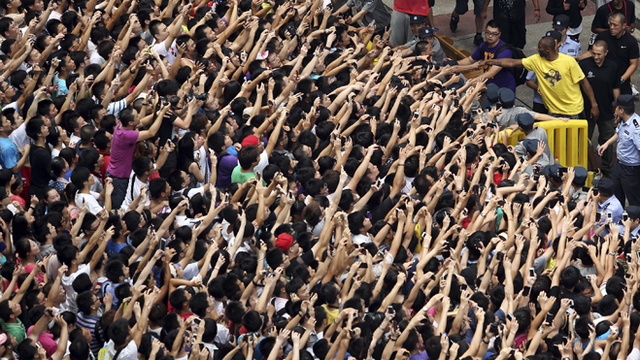
Outside the
arena, following a 100-95 Warriors win, Beijing briefly turns into bizzaro
Downtown LA. Kobe jerseys, T-shirts, hats, mouse pads, iPhone covers, bags,
scarves, and pretty much anything else that could possibly be merchandized are
being hawked. The subways are full of fans of all ages in Kobe jerseys. The NBA
may have held the game at a neutral venue, but with the Mamba on deck, the
Lakers were always going to be the home
team.
Such is the
impact in China of the cult of Kobe. While Bryant has collected championship
rings, All Star accolades, an MVP award, and legendary status back home in
America over the course of his 17-year-career, he has also been able to
cultivate a unique following in the world’s most populous country. In China,
Kobe has developed into more than a man. He’s a myth. He’s spoken of in
reverence, and alluded to like a demi-god.
For a
country that has long thrived on the socialist philosophies of ‘we’ rather than
‘I’, China have a complicated history with personality cults, starting with the Supreme Commander himself. With changing times, a new
type of celebrity obsession has hit the Chinese youth, and everyone from
Rihanna to Justin Bieber to David Beckham draw colossal numbers of screaming
fans with their every move.
Basketball
has long been one of the favourite sports, and with the success of Yao Ming,
the NBA has become by far the most popular sporting league in China. Yao is
considered one of the country’s greatest ambassadors and is a role model for
many, but now that he’s settled back in China, his presence isn’t as novel as
it once used to be. Amongst current NBA-ers, LeBron James has dominated Chinese social media (renren, sina weibo, tencent weibo,
youko, etc.) more than any other Western celebrity over the past year. Tracy
McGrady attracted big crowds in every Chinese small town where he CBA team
visited last season, and was even welcomed by 2,000 screaming fans when he first landed at the Qingdao
airport. Derrick Rose, Kevin Durant, and of course, Jeremy Lin are a big deal here, too.
But nothing
matches the strange and wonderful veneration of Kobe. It started in the last
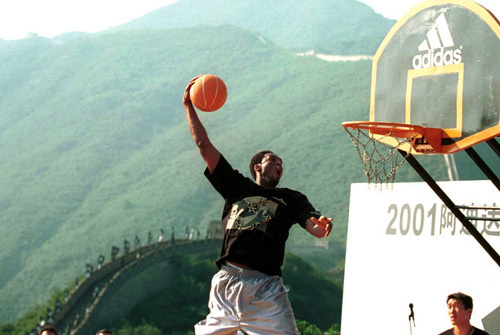
90s, when a young Kobe began to host basketball camps around China. The
mainstream popularity of the NBA in the country synchronized with the Shaq-Kobe
three-peat, and by the time Yao became an NBA mainstay superstar, Kobe was
hitting game-winners on the regular and scoring in the 40s, 50s, 60s, and 80s.
By the time
he had won his fifth championship, the legend of Kobe in China was sealed.
Mamba was visiting the country nearly every off-season and visiting smaller
off-beat towns to get closer to more and more hardcore fans. He was part of the
US Olympic Basketball squad that won the 2008 gold medal in Beijing, and in
front of the crowd at the same MasterCard center, it was Kobe that memorably stepped up as the brightest star in a team
full of superstars to defeat Spain in the Final. On the side, he became
involved with charity projects and set up the Kobe Bryant China Fund, which
ended up raising millions to help those affected by natural disasters in the
country.
Judy Seto,
a trusted physical therapist of Bryant, reveals many of the strangest
stories about
Kobe’s popularity in China, and she adds that, “He’s made an effort to
cultivate that relationship [with China] every year. And it’s not just, ‘Let me
make this stop at this store.’ It’s, ‘Let me hold this clinic to work with some
of the kids and spend some time with them. Let me understand what this city has
in terms of culture or the main manufacturing or what’s the main draw.’”
Before the
Lakers-Warriors exhibition in Beijing, NBA Commissioner David Stern tried to
explain the Kobe phenomenon in China. “Well first of all, he’s playing
for the Lakers,” Stern said, “He’s been playing for a very long time, as
viewership and interest in our game has grown dramatically. And he has come to
this country quite often and understands what it is to cultivate a fan base
which totally understands that he has, shall I say, the heart of a champion.
His Chinese fans totally expect him, beyond all odds, to make a full recovery
from his injury because they have come to have enormous confidence in his
ability and his determination. I think that’s because he’s shown the ability
and determination at different stages of his career to win, to play at his
highest and to elevate his teammates.”
Bryant, however, slightly deflects the answer from himself
when speaking on his own popularity. "If you go back to the States, fans
have gone through this progression of hero marketing,” he told
Mike Bresnahan of LA Times, “They kind of lived through that in the '80s
with Michael [Jordan] and Magic [Johnson] and having the fanaticism
of fans. With so many [U.S.] media outlets, I think it's evolved to something
beyond that, where we're a little bit more desensitized by celebrities. Out here,
not so much. It's something that's kind of relatively new.”
In recent years, the two championships for the Miami Heat,
coupled with the forgettable years for the Lakers, have boosted LeBron’s
popularity amongst the newer, younger NBA fans, many of whom are more active on
Chinese social media. China likes winners, and yet, despite the fact that
Kobe’s last meaningful playoff game came over three years ago, fans have
remained loyal to him. Regardless of the problems of the present – the injury,
the age, and the declining roster – the Myth of Kobe is secured. “China likes
him because he is always working so hard, and he always wants to win,”
describes Sun Yimeng, an editor and writer for SLAM China and one of the most
famous Kobe fans in China, “I have seen grown men crying in his
presence because he inspires them so much.” She also tells the story of a fan –
one of many – who bought a Mercedes-Benz ‘Smart Car’ simply to put his name
into a lottery of those (in the thousands) with a chance to meet Kobe. “Luckily
for him,” she adds, “He won!”
The love for Kobe reached its peak in the player’s darkest
on-court moment. When Kobe went down with the Achilles injury to the Warriors
at the end of last season, Weibo – China’s version of Twitter – erupted
with good-will messages for Bryant. Kobe, who has over 2.3 million
followers on Weibo, posted a photograph of himself preparing for surgery on his
account. Within 24 hours, the photo had accumulated 45,000 comments and
forwarded over 70,000 times. ‘Pray for Kobe’ and ‘God Bless Kobe’ became
amongst the most popular trending topics in the country, and fans didn’t hold
back with their emotional outpouring of their favourite Kobe memories, their
wishes, and their determination to believe that Bryant would be back to his
best again. (Jason Q. Ng compiled a fascinating, long
list of Weibo comments for Kobe post his injury).
Outside the borders of Mainland China, down to Hong Kong,
eastwards to Taiwan, and then around in other Asian nations who are slowly
falling deeper in love with the NBA, the Kobe mania continues. In Taiwan, Kobe
is in commercials with
the country’s most popular entertainer Jay Chou. In the Philippines, the crowd
at the recent Rockets-Pacers exhibition game chanted
Kobe’s name at his former Laker teammate Dwight Howard. In India, where
basketball is still a minor sport, fans on Facebook ran a
petition to try and get Kobe to visit the country.
While Kobe – and LeBron, too – are the dominant NBA
personalities amongst most of China and Asia in the present, there is a special
place still saved for the man who was once bigger than the sport of basketball
itself. In China, legions of followers still swear by
the gospel of Michael Jordan, and to many of Asia, interest in the NBA is still
stuck in a 90s time-warp. According to the Financial Review, back in 1992
during MJ’s heyday, a survey taken by students in China revealed that Jordan was considered the most
influential person of the twentieth century.
Jordan made way for Iverson, Iverson for Yao and McGrady,
and then, to the new era of LeBron, with Rose and Durant and others. And then
there’s Kobe, who has survived all the post-Jordan eras and maintained his
popularity and relevance in world basketball.
“Kobe! Kobe! Kobe!”
The venue now is Shanghai, and it’s the second of two China
preseason games on October 18th at the Mercedes-Benz Arena. A loud
cheer greets Shanghai’s proudest son – Yao Ming – who waved at the fans in
attendance. An even louder cheer was saved for Kobe Bryant, who via
Philadelphia to Italy to Los Angeles become a legend to a country of hundreds
of millions of basketball fans.
Bryant didn’t play in either game in China. The Lakers lost
both games. But it didn’t matter. Fans screamed. Fans cried. He was mobbed
everywhere he went. Some got to see him in person. Some saw on him on the
jumbotron. Some watched him with pride on the Television, excited that he was
back in their country. And others sent him messages online.
The chants never stopped. And the cult of Kobe continued.