Showing posts with label china. Show all posts

February 4, 2020

Hoopdarshan Episode 88: Kobe Bryant + India's internationally-acclaimed FIBA official, Norman Isaac


We start off this episode with a lengthy discussion on life, legacy, and untimely death of the late, great Kobe Bryant.

In episode 88 of Hoopdarshan, we welcome Norman Isaac, India's own FIBA Technical Delegate and Commissioner who has officiated high-level international matches for decades, including the recent FIBA World Cup Final in Beijing. Isaac speaks to co-hosts Kaushik Lakshman and Karan Madhok about working a big event like the World Cup, the evolution of international basketball officiating over the years, how to improve the status of Indian basketball, and his own playing days for Andhra Pradesh.

In 2017, Isaac became the first-ever Indian to be named a FIBA Technical Delegate. He has served as FIBA Commissioner in numerous international basketball events, including the World Cup, FIBA Qualifiers and the FIBA Asia Cup. Originally from Hyderabad, he has been a referee for nearly 20 years and was appointment as chairman of BFI’s Technical Commission in 2015.


Hoopdarshan is the truest voice of Indian basketball, and since we're such hopeless fans of the game, it will become the voice of everything basketball related we love, from the NBA to international hoops, too. On every episode of Hoopdarshan, we will be inviting a special guest to interview or chat to about a variety of topics. With expert insight from some of the brightest and most-involved people in the world of Indian basketball, we hope to bring this conversation to a many more interested fans, players, and followers of the game.

Make sure to follow Hoopdarshan on Soundcloud or search for 'Hoopdarshan' on the iTunes Store! Auto-sync Hoopdarshan to your preferred podcast app NOW!

Hoopdarshan can be found on...


December 8, 2019

The Thin Red Line


A tweet of support to Hong Kong protestors by an NBA manager endangers the league’s following in China and exposes its own double standards.

This essay was originally published in the November 2019 edition (Volume 9, Issue 1) of Fountain Ink Magazine. You can find the piece online here - first published on Nov 11, 2019.

Adam Silver, commissioner of the most powerful and influential basketball league in the world, sat in the middle of the dais in a large press room at Mumbai’s NSCI Dome. He was flanked by Vivek Ranadive and Herb Simon, owners of the two teams who were set to play the historic first-ever NBA pre-season game in India. It was the setting of a monumental step forward for basketball in India.

And for the business of basketball, too. Before the first of the two games between the Sacramento Kings and Indiana Pacers, Silver and Co. announced that the North-American National Basketball Association (NBA) had been considering the launch of an affiliate basketball league in India. Silver mentioned that there were millions of young players, part of the NBA’s India grassroots programme with the Reliance Foundation. He added that hundreds of millions were now watching NBA games live on Indian TV.

That night’s game was a success, a thrilling overtime win for the Pacers, cheered on by 35,000 Indian kids in attendance from the NBA’s junior programme. The league, which has taken advantage of the worldwide popularity of basketball to become a global brand name, had scored in its longest shot yet to grab a stake in the Indian market.

Without a professional league, national success, or a profitable career path, basketball remains a niche sport in India, far from the eyes of the mainstream. But the NBA hasn’t been deterred, and they have continued to believe in India’s potential.

Part of this optimism is based on India having the second-largest population on Earth. China, the country that stands at number one, is also the world’s biggest pool of NBA and basketball fans, with the numbers topping off over 300 million. China has a far more mature basketball market, its own pro league, better infrastructure, and stars like Yao Ming that popularised the NBA in its backyard. In China, pre-season games like those that took place in India have been held every year since 2004.

India, of course, lags far behind. But the numbers and growing consumer culture is enough to encourage any foreign investors that, even a small percentage of fans from India’s billion-plus population would be a significant addition to the NBA’s global bottom line.

From lucrative shoe deals to broadcast partnerships to just about everything else around the game, China has been a goldmine for the league for decades. NBA players are worshipped in China, and, in return, the NBA gives back with special interest to its loyal fan base in a variety of ways.

But then, Daryl Morey tweeted.

***

On October 4, 2019, the same day Silver, Ranadive, and Simon sat at a press conference in Mumbai, Houston Rockets General Manager Daryl Morey—one of the most respected minds in the business—tweeted an image with the words “Fight for Freedom / Stand with Hong Kong”.

He deleted that tweet. But the damage was done.

Tensions between “mainland” China and Hong Kong—a special administrative region—have been simmering for decades. But this year these tensions escalated to fever pitch, with protests in Hong Kong all summer. They began as a movement against the Fugitive Offenders amendment bill, worrying citizens that it could be used to potentially subject them to mainland Chinese jurisdiction. The relationship between the two states is complicated, as one believes in its autonomy (Hong Kong) and the other in its sovereignty over the entire territory (China).

The protests turned violent and caught the attention of Human Rights watchdogs around the world. In the ongoing trade war between the US and Chinese governments, China’s actions in Hong Kong have come under even higher scrutiny.

So, of course, the Chinese were unhappy about Morey’s tweet, especially considering that they looked at the NBA—and all its affiliates—as friends of their nation. In response, Morey received a planned, cohesive online attack. Based on a review of nearly 170,000 tweets by the Wall Street Journal and more expert information, Morey received angry responses from a number of pro-China Twitter troll accounts, many of them bots or created solely for the function of harassing the GM. Several of those tweets included the phrase “NSML”, a Chinese acronym for “your mother is dead”.

Morey’s own ownership group with the Rockets immediately distanced themselves from their general manager’s message. The NBA’s commissioner claimed that China even requested that Morey be fired from his job.

What complicates Morey’s personal involvement even further is that his employers—the Rockets—have been historically the most popular NBA team in China. They drafted and fielded Chinese legend Yao through the course of his Hall of Fame career and have had a large number of sponsorships and partnerships with Chinese companies.

The NBA’s first reaction was to douse the fire. After Mumbai, commissioner Silver flew to Tokyo for the NBA Japan Games, from where he put out an apology for offending the Chinese. The Rockets’ biggest superstar James Harden offered his own extended apology over his own GM’s tweet. Joseph Tsai, the new Chinese-origin (born in Taiwan) owner of NBA franchise Brooklyn Nets, reprimanded Morey in an open letter and supported China’s party line.

Back in the States, the NBA’s considerably “weak” apology to China became a firebrand issue for political conservatives. The NBA and its players had historically held a liberal stance on politics and opposed the US President. Silver hadn’t held back the league’s biggest names from speaking about the political issues they believed in.

Their collective distancing from Morey seemed like a hypocritical turn to appease a nation that had been so lucrative for their business. Despite being vocal about human rights at home, the league was blamed for choosing money over human rights issues abroad. President Donald Trump of course got into the action, singling outspoken NBA coaches Steve Kerr and Gregg Popovich for their distance from the China issue. “I watch the way that Kerr, Popovich, and some of the others were pandering to China and yet to our own country, they don’t—it’s like they don’t respect it.”

Right after his stopover in Japan, Silver was actually on a scheduled trip to China for this year’s NBA China Games in Shanghai and Shenzhen. The two games featured the Los Angeles Lakers—led by the NBA’s biggest name LeBron James—and the Brooklyn Nets, the team owned by Tsai. In a warning shot to the NBA, China cancelled the local broadcast of these games as a punishment for Morey’s tweet.

To keep its players from making inflammatory statements, the NBA cancelled all media interaction during the two games in China. Back in the United States, journalists were stopped from asking the China question and fans supporting Hong Kong were told to leave NBA arenas.

The media blackout, and the bans, were strikingly similar to China’s operations over its own affairs. The NBA—a model of free speech and liberalism at home—had seemingly paid obeisance to China by sacrificing some of its own values.

A recent, ongoing case of the NBA supporting a player’s outspokenness has been that of the Celtics’ Swiss-born Turkish player Enes Kanter, who is a vocal critic of Turkey’s President Recep Erdogan. The criticism has brought him death threats, cost him contact with his family, and made him a pariah in his homeland. But the NBA has stood by the player, often to Turkey’s displeasure.

China, however, is a different and more financially-sensitive issue. Silver eventually clarified his previous statement by saying that he supported the rights of Morey (and others) to speak out about the causes they believed in.

But when the Lakers returned stateside from China and their media blackout was lifted, James was asked to speak about the issue, and he only dug himself and the league into a deeper hole: he called Morey misinformed about the Hong Kong issue—a fight for democratic rights—and complained about the inconvenience that Morey’s tweet had caused him.

James is one of the flagship athletes for Nike, and China is one of the biggest markets for the sports-apparel company. Next summer, James will hope to oversee the release of his movie Space Jam 2 in China under Warner Bros.These are major financial considerations for him. After establishing a reputation as one of the most-outspoken athletes for justice in his homeland, James, too, has been perceived as powerless in front of China’s financial might. It was his weakest performance since the 2011 NBA Finals.

A few days after James’ message, a group of around 200 Hong Kong citizens gathered together on basketball courts for a protest. They chanted “Thank You, Morey”. Some wore masks of a “Crying LeBron” meme and some burned James’ jerseys. “Students, they come out like every weekend,” said one protestor to The Guardian. “They’ve got tear gassed and then they got gun-shot, like every weekend. Police beating students and then innocent people, like every day. And then [James] just comes up with something [like] that. We just can’t accept that.”

This issue is not going to go away. China’s human rights violations and history of totalitarian control over its people isn’t a new story. But for the longest time, the NBA—and countless other organisations from Disney and Nike to Apple and General Motors—have looked the other way at the bad news to continue business relations.

After all, every nation is flawed, and every company has a dark side. There are injustices in the USA, in Britain, in South Africa, in Saudi Arabia, in India. And yet, for the sake of international trade and relations, nations and private institutions make concessions, turn a blind eye, continue business-as-usual.

But most of those other companies aren’t the NBA. On his HBO show “Last Week Tonight” last Sunday (blocked in China, of course), host John Oliver best summed up the dilemma: “The NBA can either have a commitment to free speech, or they can have guaranteed access to the Chinese market. But they cannot have both.”

***

For centuries, sport has served as a balm for the aches of society, a kind of necessary distraction for the public, a unifying force for those with different political, economic, and social backgrounds.

But try as it might, sport hasn’t been able to separate itself from politics, and often served as a giant loudspeaker for global political causes. The 1936 Olympics in Germany will mostly be remembered for American track-and-field athlete Jesse Owens’ remarkable rebuke to Adolf Hitler’s Aryan nationalism at the global stage. African-American athletes Tommie Smith and John Carlos clenched their fists in the Black Power salute at the medal ceremony at the 1968 Olympics in Mexico. Boxing legend Muhammad Ali became a symbol of the American civil rights struggle after refusing the Vietnam War draft in 1967. Football icon Diego Maradona scored two winning goals for Argentina against England at the 1986 FIFA World Cup, celebrated by Argentines as revenge for the Falklands War.

In recent years, the most discussed case in the relationship between sport and politics in North America has been that of American Football player Colin Kaepernick. To protest police brutality and racism in the USA, Kaepernick began to take a knee during the pre-game national anthems before National Football League (NFL) games. The stance led him to being blackballed by the NFL and he wasn’t given a chance to play professionally again.

Last year, Nike made Kaepernick the face of their social justice ad campaign, continuing their support for American athletes who have spoken up politically in recent years—much like LeBron James. James, famously, called Trump a “bum” on Twitter and stood by his right to not “shut up and dribble” in the face of attacks from American conservatives. It was that bold move that earned James the respect of so many in his country and abroad.

And that is why it was equally disappointing to many when James criticised Morey’s rights to express his solidarity for social justice abroad, for Hong Kong citizens against China.

In India, the intersection of politics and sport has almost always involved our two national obsessions of cricket and Pakistan. Cricket, the country’s favourite sport and true love; Pakistan, our national enemy, our border opposite. India and Pakistan have often looked upon each other as evil twins; but like twins, they also have intricate similarities, and in this case, are bound by their mutual passion for cricket.

Whether it’s General Zia attending an India-Pakistan match in Jaipur in 1987, India’s “Friendship” tour of Pakistan in 2004, or India threatening to boycott the 2019 World Cup game against Pakistan following the Pulwama suicide bombing, the international matches between these two nations have rarely been only about the sport itself.

But standing up for your country in the face of an outside “enemy” is easy—it’s much more difficult when one has to stand up for the country against the country’s own government, policies, or injustices. During the 2019 Cricket World Cup, Indian legend M. S. Dhoni donned wicket-keeping gloves with the insignia of the Indian army’s special forces to nationalistic praise from home. But would he—or someone of his status—make a gesture to protest India’s domestic social problems?
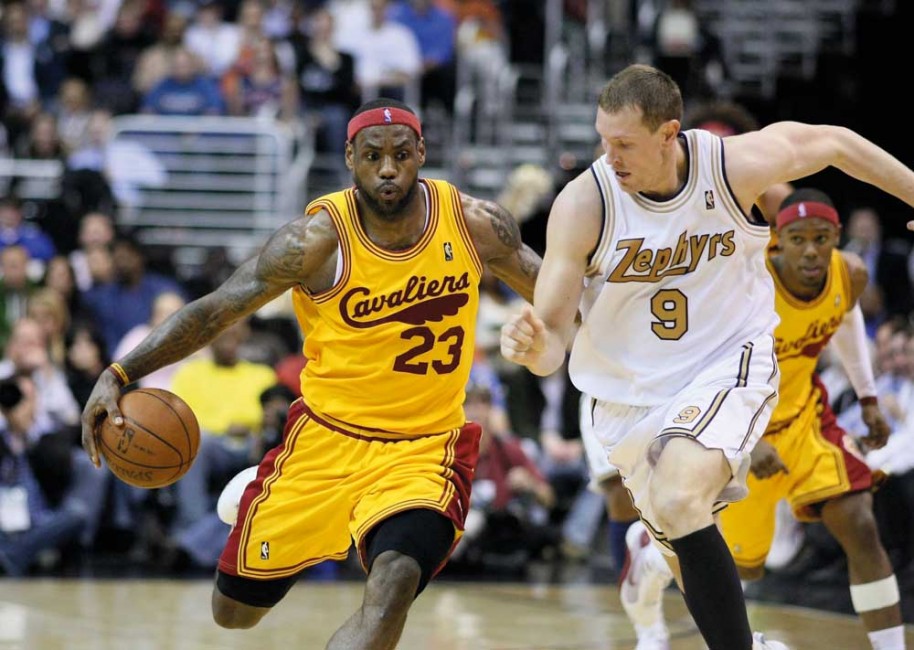
Historically, Indian athletes have steered clear of inflammatory political statements against their government, be it in relation to oppression of religion, caste, gender, language, or culture. Athletes are often at the frontline representing Indian nationalism: they wear the nation’s colours on their badges, salute the national anthem before a big game, and dedicate their performance to the country’s national pride.

Then, there’s the matter of economics, too. Big business has the power to crown world leaders or exile them. They also have the power of influencing the Indian public figures they sponsor to stick to the message for the lowest common denominator, to please all and offend none. This is a tricky business in India, a country with an astonishing variety of culture and thought. Our biggest celebrities—Bollywood stars or cricketers—find it safest and most-profitable to speak in the most all-encompassing terms: love this movie, love this sport, love this country.

There are no Kaepernicks.

For Indian athletes, international sport unites otherwise-divided Indians under the same flag, instilling a feeling of patriotism. But patriotism is only a step away from its toxic cousin, nationalism, and the guise of nationalism has allowed Indian athletes to pledge unquestioning loyalty to the country, to equate loving India to loving its flawed governments.

***

For the NBA, India isn’t China. It isn’t a make-or-break market, one which, if lost, would cost the league billions, make teams adjust their salary cap, or make a considerable scratch on endorsement opportunities for players.

India is also not at the level of China for the American public in terms of their international relationship. China is a trade foe and an economic superpower holding the USA’s largest foreign debt. More American companies conduct direct business with China and Hong Kong, and there is more direct concern among Americans about China’s actions within and outside the mainland.

But India is growing, with ambitions to be the next biggest thing. A few weeks before the NBA India Games, US-India relations took an unexpected new step. At a reception for Prime Minster Narendra Modi in Houston, Trump jokingly suggested in front of the thousands gathered that he could show up in Mumbai for the historic preseason games. A couple of world leaders had used the NBA’s moment to inflate each other.

Trump never made that last-minute visit, of course. But during the course of the second Kings-Pacers game in Mumbai, Modi tweeted about the NBA India games, noting that the matches would “set the court for greater linkages in sports” between India and the USA. Over 50 million Twitter followers got the message.

But, like China, India is in the midst of serious domestic turmoil, issues that threaten our democracy. The abrogation of Article 370 and the follow-up shut-down of communication in Kashmir, lockdown of minors, and overall treatment of minority communities have put the spotlight on Modi’s government and their own missteps.

The Kashmir situation along with the National Register of Citizens (NRC) issue, unchecked violence, and suppression of liberal voices have created a dictatorial atmosphere. Union Home Minister Amit Shah even argued that India should have a different standard of human rights than the West. It isn’t quite China communism—but it’s certainly inspired by it.

Back to the press conference before the first NBA game in India. Ranadive, another vocal champion for liberal causes in his adopted country, said to the media that he had spoken to Modi about infrastructure and basketball arenas in India.

Imagine if this event had happened after “Moreygate”. What if, at that moment, someone had asked Ranadive or Silver about their stance on Kashmir? About human rights violation in India under Modi’s watch? The NBA would likely deflect that question diplomatically, but the issue would persist.

Much of the NBA’s business in India is done in conjunction with and the sponsorship of Reliance Foundation, the charity arm of Reliance Industries Limited. The game on the night of the press conference was officially titled “NBA India Games for Reliance Foundation ESA [Education and Sports for All]”. Reliance and its chairman Mukesh Ambani—India’s richest individual—have close ties with the government. Any political turn by NBA in India would create further complications in this relationship. For the NBA, it would be too risky to lose the country’s most lucrative partnership.

***

The new NBA season began at the end of October, bringing the focus back on basketball itself. On stars like Kawhi Leonard, Stephen Curry, Giannis Antetokounmpo, James Harden, and LeBron James, too. Basketball, for the fans of the sport globally, took centre-stage again.

But even if the tensions between the NBA and China simmer down, it is unlikely that they will vanish. The two sides are star-crossed lovers with opposing ideals. China loves the NBA and its product; NBA loves China’s fan-base and financial potential. But with one tweet, the ideological fissures between the progressive league and the undemocratic government have been revealed and widened. There is no going back now.

It is, of course, grossly unfair to expect professionals who play and think about sports for a living to be the beacon on serious political world issues. But the NBA built its reputation as a league outspoken on issues outside the basketball court. So, even if the questions are completely out of bounds, many have looked upon the same players, coaches, and GMs to have strong opinions on foreign affairs like they have had on their domestic issues.

While it’s easy to point fingers at public figures in the NBA, the truth is that, in this complicated world where everyone relies on everyone else, we are all guilty of overlooking certain factors as and when they fit our convenience. We have all contributed and benefited from the domestic and international economy, even when we may disagree with certain domestic and international policies.

In the future, NBA could potentially have a problem with India, just like every corporation could have a problem with every nation. Is it right to support American products like NBA when the Trump administration is caging children at the borders? Is it wrong to use China-made mobile phones when the nation is suppressing the rights of their Uighur, Tibetan, and other minorities? Is it bad to go on day by day in India without calling out the atrocities of our own government in Kashmir?

With the announcements in India on the same day as Morey’s tweets, the NBA clearly envisions bigger things in the future for its presence in India. But, will the recent China controversy change things?

Morey’s tweet is only the tip of the iceberg, the root of a bigger problem. The NBA will have to come up with a consistent policy to support its ideals, and not allow China to force its own worldview upon the league. Corporations around the world will be watching closely for NBA’s response over the next few months: the influence of the billion-plus citizens of China—and a billion more from India—will depend on it.

August 31, 2019

Despite India's recent basketball ineptitude, FIBA rewarded BFI's K. Govindraj with the 2019 Asia President Award


At the eve of 2019 FIBA Men's Basketball World Cup, the International Basketball Federation honoured the best national federations from around the world in a glittering awards ceremony in Beijing, China, at the Sheraton Grand Beijing Dongcheng Hotel. According to FIBA's website, the ceremony was part of FIBA's XXI Congress. It "recognizes the most successful National Federations across a variety of awards."

The usual suspects walked home with the top honours. USA won for top rankings across the board. Other nations were honoured for tangible performances, like top rankings in junior levels, or in 3x3, or for featuring the most active 3x3 players, or for top social media presence, etc.

Last on the list of awards, however, was something that felt a little more subjective. The FIBA Presidents Award 2019, awarded to the leader of a National Federation from each continent. "This award," FIBA wrote, was"to recognize the work, commitment and positive impact on basketball made by each person and their National Federation during the past 5 years and was selected by FIBA President Horacio Muratore."

And for some inexplicable reason, the President Award for Asia went to... India's own K. Govindraj, President of the Basketball Federation of India (BFI).

From one angle, this is a matter of great pride for Indian basketball. We are fortunate - nay, honoured - to have a basketball president that has apparently had a better impact on the sport in the past five years than any other in the entire Asian continent - of all the other 44 nations. After a tussle in 2015 for leadership of the BFI, Govindraj's faction was recognised by FIBA over their opponents. So, Govindraj's honour was technically granted for less than the five-year stretch.

A stretch that included basketball not even being recognised by India's own government, a stretch that included the worst losing streak in recent history of India's men's basketball team, a stretch that included Indian players being unfairly banned by the federation, of an inexplicable "clerical error" that kept our top players out of important FIBA qualifiers, of embarrassing losses in those same qualifiers, of the federation creating obstacles for Indian players to chase other professional opportunities, of the BFI promising professional leagues and not delivering them, of poor public relations, of a website hardly updated, of social media accounts mostly barren, of the growth of a sport stunted.

The pros: BFI has made Bengaluru - their headquarter city - the de-facto home of most of FIBA Asia's Women's championships since 2017, including the 2017 FIBA Asia Championship for Women, the 2017 FIBA U16 Asia Championship for Women, the 2018 FIBA U18 Asia Championship for Women, and the upcoming 2019 FIBA Asia Championship for Women. This is awesome.

The cons: basically, everything else.

Govindraj's recent award came on the heels of a couple other honours from FIBA since 2017, including being appointed a member of the FIBA Competitions Commission and being elected as a member of the Central Board of FIBA Asia. In an article published earlier today on Ekalavyas, Gopalakrishnan R. succinctly pointed out how Govindraj's rise in ranks in FIBA has coincided with India's men's team's nosedive in performance. The on-court failures have been directly related to all the other chaos and mismanagement ailing the federation in Govindraj's tenure.

But FIBA, for some reason, continue to recognise him for his "work, commitment, and positive impact on basketball" in India, more than anyone else in the entire continent. Is it a case of FIBA judging solely by the surface-level events organisation, ignoring all of the rot beneath? Or (and more likely), is it because of Govindraj's connections and friendships with influential people in FIBA, helping his cause overseas, even though most basketball followers in the country have seen the federation fail the sport again and again over the past few years?

It was in July 2014, a little over five years ago, that India had arguably its greatest modern basketball moment, defeating Asia's finest squad - China - on their home floor in Wuhan at the [formerly-known] FIBA Asia Cup. This victory followed a couple more big international moments before the big dip: the political struggle for the federation at home, the disillusionment of star players with the federation, the bans, the losses. Over the past few years, the best Indian basketball stories - for Men, at least - have come despite the federation, of players rising to international leagues or making it to colleges abroad via other means.

And yet, Govindraj - and Indian basketball - have their honour. It is undeserved. Maybe the best-case scenario now is that, perhaps, it can be used retroactively, to urge FIBA to expect real progress from India, and for Govindraj to actually deliver it. Or at least, I hope so.

August 25, 2019

Japan (Men) and Australia (Women) win FIBA 3x3 U18 Asia Cup 2019 in Malaysia; Recap with India's results


The 5th edition of FIBA 3x3 U18 Asia Cup was held at the Gem-In Mall in Cyberjaya, Malaysia, from August 22-24. On the final day on Saturday, Japan's Men and Australia's Women emerged as the best of the best to claim the gold. India also participated: India's women's team made the Quarter-Finals and finished at an encouraging 7th place; India's Men fell in the Qualifying Round to finish 13th.

Japan were dominant throughout the tournament, and finished with an easy win in the Men's final, 21-13.

In the women's category, Australia had a perfect 5-0 record and dominated Japan in the final with a decisive 21-10 victory.

Japan's Seishin Yokochi was named Men's MVP after a game-high 9 points in the final. The women's MVP was Australia's Shyla Heal, who hit a game-high 8 points in the final.

Philippines won the women's bronze medal with a 14-11 win over China. The men's bronze went to China, who beat Australia 21-17.

India fielded a talented squad for the women's team, featuring experienced youngster Pushpa Senthil Kumar, Khushi Dongre, Sreekala Rani, and rising star Harsimran Kaur. India made it past the qualifying round with a dominant first win over Maldives (21-4) and a couple of impressive close finishes to defeat Thailand (17-13) and Chinese Taipei (17-15).

The squad moved on to Pool C of the main tournament, alongside Turkmenistan and New Zealand. India decimated Turkmenistan in an impressive 21-4 showing, but lost in a nail-biter to NZ, 16-14.

India's run came to an end in the Quarter-Final, where they lost to a stacked China squad, 22-3. They finished the tournament at 7th place.

India's men's team featured a group of experienced young players, led by Princepal Singh, Harshwardhan Tomar, Rajveer Singh Bhati, and Rajeev Kumar. India were in Qualifying Draw B with Maldives, Chinese Taipei, and Australia. India won their first two games, beating Maldives (20-5) and Chinese Taipei (21-16). But their journey concluded to the mighty Australians, who defeated them 19-15.

Final Standings

Men
  • 1. Japan
  • 2. Kazakhstan
  • 3. Australia
  • 4. China
  • 5. Philippines

Women
  • 1. Australia
  • 2. Japan
  • 3. Philippines
  • 4. China
  • 5. New Zealand

Teams of the Tournament

Men
  • Seishin Yokochi (Japan) - MVP
  • Daniel Foster (Australia)
  • Arsentiy Kushniruk (Kazakhstan)

Women
  • Shyla Heal (Australia) - MVP
  • Saori Yasue (Japan)
  • Kristine Cayabyab (Philippines)

May 26, 2019

2019 FIBA Asia 3x3: Australia win double golds; India's teams finish outside top-12


The 4th edition of the FIBA 3x3 Asia Cup featured a record 40 teams (18 in the women's and 22 in the men's category) playing fast-paced, competitive basketball in the heart of Changsha, China. And when the dust settled it was the dominating newcomers from the Oceania region - Australia - that celebrated the spoils. With dominant displays throughout the knockout stage on Sunday, Australia's Men and Women both emerged as 2019 FIBA Asia 3x3 champions.

Held from May 22-26, the quickfire tournament featured most of the top Asian countries. Australia's Men, who also won the tournament's previous iteration in 2017, took the gold on Sunday with a 21-9 victory over Mongolia in a rematch of the last final. Tim Coenraad scored 8 points in the final including the game-winner for the Australians.

Australia's Women beat Kazakhstan 20-9 to win gold in their division on Sunday.

Hosts China's Men finished third after defeating Kazakhstan in the bronze medal game, 14-11. The women's bronze went to Japan, who won 21-14.

India also sent four-member squads to the 3x3 Asia Cup earlier this week, for both the men's and the women's divisions. Both teams were placed in the Qualifying Draw, meaning that they had to finish in the top of their group after the first two days of qualifying games to have a chance for qualification in the main Pool Stage.

Captained by Raspreet Sidhu, India's Women's team started the tournament in the Qualifying Draw B with Malaysia, Maldives, and Thailand. On the opening day, India defeated Malaysia in a nailbiter, 16-15. On Day 2, they scored a 18-12 victory over Maldives. But they failed to top their group after losing to Thailand in their final game, 21-15.

India Women finished at 14th place (out of 18).

India's Men's squad had a similar run in their two-day appearance at Changsha. Led by returning star guard Vishesh Bhriguvanshi, India were in Men's Qualifying Draw B with South Korea, Vanuatu, and and Malaysia. Like the women, India's Men's team also started their first day with a win over Malaysia, 21-13. On Day 2, they cruised past Vanuatu 21-10. But their journey ended with a heartbreaking close loss to South Korea 20-19.

India Men finished at 13th place (out of 22).

Team of the Tournament

Men
  • Tom Wright (Australia) - MVP
  • Delgernyam Davaasambuu (Mongolia)
  • Yi Zheng (China)

Women
  • Rebecca Cole (Australia) - MVP
  • Nadezhda Kondrakova (Kazakhstan)
  • Minami Iju (Japan)

Final Standings

Men
  • 1. Australia
  • 2. Mongolia
  • 3. China
  • 4. Kazakhstan
  • 5. Jordan

Women
  • 1. Australia
  • 2. Kazakhstan
  • 3. Japan
  • 4. Mongolia
  • 5. Turkmenistan


May 19, 2019

Team India set for 2019 FIBA 3x3 Asia Cup in Changsha, China: Rosters, Schedule, and Preview


From new domestic leagues, successful grassroots programmes, and individual athletes making a name for themselves internationally, 3x3 Basketball has caught on like wildfire in India over the past few years. But when it came to participating in the continent's biggest 3x3 bonanza last year, Team India was marked 'absent'.

Now, they get to rectify their absence and make a comeback to the tournament in style.

The Basketball Federation of India (BFI) has announced four-member squads for India's senior men and women's squads, ready to take part in the 2019 FIBA 3x3 Asia Cup in Changsha, China, from May 22-26, 2019. The teams will be captained by Vishesh Bhriguvanshi and Raspreet Sidhu, and led by the Serbian coaching duo of Veselin Matic and Zoran Visic. Both Indian teams are currently in the Qualifying Draws and will have to win their first few games to qualify for the proper group stage.

India's Women won the first-ever instance of this tournament back in China in 2013. Last year, India did not participate, but two teams from Oceanis took home the golds, taking part in the Asian fray for the first time: Australia (Men) and New Zealand (Women). Both teams will be threats again in the tournament this year, along with the hosts China. Mongolia and Japan also finished in the top three of the Men's tournament last year and should hope to contend this time around, too.

Team India Rosters for 2019 FIBA 3x3 Asia Cup

Men
  • Vishesh Bhriguvanshi - captain
  • Arshpreet Singh Bhullar
  • Akilan Pari
  • Yadwinder Singh

Women
  • Raspreet Sidhu - captain
  • Bhandavya Hemmige Mahesha
  • Sreekala Rani
  • Shireen Limaye

For the Men's team, Bhriguvanshi will be looking to make up for lost time after spending much of the last two years rehabbing an ACL injury. He is India's best perimeter player, and has good understanding with the experienced forward Yadwinder Singh. Serbian Coach Veselin Matic only came to India a week ago to helm the men's basketball programme, and this will be his first international test. Matic's Serbian counterpart Zoran Visic will be the head coach of the women's team, and experienced Delhi baller Raspreet Sidhu will be expected to carry much of the squad's scoring load.

Groups

Men
  • Pool A: Japan, Turkmenistan, Jordan
  • Pool B: China, New Zealand, Qualifying Draw A 1
  • Pool C: Mongolia, Australia, Qualifying Draw B 1
  • Pool D: Indonesia, Kazakhstan, Qualifying Draw C 1
  • Qualifying Draw A: Qatar, Philippines, Iran, Samoa, Thailand
  • Qualifying Draw B: South Korea, India, Malaysia, Vanuatu
  • Qualifying Draw C: Kyrgyzstan, Sri Lanka, Chinese Taipei, Vietnam

Women
  • Pool A: China, Australia, New Zealand
  • Pool B: Mongolia, Kazakhstan, Kyrgyzstan
  • Pool C: Japan, Sri Lanka Qualifying Draw A 1
  • Pool D: Iran, Turkmenistan, Qualifying Draw B 2
  • Qualifying Draw A: Philippines, Chinese Taipei, Vanuatu, Samoa
  • Qualifying Draw B: Malaysia, Maldives, Thailand, India

India's schedule in the Qualifying Draw - all timings IST

Men
  • May 22, 2019 - India vs. Malaysia - 11:30 AM
  • May 23, 2019 - India vs. Vanuatu - 10:30 AM
  • May 23, 2019 - South Korea vs. India - 12:20 PM

Women
  • May 22, 2019 - Malaysia vs. India - 12:40 PM
  • May 23, 2019 - Maldives vs. India - 06:10 AM
  • May 23, 2019 - India vs. Thailand - 07:40 AM

India will have to win their qualifying groups to have a chance for qualification. The men's team should be able to win their first two games but will face a tougher competition against South Korea. For the women, both Malaysia and Thailand will provide stiff challenge for India to finish at top.

If India win their groups, the Men's team will join Pool C with two podium finishers from last year, Mongolia and Australia. The women's team qualification would place them in women's Pool D with Iran and Turkmenistan.

November 4, 2018

China win 5th consecutive FIBA Asia U18 Women's title in Bengaluru; Undefeated India win Division B!


It was a tournament that repeated histories. For the third consecutive time, a major women's FIBA Asia tournament was held in Bengaluru, India. For the fifth straight time, China's U18 team raced to grab the the gold medals. And for the third time in various women's FIBA Asia events, India - starting in Division B - played a perfect tournament to win promotion to Division A.

The 2018 FIBA Asia U18 Championship for Women was held in Bengaluru, India, from October 28 - November 3, with games held at the city's Sree Kanteerava Stadium and the Koramangala Indoor Stadium. 16 of the top teams in the Asia and Oceania took part, divided into higher (Division A) and lower (Division B) sections. This was the third consecutive FIBA Asia Women's tournament to be held in Bengaluru, after last year's FIBA Asia Women's Cup and FIBA Asia U16 Championship for Women.

No matter the location, the team in-charge of proceedings was yet again China. China won their fifth consecutive FIBA Asia U18 Women's title win a win over their rivals Japan in the final on Saturday, 89-76. After a tight first half where both teams were tied at 38-each, China opened the third period with a 24-12 run that proved to be the difference. They held on to their lead in a high-scoring fourth to secure the victory. Rising Chinese basketball star Yuan Li scored 28 points, 8 rebounds, and 8 assists in the final, while Zhuo Ya Fang added 17. Chinatsu Umeki (20) and Layla Takehara (18) led the way for Japan in the loss.

Oceania's finest Australia won the third-place game on Saturday against Korea to secure the bronze medal. After leading just 54-49 at the end of the third quarter, Australia finished in style to run away with a 75-58 triumph. Duke University's Miela Goodchild (21) and rising star Nnenna Agnes Emma-Nnopu (17) led the way for Australia. Korea were led with 17-points a piece by Jihyun Park and Haeran Lee.

The top four teams - China, Japan, Australia, and Korea - qualified for 2018 FIBA U19 Women's World Cup.

Like they did in the previous two age division events in Bengaluru, hosts India entered this tournament in Division B. Once again, the man at the helm of the squad was Zoran Visic, the Serbian coach who has been managing India's women's basketball for the past few years at all levels. Despite home familiarity, however, India had reason for caution, missing several of their top players and fielding a captain - Pushpa Senthil Kumar - who was injured in the run-up to the tournament.

India were in Group A of Division B, along with Iran, Guam, and Singapore, and once the tournament got underway, they showed their class to devastate all opponents.

India's first game was probably their most nervous affair, against Iran. Leading 46-38 before the beginning of the final quarter, India made several costly errors and allowed Iran to come all the way back. Fortunately, a couple of smart plays in the last few minutes helped India hold their nerve and survive for a 73-65 win. Sreekala Rani led India with 19 while Iran's best player was Fatemeh Aghazadegan Ghazvini, who scored a game-high 22 points.

Once they got the first-game jitters out of the way, India were ruthless in their next contest, against the inexperienced Guam. Srishti Suren had 19 points and 9 rebounds to lead six players in double-digits for India in the 107-42 victory.

It was more of the same in India's final group stage game against Singapore. India started off with a 20-3 first quarter run that immediately deflated their opponents. Led by Gulabsha Ali's 21 off the bench, India ran away to a 79-49 win to top their group.

In the Division B semi-final, India were matched up against Group B runners-up Hong Kong. Once again, India looked confident, and this time, used a defensively throttling third quarter run (17-2) to shut down their opponents. Harshitha Kelttira Bopaiah was immense with 18 points and 16 rebounds to help India win, 83-38.

India faced a familiar foe - Kazakhstan - in the final, in what was supposed to be a closer matchup. But right from the start, Visic's squad ensured that they wouldn't allow any space for mistakes. India led 32-18 after the first half and pushed the lead to 54-30 after three quarters. The final score read 68-45 as India celebrated their Division B victory. Bopaiah, who definitely emerged as the team's knockout stage MVP, finished with 20 points and 13 rebounds in the victory.

India finished the tournament a perfect 5-0, winning each game with an average margin of 34.2 points. The victory ensured that India will be promoted to Division A when the next iteration of this tournament comes around in two more years.

India and Visic have a lot to be proud of after this tournament, particularly the impressive performances by the Bopaiah, who led the team in both scoring (14.8 ppg) and rebounds (11.2 rpg). Point guard Dharshani Thirunavukkarasu showed maturity beyond her years in shepherding the squad and averaging 10.8 points and 4 assists per game. Other consistent performers for the team included Srishti Suren and Ishwarya Janardhanan, who led the squad in minutes played and assists (6.0 apg).

This victory again highlighted the strange space occupied by India's Women's basketball: too good for Division B; too terrible for Division A. Hopefully, all three promoted squads (Seniors, U16, U18) can find Division A success in the next tournaments.

FIBA Asia U18 Championship for Women - Final Standings
  • 1. China
  • 2. Japan
  • 3. Australia
  • 4. Korea

October 28, 2018

India hope to defend home court at 2018 FIBA U18 Women's Asia Championship: Roster, Schedule, and Preview


Over the past year or so, Bengaluru has been a sort of lucky charm for India's Women's basketball. Last year, both India's Senior and U16 Women's squads played in their respective FIBA Asia tournaments hosted in the city. And each time - the seniors in July and the Youth players in October - India started in the lower Division B and won all of their matchups to earn promotion to Division A.

Now, the U18 squad find themselves in a similar predicament. Bengaluru. Division B. A FIBA Asia Championship. Even the head coach - Zoran Visic - is the same. And India will be hoping that the culmination of these factors will yield another positive result, another promotion, and finally produce some good news after a cold, barren period in Indian basketball.

192 of Asia and Oceania's finest junior women cagers, across 16 teams, are set to take centre stage in the 2018 FIBA U18 Women's Asia Championship in Bengaluru from October 28 to November 3. The teams are divided into the higher Division A and the lower Division B. The former teams - plus India - will play their games in the showcase Sree Kanteerava Stadium in the city, while the rest of Division B will be at the Koramangala Indoor Stadium.

All eyes will be on China at the top, who have won four straight U18 FIBA Asia Women's titles and are aiming for a five-peat. This team around, however, they will have stiff challenge from Oceania's entrants Australia and New Zealand. Australia will definitely be favourites as they feature a similar squad to the won that won the U17 FIBA World Championship. Other teams to watch will include Japan and Korea, too.

Participating Teams

Division A
  • Group A: Australia, Korea, Chinese Taipei, Indonesia.
  • Group B: China, Japan, New Zealand, Malaysia.

Division B
  • Group A: India, Singapore, Guam, Iran.
  • Group B: Hong Kong, Kazakhstan, Syria, Samoa.

Led by Zoran Visic, India have reason for caution even as hosts in their lower division. The team is missing two of its best players to injury, Vaishnavi Yadav and Sanjana Ramesh. Additionally, the captain of the current team, Pushpa Senthil Kumar, is also recovering from injury and will likely be a game-time decision for India's opening match. India will be hoping that a healthy Pushpa, along with other young players will international experience like Sreekala Rani, Sushantika Chakravortty, and Ann Mary Zachariah will be able to lift the team to promotion.

India's Roster
  • Arya Achuta Sreeramaneni
  • Sakshi Sharma
  • Dharshini Thirunavukkarasu
  • Harshitha Kelttira Bopaiah
  • Pushpa Senthil Kumar - captain
  • Srishti Suren
  • Ishwarya Janardhanan
  • Sreekala Rani
  • Gulabsha Ali
  • Ann Mary Zachariah
  • Anumaria Chenganamattathil
  • Sushantika Chakravortty
  • Head Coach: Zoran Visic
  • Assistant Coach: Thankachan Mulackal Chacko
  • Assistant Coach: Priyanka Bhandari

Even with all the injuries, home court and recent experience of a similar U16 team should make India favourites in the division. India were in Division A at the 2016 version of this championship and ended winless to be relegated. Visic will hope that his influence can help a bounce back. However, India will have difficulty preparing for their opponents, featuring a little-seen Iran squad, newcomers Guam, and Singapore in their group.

India's Preliminary Round Schedule - all timings IST
  • October 28 - India vs. Iran - 8 PM
  • October 29 - Guam vs. India - 8 PM
  • October 30 - India vs. Singapore - 8 PM

If India are able to get through this group (and ideally, it should be easy for them to do so), their biggest threat to winning the division will probably come through from a strong Kazakhstan squad in Group B. On Friday, the Basketball Federation of India (BFI) announced a cash prize of ₹10 lakh for the team if it finishes atop Division B.

The top four teams from Division A will grab the spots for the 2019 FIBA U19 Women's World Cup. All Division A games and India games will be live streamed on FIBA’s social media channels. The BFI has announced free entry to the Sree Kanteerava and the Koramangala stadiums for the group stage!

October 4, 2018

Eight Indian coaches selected to attend NBA China Games in Shanghai and Shenzhen


The 2018 NBA preseason is underway, and per their annual tradition, the NBA will be holding two exhibition games in China this month. The 2018 NBA China Games will feature back to back matchups between the Philadelphia 76ers and Dallas Mavericks in Shanghai (October 5) and Shenzhen (October 8). Like every year, these games provide an amazing opportunity for NBA to feed their growing popularity among Chinese fans.

This year, the NBA is lending out a hand to some basketball lovers in India, too.

Eight Indian coaches from around the country, based on their performances at the various Reliance Foundation Jr. NBA programme events this year, have been selected to travel to China to attend the NBA China Games. The coaches will take part in the NBA Fan Day event in Shanghai on October 4 and then attend the two games in Shanghai and Shenzhen later in the week.

Indian coaches travelling to China for this programme include Jose Sebastian (Thiruvanathapuram), Shabana Patel (Mumbai), Ravi Kumar (Bengaluru), Ganesh Prabhu (Chennai), Ishwar (New Delhi), Tua Ghatak (Kolkata), Ibrahim Rose Khan (Hyderabad), and Ravinder Kaur (Punjab).

"It was quite unexpected and took me by surprise," said Sebastian to The New Indian Express. "I think this is a reward for all the hard work I have put in over the years. We will be watching two games of the highest standard and also meeting with coaches from across the globe -- all valuable experiences that I can put to good use in my coaching."

Even though its just the preseason, the coaches will be hoping to relish some top-notch NBA action and glean from coaches like Brett Brown and Rick Carlisle on the sidelines. Plus, there are so many more questions to consider before the start of the NBA season from the two participating teams. Will Embiid have social media access in China? Can Fultz shoot again? Does Simmons want to shoot? Is Nowitzki going to play? Will Doncic showcase his potential for being the rookie of the year?


September 2, 2018

China sweep basketball events at 2018 Asian Games; India's Women return winless


The venues were in Jakarta, Indonesia, but by the end of the basketball competitions at the 2018 Asian Games, it was the Chinese that felt most at home.

China swept across all categories of basketball at the Asian Games, winning gold in the Men's, Women's, 3x3 Men's, and 3x3 Women's events. It was a dominant performance and a reminder that, despite some recent inconsistencies, the Chinese still stand as the most dominant force in Asian hoops.

The basketball finals at the Asian Games were held in Jakarta on Saturday, September 1. China's Men's team defeated Iran 84-72, and China's Women's squad won the gold with a win over Korea's combine dteam, 71-65. South Korea won the Men's bronze with a 89-81 win over Chinese Taipei. Chinese Taipei lost the Women's bronze medal game, too, against Japan 76-63.

Chinese Men defeated South Korea in a closely-contested Men's 3x3 final, 19-18, and Iran won bronze by cruising against Thailand 21-7. Chinese Women beat Japan 21-10 for the 3x3 gold and Thailand won the women's bronze in a close game against Chinese Taipei, 15-14.

Although India participated and succeeded in various sporting disciplines at the Asian Games this year, it was a forgettable campaign for the country's basketball contingent. India only sent a Women's basketball team for the 5x5 event, as the Indian Olympic Association (IOA) held back the Men's team and the 3x3 teams citing their low chances for success at the Games.

India's Women, led by head coach Shiba Maggon and featuring leading players like Jeena Scaria, Shireen Limaye, Raspreet Sidhu, and Rajapriyadharshini Rajaganapathi, were placed in Group X of the preliminary round stage, along with Korea (Combined), Chinese Taipei, Indonesia, and Kazakhstan.

India began their campaign against Kazakhstan, a squad they were evenly matched with and whom they defeated in the Division B final of the FIBA Asia Women's Cup last year. This time around, it was Kazakhstan who held the edge, and raced out to a 79-61 win. Tamara Yagodkina (21) and Zalina Kurazova (16) led the way for the Kazakhs win.

India's second game was against Chinese Taipei. The Indian eves started off well and only trailed by five at halftime against the much-favoured squad. But a 31-17 third quarter run gave Chinese Taipei the necessary separation as they sped their way to an 84-61 blowout.

The Combined Korean squad - eventual silver-medalists at the tournament - had the easiest time against India, dominating from start till finish to a 104-54 victory. Lee Seul Kang led all scorers for Korea with 17.

It all came down to India's final group stage game, against hosts Indonesia, in a do-or-die contest that could determine their qualification to the next round. It was a neck-to-neck game as expected, and although Indonesia held the lead for most of the time, India made an impressive late comeback to take the lead in the final quarter. Alas, Indonesia won the battle of the nerves in front of their home fans in the fourth quarter and survived for a 69-66 win. Natasha Debby Christaline had 21 for Indonesia while India's top scorer was Stephy Nixon (18).

The result dropped India to 0-4 and they were knocked out of the tournament. This was another disappointing result for Indian basketball, which has been facing a string of major losses at the international stage in both the men's and women's competitions. India's Women's failure at the Asian Games and the complete non-participation of the Men should reflect directly at the federation in India and their failures to develop and prepare our top players for these competitions.

Final Basketball Rankings from the 2018 Asian Games

Men
  • 1. China
  • 2. Iran
  • 3. South Korea

Women
  • 1. China
  • 2. Korea
  • 3. Japan

Men 3x3
  • 1. China
  • 2. South Korea
  • 3. Iran

Women 3x3
  • 1. China
  • 2. Japan
  • 3. Thailand

August 13, 2018

US Central win both boys and girls divisions of first-ever Jr. NBA World Championship


Over the past week, the future basketball stars from across the globe got their first major taste of the limelight, an opportunity to project their way forward if all the stars align for them. It was a gathering of the best under-14 players at the inaugural Jr. NBA World Championship at the ESPN Wide World of Sports Complex at Walt Disney World Resort near Orlando, Florida from August 7-12. And when the exciting phase of games concluded, teams representing US Central reminded the world that the United States are poised to remain frontrunners in global basketball in the near future, too.

The US Central girls team (Kansas City, Missouri) and US Central boys team (Overland Park, Kansas) won the Jr. NBA World Championship after the event's finals on Sunday. Central girls defeated the Europe girls team 68-38, while the Central boys defeated the Africa & Middle East boys team 60-50. NBA Commissioner Adam Silver, three-time NBA Champion and Jr. NBA World Championship Global Ambassador Dwyane Wade and four-time WNBA Champion Sheryl Swoopes presented the winning teams with trophies in a ceremony following the games.

The first-of-its kind global youth basketball tournament featured 32 of the top 13- and 14-year-old boys and girls teams from around the world, including teams from India represented by Bengaluru (Girls) and Delhi (Boys).

India's Girls started their campaign with two massive losses on Day 1, losing 57-11 to Asia Pacific, and 75-28 to Europe. On the second day, however, the team showed class to defeat South America 40-37. India were eventually defeated in the first round of the knockout stage by China, 62-31.


India's Boys also lost their two Day 1 games, to Europe 75-34 and to Asia Pacific 59-46. South America beat India on Day 2 59-46. In the first round of the knockout stage, eventual finalists Africa and Middle East knocked out India 86-29.

India's Girls player Sunishka Kartik was handed the Community Award at the end of the tournament. Before the event began, both of India's teams enjoyed a lunch hosted by NBA player Brook Lopez, who had formed a kinship with the teams when he was present at the NBA Academy India for the Reliance Foundation Jr. NBA finals earlier this summer.

August 11, 2018

Australia win 2018 FIBA U18 Asian Championship in Thailand; India knocked out in pre-quarter finals


After FIBA restructured some of its continental championships last year, Oceania's finest squads - Australia and New Zealand - took part in the FIBA U18 Asian Championship for the first time in this year's edition. And their debut in the junior Asian fray couldn't have been grander: both squads sliced past the new competition to make the final of the tournament in Nonthaburi, Thailand. And on Friday, it was Australia who repeated the achievements of their senior team at last year's FIBA Asia Cup and came up as victors in the U18 division, too.

India's U18 squad also took part in the tournament, and although they were ousted in the pre-quarter finals, showed some positive glimpses of potential for the future of the game here.

The final of FIBA Asia U18 was held at Stadium 29 in Nonthaburi on Friday, August 10, 2018. Australia and New Zealand, familiar neighbours, played a gritty game where the Aussies kept a steady lead, but the Kiwis always stayed close and never allowed their opponents to get comfortable. Australia took a 15-point first quarter lead, but NZ closed the gap to just seven by the end of the third period, before Australia pulled away with a 72-63 win. Koby Stattman scored 17 for the victors, while Maxwell Darling (20), Kruz Ambrose Roger Perrott-Hunt (16), and Flynn Macpherson Cameron (16) carried the scoring load for NZ in the loss.

China exacted revenge on the Philippines to win 76-57 in the bronze medal game, after losing to the same opponent earlier in the group stage. Quanze Wang scored a game-high 27 for China while Jie Xu added 18. Kai Zachary Sotto led Philippines with 16.

Australia, New Zealand, China, and Philippines qualified to represent FIBA Asia in the 2019 FIBA Under-19 Basketball World Cup.

India came into this tournament having convincingly won the South Asian Qualifying round of the FIBA U18 Asian Basketball Championship in Dhaka. India was coached by Aman Sharma and will feature exciting young players such as Rajeev Kumar, Prashant Tomar, Harshwardhan Tomar, Seijin Mathew, Princepal Singh, and Rajveer Singh Bhati in their roster. The squad was drawn into Group D of the preliminary round with Chinese Taipei, Korea, and Syria.

In many past tournaments, India has virtually conceded the matchups against the higher-echelon Asian opponents and focused only on the 'winnable' games. But from the first tip against Chinese Taipei in Thailand, it was clear that this team had different ideas. India took an early lead over the team from Taiwan and held a surprising eight-point advantage to begin the fourth quarter. Alas, the famous late-game jitters plaguing Indian basketball struck this team, too, and Chinese Taipei bounced back to eke out a close win, 83-80. Fan Po-Yen Chen and Yan Ting Lin each scored 17 for Chinese Taipei. India were led by Princepal Singh (17) and Seijin Mathew (16).

India faced Korea in Game 2, and very quickly, Korea turned the game into an offensive masterclass. Korea led by 18 in the first quarter and kept up their hot shooting streak to explode for a 134-95 victory led by Hyunjung Lee (30), Jiung Bae (24), and Jun Seok Yeo (16). Although they had no answers for Korea defensively, India enjoyed a good offensive outing, too, led by a breakout 40-point, 7-assist performance by Rajeev Kumar and 24 points by Princepal Singh.

India needed a win to make it out of the group stage, and they got it in their last preliminary round contest against Syria. The tables were now turned and India were the aggressors, opening with a 27-13 first quarter, leading by 29 at halftime, and cruising to a 100-59 win. Kumar was again India's star man with 32 points to lead all scorers.

The victory meant that India finished at third-place in their group and were awarded a knockout game opportunity to make the top-8. Alas, their pre-quarter final opponent was New Zealand, one of the toughest teams at the tournament. India fearlessly got off to a good start to match NZ 21-21 at the end of the first quarter. But James William Moors (20) and Oscar Frewin Oswald (17) helped NZ stretch their lead over the next two periods to a considerable advantage and eventually settle to a comfortable win, 109-76.

India thus ended their campaign with a 1-3 record, knocked out before the quarter-final.

Although they technically couldn't match their 2016 eighth-place finish at this tournament, this was nevertheless a very encouraging outing for Team India's juniors. The team showed great confidence against teams that historically thrash India to smithereens. Even their losses showed promise, like the big lead over Chinese Taipei, the offensive output against Korea, and the positive start versus New Zealand. The big win over Syria was an affirmative announcement that these young players are going to be a problem for Asian opponents in the future.

Averaging 22.0 ppg, Rajeev Kumar finished as the second-leading scorer at the entire tournament! Kumar also chipped in a team-high 3.8 assists per game. Promising big man Princepal Singh nearly averaged a double-double as India's second-leading scorer with 15.5 ppg and leading rebounder (9.8). Pratyanshu Tomar was a strong force on the defensive end and in gathering rebounds all tournament, while Seijin Mathew (10.5 ppg) also played consistently well.

Many of these players will now graduate to the senior squad and challenge some of the country's established stars. With this important experience under their belts, hopefully a handful of them can become the next big things for Indian basketball.

2018 FIBA U18 Asian Championship - Final Standings
  • 1. Australia
  • 2. New Zealand
  • 3. China
  • 4. Philippines
  • 5. Japan