Showing posts with label SLAM China. Show all posts

May 2, 2015

And the 2015 NBA champ will be…


This article was first published in the 144th edition (2015 - No. 5) of SLAM China magazine. Here is my original English version.

*I wrote this article before the playoffs began!

We have seen this movie before. Over and over again, Popovich’s disciplined and dedicated troops have stretched their dominance, squeezing the last bit of talent out of the Duncan-Ginobili-Parker ‘Big Three’, up to a point where we have entered the Kawhi Leonard era and a new face of the franchise threatens to haunt NBA rivals for another decade.

But this isn’t about the past or the future, it’s about the present. And in the present, all signs point towards another title for the Spurs, their sixth in the Duncan-Popovich era, and their first successful title defence.

There will be strong contenders on both coasts, but you can expect the Spurs to have an upper hand against every postseason challenger. The Warriors have been historically good this season on both ends of the floor, but I fear that that their inexperience (they were ousted in the First Round last year) will be exposed and they will be outclassed by the Spurs in the West. The East may present the Bulls, Cavaliers, or Hawks as the sacrificial lamb in the Finals, none of whom have the two-way balance, experience, and tactical cunning that the Spurs will be riding on.

After a relatively slow start to the regular season, Leonard, Parker, Duncan, Popovich, and co. have finished in style to peak just in time for the playoffs. The NBA is a problem, and the Spurs are the solution. With their team-first approach, passing, three-point prowess, and defensive intensity, the San Antonio Spurs will finish this season just as they began it: as NBA champions.

April 6, 2015

The Mighty Duck


This article was first published with the cover story of the 143rd edition (2015 - No. 4) of SLAM China magazine. Here is my original English version.

Stephon Marbury’s evolution has helped create a basketball dynasty in Beijing

It’s a rare moment when an icon and a community find perfect resonance with each other, a bond that eventually offers unconditional love from one to another. Watching a Beijing Ducks game in Beijing – especially during the playoffs at the MasterCard center – provides a glimpse of that type of resonance. On nights when Stephon Marbury is heroically carrying the Ducks to victory, pushing the team forward with big performances every night, the city parallels his passion and intensity off the court. Both of them feed into each other, until they make a monster that few in the CBA can conquer.

Last week, Marbury led Beijing to their second consecutive CBA title and their third in fourth years, deservedly winning the Finals MVP award. He’s now 38, and has played for nearly two decades professionally in Minnesota, New Jersey, Phoenix, New York, Shanxi, and Foshan. But it was in Beijing that the star point guard finally found fulfilment, and in return, the city made him a basketball deity.

“This is home,” he tells SLAM a few days after celebrating the title victory – his third – in Liaoning, “Beijing is home. America will always be home. But this is where my life is at, here in China.”

Marbury has shown Beijing and China love, and China has showed him love back. After over five years playing and living in the country, he has also overcome the early trials and tribulations to find peace, both on and off the court.

“It was a trying time because it was all brand new,” he says of his early years in China, when he went from being an NBA star to a point guard from Shanxi and Foshan, “I was ready to do something different and be a part of something different. I wanted to evolve to a new area in my life and in basketball. It was a trying time because of the culture barrier and not being able to speak the language and not being able to communicate. But for the most part it was cool, because I knew it was just part of the experience.”

“I understand the culture now,” he adds, “I love the food. I now know why people do what they do when they do it. Even though I can’t speak the language as well as I would like, I know a little bit more than when I first came here. It’s just growth.”

The growth off-the-court corresponded to success on-court, and with the Ducks, Marbury found a clique that finally brought him championship success. Part of the reason is team continuity, as the Ducks have had the same two foreigners (Marbury and Randolph Morris) and much of the same roster over the last four years.

When I ask him what the secret is to the team’s success, he says that it has always been about looking ahead. “[It’s about] our preparation from the beginning of the year. So now, our focus is on the next year. Everyone is aware of what we have to do for next year. We’re enjoying the championship but in the back of our mind we know that we have more work to do. We know where have to get better, where we have to improve. No one is relaxing right now. Everyone loves this feeling. We like winning. For the most part, everyone is conscious of living in the moment of now, but knowing in the future what we have to do to continue to stay stable as one of the top teams.”

And of course, having a city that resonates and encourages him and his teammates every moment of every game helps, too. “I’ve said it once and I’ll say it again,” Marbury stresses, “I think they – Beijing – are the best fans on the planet. The energy that they bring towards the players and the atmosphere in Wukesong is different and it’s rare. And it’s consistent throughout the whole game, not in spurts or just the fourth quarter, it’s all throughout the whole game. They’re very knowledgeable, they understand the game, they know when someone’s shot isn’t going, and they know when someone needs to be encouraged. All of that contributes to why they are the best fans. You can’t really put a price tag on that or compare it to anything. I know the energy that they gave me from the way that they go about cheering for us.”

NBA and foreign players have played in China before Marbury, and they’ll come to play in China after he retires, but there may never be anyone like him again, an individual who embraced the culture and a city and they embraced him back. And as he basks in the afterglow of another CBA title, Marbury sets his eye ahead for more success in China and with Beijing in the future.

“I wanna win more championships here,” he says, “It’s fun right now. It’s fun to be winning, and you’re driven to continue to work hard to keep winning”

October 5, 2014

Great Wall


John Wall has ambitions to be the greatest PG in the game.

I originally wrote this article in the cover story of the 136th edition (2014 - No. 15) of SLAM China Magazine, and republished in it's original English form for SLAMOnline.com on September 24, 2014. Here is another look at the feature.

For over 21,000 kilometers across the width of Northern China, the Great Wall stands as an astonishing wonder of the world. For centuries, the Wall has withstood, endured or bounced back from various disasters—natural or manmade. It has fallen and risen and fallen and risen again. It has remained a citadel of strength: a beacon to plan attacks and a fortification to build defenses. It has survived the toils of history and become legend.

With the intentions of making the Wall a muse to inspire legends of the future, adidas brought Wizards’ All-Star guard John Wall to China’s famous monument. Wall visited the Juyongguan section of the Great Wall in mid-August, climbing the structure for promotional events that included debuting his new shoes and watching dunk and three-point contests at a temporary court built up at the Wall.

Yet, despite the history and tradition around him, Wall would’ve probably rather not been there—or at least, hoped to postpone his visit a little. A few weeks before his visit, Wall was among the group of names cut from Team USA for the Basketball World Cup. So, while the rest of the squad headed to Spain for more international basketball, Wall found himself venturing across global borders in a different way, with the summertime visit to China.

After his best season yet, Wall had reason to feel slighted for the cut; finally having a full season where he was blessed with both good health and the right balances of depth, experience and talent in his team, he helped the Wizards take their much awaited big step forward last year. Individually, he averaged career-highs in points (19.3 ppg), assists (8.8 apg—tied for second the League), steals (1.8 spg), free-throw percentage and three-point percentage. He helped carry the Wizards to their first playoff appearance since 2008 and their first series win since 2005. ‘The next’ had become ‘the now.’

Climbing up the Great Wall of China may sometimes feel like climbing up a stairway across heaven. At the tallest dizzying heights, the Wall dips down and climbs back up again. It takes an individual with the heartiest of abilities to handle the grueling ebb and flow of this magnificent structure across the steepest parts of the Wall.

John Wall’s young career has already experienced its highs and lows, and as he aims for even greater heights, he climbs on with the expectation of more swings ahead, swings between elation and disappointment, success and failure. But just like he climbed a part of the Great Wall in China, John Wall has also climbed past mental and physical walls in his career to get near the top: now, he will battle all comers to make sure that he stays there.

SLAM: Have you ever been on the Great Wall before? How was the experience coming up here?

John Wall: This is my first time here. It’s a great experience to have an event up here. It’s very exciting to be at a legendary and traditional spot that everybody would like to visit when they come to China. I’m happy to have the opportunity to come here with my new logo which is coming out in October. It’s nice to be here with Team adidas and have fun.

SLAM: Growing up, could you have imagined that the game of basketball could provide you with some of the most interesting experiences in the world?

JW: Nah, I just thank God every day. It’s truly a blessing that he blessed me with the talents and the abilities that I have. And I have a Mom that was dedicated to making sure that I had a better life. I’m just a humble, hungry kid from Raleigh, NC, living out a dream: trying to be the greatest point guard to ever play the game. It’s fun, it’s exciting. There are a lot of different experiments and journeys you got to take in life, and I like the way that my career and my legacy are going so far.

SLAM: Last year was a major step forward for yourself and your team. Was there a moment when things finally clicked for you?

JW: I give a lot of credit for the two veteran guys we had: Trevor Ariza and Al Harrington. We started off like 2-9 or something like that, and we wanted to come out and have a better start. That’s not the way to start to make a playoff run. We just had a team meeting, and they told me that I had to be the leader of our team. They kinda made me step up in front of everybody. I had to look everybody in the eye and told them what their role was: If you don’t accept it, we don’t want you to be part of the team; if you accept it, you can come along. Ever since that day I knew that I was the main guy on the team and they were going to go as far as I took them.

SLAM: What do you remember most about your first trip to the postseason?

JW: Just walking out on that first night in that game in Chicago. It was very exciting. The fans were going crazy. Every play meant something. Everybody was yelling, screaming. I had never been in the Playoffs, and then to go out there and get the first win, and then winning a playoff series for the first time, it was a great accomplishment for me. My biggest goal now is, I know what it takes to get there. I know how much better I have to get as a player and my goal now is to get to the Finals.

SLAM: How important has it been to add a veteran champion like Paul Pierce to the mix?

JW: He’s just a great veteran and he’ll bring great leadership presence. He knows how to win games. He’s a guy that’s been to the places that I wanna go; winning the NBA Championship. That’s my biggest goal. I’ve made the Playoffs, now my goal is to bring a Championship to DC. That’s something I’ve always preached. That’s what I’m all about.

SLAM: Looking forward to next season…Like we climbed the Wall today, what sort of physical or mental walls do you hope to climb to get better?

JW: Just improve every aspect of my game. I’m trying to be the best point guard of the League next year and lead my team to the Finals. So I need to be taking care of my body, not being injured and definitely being in better shape so I can play both ends of the court like I did in the Playoffs, in the way I was committed on the defensive end, just trying to lead my team and not worry about points or things like that. It lets me know that I can do a lot of other things to help my team win other than just scoring.

SLAM: Do you think that the Wizards have all the components necessary to beat the best teams in the East, like the Cavs, Bulls or Heat?

Wall: I feel like we are all in the same boat right now. Everybody has to build their chemistry up after adding their different pieces. Everybody has their own superstars on their team. I feel like we can be one of the best teams in the East. That’s my goal: to be a leader, as a point guard. If I want to lead my team to the Finals, I have to be the best point guard in the Eastern Conference.

SLAM: Over the last few seasons, how has your mental approach toward the game changed or matured?

Wall: It’s matured a whole lot. Dealing with injuries early on in my career, I began to watch a lot of film. I studied the game while I was injured and watched my team play. I spent time seeing different aspects in the areas where I can improve my team, and help me improve my game, doing little things to get better while I couldn’t play.

SLAM: You’re one of the fastest players in the NBA. Explain the process of decision-making at such speeds: Is it your brain catching up with your body, or your body catching up with your brain?

Wall: With me, it’s more just…I can read defenses early. I know how defenses are guarding me or where the help is coming from. So it’s just about tightening my handle. Sometimes I lose the ball: Guys stick their hand in and poke it away. [I work on] making the read: You might be playing against a great defender that night that could be quicker than you. There are little careless things like jumping in the air and making passes, trying to make the home-run play rather than the basic play. That’s just coming from the time I’ve spent studying film. That’s what I do in my off time, I try to watch basketball 24/7.

SLAM: You were cut from Team USA a few weeks ago. Do you think that you will use that as fuel for next season going out against everybody else?

Wall: It’s funny… Anything bad that has happened to me, like people criticizing me, or getting cut from a team, I’m never gonna say bad about the situation or talk bad about the person. I just put a sticker or note in my phone or my refrigerator, and I use it as motivation. So that motivates me even more, and for the guys who are making it over me, I have to prove them wrong.

July 29, 2014

The Linspiration


Linsanity may be over, but Jeremy Lin is continuing basketball's greatest underdog story

This feature was first published as the cover story of the 133rd edition (2014 - No. 12) of SLAM China magazine. Here is my original English version.

Even the greatest moments in history need perspective, they need some distance, an appropriate passing of time, and the appropriate understanding of that moment’s place in our memories. Sometimes, when we live through these great moments in real time, it is difficult to predict their long-term significance. A great moment thrills us in the present, a greater moment continues to amazes us in future years to come.

It seems like it happened an eternity ago, but it was only in 2012 that Jeremy Lin – in the space of a short fortnight – went from being the last guy on the NBA bench the most popular basketball player on the planet. After being cut from two teams and sleeping on a teammate’s couch because he was sure to be cut from the third, a string of injuries turned a dark cloud into a silver-lining for Lin. The young player out of Harvard took over the New York Knicks’ starting point guard position, and within weeks, became the living embodiment of history in very fluid motion.

The legend of ‘Linsanity’ is well known by now. A relative unknown in the big bad NBA world, Lin led the ragtag Knicks to an improbable winning streak, averaging 26.8 points and 8.5 assists over a six-game stretch (setting a record for the most points by any NBA player in their first five starts since the NBA/ABA merger in 1977). He secured a guaranteed contract with the Knicks, saved Coach Mike D’Antoni’s job, outplayed NBA legend Kobe Bryant, hit a game-winning three-pointer, heard ‘M-V-P’ chants at the Madison Square Garden, was named NBA’s Eastern Conference Player of the Week, found himself on the cover of ‘TIME’ and ‘Sports Illustrated’ magazine, and reignited the NBA’s popularity in China after Yao Ming’s retirement.

Eventually, the fairytale ended. Lin shifted base to the Houston Rockets the next season, and the insanity gave way for some stability. Over the past two years, Lin has been a solid, if not spectacular contributor. The day of Linsanity are over, but the young point guard has become a consistent player in the NBA, a dream that seemed far from his reach when he was struggling between the D-League and 10-day contracts.

Still shy of his 26th birthday, Lin has already survived a lifetime’s worth of highs and lows as he prepares to begin a new chapter in Los Angeles. And we – the audience who have been witness to the history he created – can now have the luxury of perspective. ‘Linsanity’ is over, but basketball’s greatest underdog story continues to inspire hundreds of thousands of young players around the world.

Lin returned to China this offseason once more in a move to once again bring him face to face and closer to Asian fans who have long been unconditionally devoted to him. His stock in the NBA may rise and fall, but out here, he remains a bright shining star, the living embodiment of proof that basketball is much more than a genetic code, that hard work on the court can reap rewards on the court for a person of any race.

Usually, international players in the NBA – particularly those from Asia – are scouted more on the basis of their size. The tallest players, like Yao Ming, Yi Jianlian, Wang Zhi Zhi, or Hamed Haddadi have a clear advantage because they offer the one thing that coaches say can’t be taught: height.

Until Lin’s breakthrough Asian guards rarely scratched the surface of their potential. Credit for his immense development must be given to the hard work he put in to become a rising star in High School, College, and the pros out in America. But still, Lin was able to prove that smaller Asian players – if they have the right combination of internal motivation, good coaching, and the right opportunities – can be just as successful as any of the other young players getting drafted into the NBA.

In his recent visit to Beijing, Lin spoke to SLAM about how his stardom proved that basketball success is clearly more than a game of genetics and that being bigger isn’t the only key for an Asian player to make it to the NBA.

“I hope that my achievements can be an inspiration to young Asians,” he said, “I think that height is just one component, but it’s not close to being the most important one. If you look at the NBA right now, you’ll see that it’s evolving and becoming more of a guard’s game. The most talented position is the point guard position all the way across the board.”

“I hope to see many more Chinese guards – and not just big men – make it to the next level,” he added.

Lin was among the first of a usual off-season flurry of NBA superstars that visit China and help to encourage the growth of the game in the country. As always, he showed enthusiasm for the reception that the game has been getting in China.

“I think that the growing interest of the game here is great,” Lin said, “It’s great for basketball, and it’s great for the country as well. Basketball is such a fun sport and now it’s cool to see how much China has really adopted the game.”

It’s clear to see that the game that Lin professes his love for has loved him back. Lin’s NBA story is markedly different from many of his peers. Unlike his former All Star teammates Dwight Howard or James Harden, Lin did not become a high lottery pick. He wasn’t drafted at all. Everything about his journey – from his Asian background to the fact that he attended Harvard, a Division II squad, in college – was unique.

And yet, years later, he made his uniqueness – as an undrafted, Asian-American smaller player out of Harvard – into his strength. The impact of Lin’s has surely smartened up NBA execs and scouts to think outside the box when searching for prospects and not turn anyone down based on their college, size, or ethnicity.

Looking back now, it is still surprising that Lin slipped past the eyes of so many NBA teams: future prospects can be grateful that his explosive breakout will serve as an example so others like him don’t slip by, too.

Now, Lin has found a role for himself in the NBA beyond the explosive breakout, beyond ‘Linsanity’. He is now fully focused on remaining a regular NBA contributor going forward, and on evolving his role to remain efficient in the NBA.

“I want to keep getting better,” he said, “I saw some improvement in my game over the past year; and I hope that, over time, I’ll be able to see more and more improvement. Hopefully, as a team, we’ll be able to go further and further into the playoffs.”

This offseason, Lin told SLAM that he has plans to continue sharpening the edges in his game. “I want to continue to work on what I worked on last year,” he said, “On aspects of my game like three-point shooting, defense, on improving my left hand. I’m also adding floaters and stuff like that to my game to be a little more versatile on the court.”

Lin’s uncertain off-season finally came to a conclusion when the Rockets sent him to Los Angeles to become a Laker. When SLAM met Lin two days before this trade, he didn’t comment on his team status, but instead looked back on what it would take for Houston to overturn the recent First Round playoffs loss.

The 2014 First Round series between the Rockets and the Trail Blazers saw featured several memorable moments, including two 40+ games by Lamarcus Aldridge, two games that were settled in overtime, and a game-winning three-pointer by Damian Lillard that beat the buzzer and beat the Rockets for good in Game 6.

Lin’s personal high-point in the series came in Game 5 – his strongest performance of the playoffs – as he bounced back from a tough outing earlier to score 21 points off the bench and help Houston secure a victory. It was true to form for Lin, who turned disappointment and despair into motivation and success.

“I just took a step back after Game 4,” he said, “I prayed to God, and I just kinda calmed down, and I realized that I can only control so much and I have to trust in Him. Going into Game 5 I told myself that I have to be really aggressive and I’m gonna play for God’s glory and be okay with whatever happens. That’s the mentality that I had between Game 4 and Game 5.”

But overall, Lin and his team have been left with a sense of incompleteness after their season of hope was cut short so cruelly in the playoffs. Lin – who played 38 of the 71 games last season of the bench and didn’t start in game of the playoffs – saw his scoring and assist numbers take a dip from last year. He, along with his teammates, must bear the responsibility for the playoffs loss, and as he looks forward to starting over with the Lakers, he has to also focus on bouncing back to answer his critics.

The shadow of the past will always hover above him – and not just his past with the Rockets. Lin spoke about how the Rockets struggled with ball-movement last season, and as the eventual NBA champions showed, ball movement can be the key to overcome any challenge in the league.

The Spurs – who on their way to the Finals defeated the Trail Blazers in the Second Round – were the NBA’s best passing team, leading the league in assists, a wonderful habit that they continued as they demolished LeBron James and the Miami Heat with ease in the NBA Finals. Every success story in the NBA inspires others to try and emulate that success: watch out for more NBA teams attempting to copy the Spurs’ model and become better passers of the ball.

Despite being the second-highest scoring team in the league, Lin’s Rockets only ranked 18th in assists per game in the NBA, a statistic that immediately makes clear that the team relied more on isolation opportunities and individual brilliance than team interplay for their points. As a point guard – who believes that the NBA is moving in the direction of becoming a point guard’s league – Lin’s next challenge is to become the type of floor general that can orchestrate the flow of the offense and leads his team to play unselfish, pass-first basketball.

It is also no secret that the Rockets, including Lin himself, struggled on the defensive end. They ranked in the league’s bottom ten in opponent’s points allowed, for which both individuals as well as the system has been the culprit. Lin has vowed to work on his defensive duties this offseason, and his fans will be hoping that he can bounce back to become a consistent performer when guarding the ball as well.

From one perspective, the road ahead looks rocky, as Lin has to take several individual leaps forward to raise his game to a higher level. But history has taught us perspective, hasn’t it?

History has taught us about the underdog who defeated the odds to become a superstar, and let that stardom flicker to help redefine himself in the NBA. History has given us the perspective to look back at the phenomenon that ‘Linsanity’ once was two years ago, and given us the time to see the influence and the inspiration that phenomenon has had ever since. History tells us that Lin toiled night and day in practice to fight for a chance in the NBA, and that perhaps he has the drive to do it again.

But most importantly, the history of Lin’s career tells us that we still don’t know anything at all. Lin is still only 25 and potentially has many more years with the game ahead of him. We’re still watching history being made in fluid motion, and we’re still experiencing Jeremy Lin in the midst of basketball’s greatest underdog story.

July 28, 2014

The 6th Man: Jeremy Lin


This article was first published as 'The 6th Man' editorial of the 133rd edition (2014 - No. 12) of SLAM China magazine. Here is my original English version.

Forget the playoffs: the most pressure that an NBA player feels these days happens off the court. It happens in the midst of summertime and it happens off-the-court. Basketball’s maestros are most comfortable when they are asked to focus on what they do best – trying to win basketball games. But during the off-season, the chaos of the draft, trade rumours, and free agency takes over, and the same maestros are out of their element.

When SLAM China met Jeremy Lin in Beijing in early July, he was still a member of the Houston Rockets. But the man who was once responsible for causing the ‘Linsanity’ phenomenon was now in the eye of the storm again. He was hearing that he was going to end up in Philadelphia. In Cleveland. Back to Golden State. Instead of being judged on his on-court abilities, he was being reduced treated as simply cap space.

And yet, despite the storm that brewed externally, Lin was the epitome of internal calm in Beijing. He smiled. He posed for photographs. He spoke about his family. He spoke about his past, his present and his future. He spoke about the Rockets and about being back in China.

He wasn’t just handling the storm, he was taming it.

And that’s when we realized that, for the man who has struggled at every step of the way, who was refused a D1 scholarship, left undrafted, cut by two teams, forced to sleep on a teammate’s couch, and pushed to the limits of his NBA dreams, a few trade rumours are nothing. Jeremy Lin had been through real tornadoes; the offseason uncertainty was a mere breeze.

Days later, he was a member of the Los Angeles Lakers. The drama was thankfully over, and the new chapter in Linsanity was set to begin. Now, it’s time to focus on being a maestro again.

Check back soon to see my full feature and interview with Jeremy Lin published as the cover story of SLAM China 133 here.

June 23, 2014

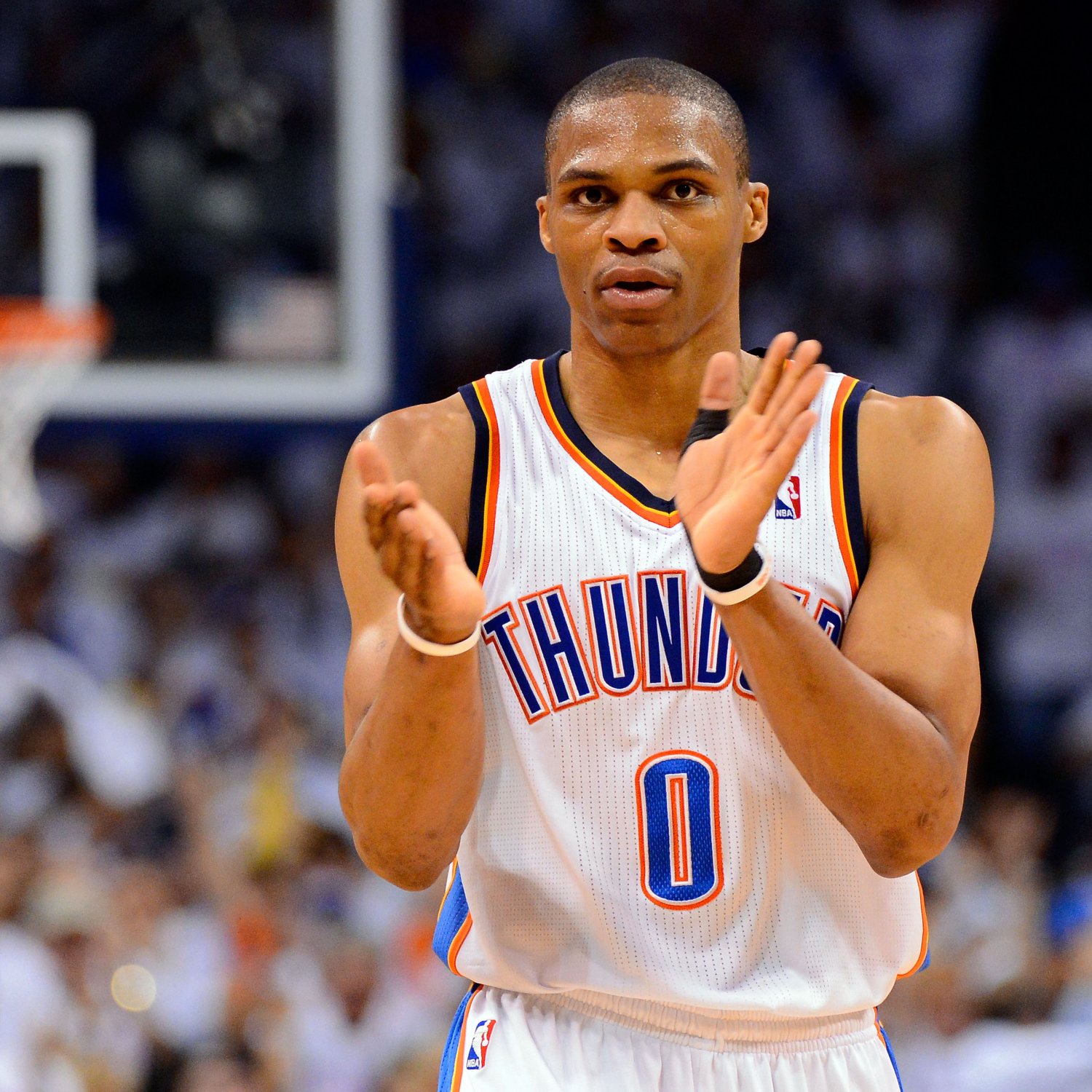
Oxymoron: Russell Westbrook is Basketball’s Walking Contradiction


This feature was first published in 131st edition (2014 - No. 10) of SLAM China magazine. Here is my original English version of the story.

There goes Russell Westbrook, grabbing a rebound, sprinting frantically down the floor, and expertly dropping the ball into Kevin Durant’s hands for an easy two points.

There goes Russell Westbrook, turning an easy pass into a turnover.

There’s Westbrook taking and missing a contested, ill-advised three-pointer, when two of his teammates are wide open for better shots.

And now, here he is attacking the basket, getting to the free-throw line, and tying the game to take his team into overtime.
In overtime, there goes Russell Westbrook converting a tough lay-up to give the Thunder the lead in Game 6 of the Conference Finals, with his team facing elimination against the Spurs, and just two and a half minutes remaining on the clock.

But with 42 seconds left in the Thunder’s season, there is Westbrook attempting another go-ahead shot, only to see it blocked by the outstretched hands of Kawhi Leonard. The Thunder never get a chance again, and the game, the series, as well as their season, ends less than a minute of basketball time later.

Welcome to the complete Russell Westbrook experience. A scorer in the guise of point guard. A passer in the guise of an athletic shoot-first player. Called selfish for not creating enough for Kevin Durant. Called selfless for taking a step behind the spotlight of Durant. Loved by many and hated by a lot. Welcome to the world of the most complex and polarizing star in the NBA today.

The above moments – all from Game 6 of the 2014 Conference Finals – offered all aspects of the Russell Westbrook experience. They showed the jaw-dropping moments and the frustrating ones. Westbrook was the player who helped the Thunder get this far but also the player who made several mistakes to hurt his own team. It was his unpredictable play and his fighting spirit that kept his team in the game until the last seconds. But it was also the same unpredictable style that many blame for the Thunder’s lack of cohesion.

So who exactly is the real Russell Westbrook?

To close followers of the game, the story is by now very well known. Explosive guard out of UCLA is selected with the fourth pick in the 2008 draft by the Seattle Supersonics. Before he can play a minute for his home team in Seattle, the entire team picked up and relocated to Oklahoma City to become the Thunder. For Westbrook, a defensive specialist in college, there seemed to be no set position on the offensive end. He shot the ball too much for a point guard, but dribbled too much for a shooting guard. Is he a scorer or a creator? An offensive force or a defensive specialist?

The team began their first season in Oklahoma City 3-29 and finished with just 23 wins. But there is hope.

A year later, the core of young players lead the Thunder to a dramatic turnaround and compiled a 50-win season. They lost in the First Round of the playoffs after giving some headaches to eventual champions Lakers. A season from then, Westbrook made his first All Star appearance and began to legitimately find his name among the NBA’s top players. His numbers rose across the board and his team shot up to the Western Conference Finals.

But with a rise in prominence there is also a rise in notoriety. For every staunch supporter, there was now a vocal critic. As he rose in the spotlight, the glare also revealed his weaknesses. His inability to be pigeon-holed by position or style. His passion overtaking his sensibilities. But it is the same passion that made him special. And so the two opposing forces pull him in different directions, giving birth to an exciting, yet unpredictable NBA talent.

A year later, at just 23, Westbrook and the Thunder were in the NBA Finals. The pendulum swung the other way again, as the next season, Westbrook got hurt in the playoffs and his team couldn’t make it past the Second Round. And a few weeks ago, we saw them lose to the Spurs in an overtime loss in the Conference Finals, closing the chapter of yet another season unfulfilled.

This is the Russell Westbrook that we know today. The three-time All Star, the three-time member of the All NBA Second Team, and one of the best guards – positions be damned – in the league today. This is the Westbrook that has made his team one of the strongest and most-feared in the league.

Are we forgetting something? Or someone?

The story of Westbrook so far is impossible to tell without the story of Kevin Durant. That same Kevin Durant who was the Sonics’ original building block before Westbrook was drafted and the team became the Thunder. The same Durant who has led the league in scoring four of the last five seasons, while also somehow morphing into one of the most efficient shooters of our time. The Durant who came into the league with promise of becoming a game-changer, and then has gone on to deliver on that promise by a young age. The Durant who justifiably won the NBA’s MVP award this season.

Westbrook’s own legacy is complicated by the man with whom he shares the court. Both players need each other to thrive in the NBA, but most experts believe that, ironically, they are not suited to play together at all. Their styles clash. One is the quiet, efficient assassin, with the capability of turning any system into a winning system. The other is the turbo-charged monster, whose command on the ball becomes the system itself.

Westbrook is sorely missed when Durant fails by himself, but he is blamed when the Thunder fail with the two on the floor together. Durant earns high praise – deservedly – for OKC’s successes, but praise for Westbrook is reserved more for his possession-by-possession brilliance instead of his impact on the entire game.

There are two divergent schools of thought with Westbrook. The ‘Let Westbrook be Westbrook Team’ believes that a player of his prodigious talents shouldn’t be caged in with traditional definitions of NBA positions and tactics. He was the only player in the post-season to be top four in both scoring (26.7 ppg) and assists (8.1 apg). Beyond the stats, he motivates his team with his much-needed passion. Durant is the ever-constant working engine, the remixed Tim Duncan for the new generation. But Westbrook is the fire that can ignites the team in ways Durant’s quiet style rarely does. Westbrook may or may not be a great point guard, but there is no doubt that he’s a great player.

But there is the other school of thought which believes that, for Thunder to finally turn their championship potential into actual championships, the ball has to go through Kevin Durant more often and there needs to be a quick-passing system of offense around him, which could only happen with a diminished role for Westbrook. For Durant and his other talented teammates like Serge Ibaka to reach their full offensive potential, they need a true point guard to set plays, find the open man, and keep the ball moving. Despite his talents, Westbrook is not that player. He is prone to taking more shots than Durant, many of which are ill-advised. He is prone to turnovers or turning a blind eye to open teammates. He is prone to doing the very things that make him great, and the same things that make him a problem. He is prone to ‘Being Westbrook’.

In the Second Round of this year’s playoffs, the Thunder faced the Los Angeles Clippers, and Westbrook went directly against the man who currently serves as the model citizen of their position. Although he was suffering with minor niggles, Chris Paul is widely regarded as perhaps the best point guard in the league, a true team-first player who helps to make his teammates better, rarely turns the ball over, leads by example, and can be a devastating scorer when the moment calls. The Thunder got the best of the Clippers in the series, but Paul could be a reminder to Westbrook of how effective he could be if he honed his energy and intelligence in the right direction.

Westbrook and Durant are still young players with the primes of their careers in front of them, but their window of opportunity won’t last forever. With their talent, they will be expected to challenge for championships for years to come. But, the question once again comes around to their co-habitability. The two superstars make for a great team together, but can they truly make an NBA champion?

The onus will be not only on the two stars to redefine their gams to make the most of each other’s abilities, but also on the team’s coach to get more creative with his offensive sets to create easier scoring opportunities for all the players on the court. Having Westbrook as a starting point guard for any coach is a challenge, but the challenge can reap huge rewards if his skills are harnessed the right way.

The complete Russell Westbrook experience is a rollercoaster, delighting and disconcerting from one possession to the next. He gambles on defense, but can be a menace defensive when he is dialed in. He takes too many shots, but is unstoppable when those shots start falling. He commits too many turnovers, but he can attract defensive attention away from his teammates and help create shots for others. He’s a superstar who is accused of taking shots away from the league’s MVP, but he is also someone who makes life easier for the same MVP.

Westbrook has the potential of becoming something special: a new generation hybrid player, with the skill-set and ability that we have never seen before. He’s nearly there, and his on-court evolution from this point on will determine his legacy. Will he always struggle to find the balance between a scorer and a passer? Or will be become that perfect scoring and passing hybrid, the first player with a real chance of leading the modern NBA in both points and assists after Tiny Archibald did it in 1973?
In his emotional MVP speech, Kevin Durant saved his note for Westbrook for the very last among his teammates. And it was for good reason. Despite the apparent differences between them, the two are as close as any teammates in the league, and are determined to grow and succeed together.

“I don’t take it for granted,” Durant told him in his speech, “There’s days that I just wanna tackle you, and tell you to snap out of sometimes. I know there’s days you wanna do the same thing with me. I love you man… A lot of people put unfair criticism on you as a player and I’m the first to have your back, man, through it all. Just stay the person you are… You made me better… You’re an MVP-caliber player. It’s a blessing to play with you.”

Durant’s words of support for his prodigious teammate say it all. Westbrook is imperfect, and he and Durant are imperfect together. But they make each other better. And for the foreseeable future, the camaraderie that they have among each other is unlikely to be broken off. So all they have left to do is try and make it work, to try and fit the imperfect pieces of the puzzle into a perfect result.

The Thunder couldn’t get that perfect result this season. By the time Game 6 of the Conference Finals ended in an overtime loss to the Spurs, they found themselves outclassed by a savvier, more balanced squad. Westbrook ended up with 34 points, eight assists, seven rebounds, and six steals. He made 17 of his 18 free throw attempts. But conversely, he only made eight of his 23 attempts from the field, turned the ball over seven times, and was in foul trouble throughout. He helped his team a lot, but also hurt them a little.

It was yet another see-saw night from the league’s walking contradiction. But once the creases can be straightened and rough edges sharpened up, Westbrook can live with the contradictions if he starts walking towards a championship.

May 8, 2014

Any city, one game


This feature was first published as 'The Opening Tip' in the 129th edition (2014 - No. 8) of SLAM China magazine. Here is my original English version of the story.
For international fans of the NBA, the league didn’t just teach us how to play the game, it also taught us North American geography. Even without visiting the locations, we knew the locations of American cities purely based on the division or conference they play in.

But the one fact that most global fans couldn’t ever fully appreciate – residing thousands of miles away from the NBA’s home teams – is how much the profile of a city has mattered to match its basketball output in the past. In the previous 67 years of its history, the NBA has featured franchises from various cities around the US and Canada, but some cities resonated with basketball culture much more than others.

Since the league’s inception in 1946-47 as the Basketball Association of America (BAA), three marquee franchises – the Knicks, the Lakers, and the Celtics – have survived the majority of its history while several others folded or moved. Two of these three teams – the Celtics and the Knicks – have represented major American cities with a historically serious basketball fanbases in Boston and New York from 1946. A year later, the third – Lakers – came into existence and have had a major stronghold on professional basketball; initially in Minneapolis, and famously from 1960 onwards, in Los Angeles.

Boston, New York, and Los Angeles not only represented the largest basketball markets for the NBA but were also responsible for most of the league’s success. Since 1947, at least one of these three teams made it into the NBA playoffs. 67 years in a row.
Until now.

For the first time in NBA history, we are witnessing a post-season without the Celtics, Lakers or the Knicks. What would’ve been unthinkable in the days of a young NBA is now passé. Because of its global presence and the power of the internet and social media, there is now very little correlation to a city and its team’s global popularity. The most internationally popular and/or talented teams in the league currently play in Miami (where basketball isn’t a favourite sport) and Oklahoma City (a tiny city where the Thunder are the only pro sport team). Teams from relatively ‘smaller’ markets like San Antonio, Memphis, Indiana are catching the imaginations of fans worldwide, fans who barely care about the name on the front of the jersey instead of the one on the back. A player like Kevin Durant (OKC), LeBron James (back in Cleveland), or even Kevin Love (Minnesota) can turn any city into an NBA city. The borders are widened far beyond New York, Boston, and LA.

The franchises we ignore today could be the world’s top selling jerseys a year from now. And even teams from Milwaukee or Utah could get their hands on Andrew Wiggins or Jabari Parker and continue the trend. For the 21st century NBA, it’s barely about the city anymore, as long as it’s the one game above all.

April 19, 2014

Bold Playoff Predictions: 14 foolproof guarantees for the NBA post-season


This feature was first published in the 127th edition (2014 - No. 6) of SLAM China magazine. Here is original English version of the story.
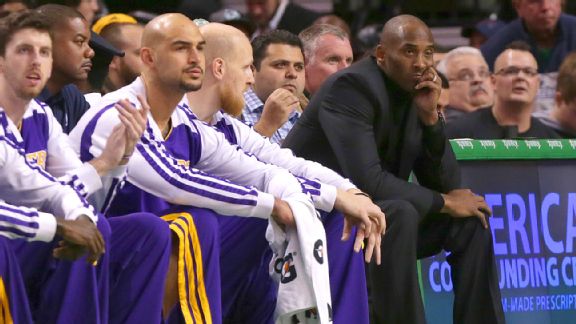
Predicting the future can be a tricky business, but the hazy smog that separates reality from a close approximation of reality hasn’t stopped the tricky business of prediction to develop into the profitable business of forecasting. Cultures and beliefs around the world use varied zodiac methods to paint vague portraits of the future. If it’s not the Year of the Horse, then it’s the sign of the Aries. It is isn’t palm reader then its mystic octopuses or parrots making their guesses.

But all in all, no one really knows anything.

And when it comes to the NBA playoffs, even prophets like Nostradamus or Hong Xiuquan couldn’t exactly predict the winners from the losers and the team that would be lifting the Larry O’Brien trophy in mid-June.

The NBA has long had its famous prophecies, too. After winning the 1987 title, Pat Riley guaranteed a repeat at the Lakers’ championship parade. A year later, his guarantee was fulfilled with the NBA’s first successful title defense in 18 seasons. In 2005, Detroit Piston Rasheed Wallace successfully guaranteed (or ‘guaransheed’) that his team would win Game 2 of the Eastern Conference Finals after falling behind to the Heat. Everyone from Dikembe Mutombo in 2001 to Kobe Bryant last year have used guarantees as part of successful motivational tactics.

And then there are the stinkers, the wild guarantees that have gone way off to the embarrassment or ridicule of the forecasters. After LeBron James left Cleveland for Miami in 2010, Cavaliers owner Dan Gilbert famously posted that his team would win a title before LeBron and the Heat. Four years since then, the Heat have won two titles and the Cavaliers have yet to make the playoffs. JR Smith guaranteed a championship for the Knicks in September, but the squad looked like a shell of itself all season. Going back to the two-time champs Heat and LeBron James: if their 2010 boasts are to be believed, Miami fans should be expecting, “Not one, not two, not three, not four, not five, not six, not seven,” titles in the Big Three era.

It’s time for us fans to rebel against tall words of such false prophets. Which is why I’m bringing you 14 fool-proof, undeniable guarantees for the 2014 playoffs. In what is priming to be another year of unpredictable action in the post-season, here are the predictions that you can be sure to bet on.

1. Marco Belinelli will become famous

If there is any model of consistency in the league, it’s those Spurs. Every year, just when everyone assumes that San Antonio are going to be done and dusted, they rise and surprise and make us all into believers again. While big names like Dwight Howard, Luol Deng, Andre Iguodala, or Josh Smith made high-profile changes of scenery over the past year, the most-underrated pick-up might have been made by the Spurs when they signed Italian Marco Belinelli from the Bulls at the beginning of the season. Even though he’s “only” pouring in 11.6 points per game, Belinelli has been a perfect fit for his new team, stretching the floor with his hot three-point shooting (39.8 percent) and giving more space and opportunities for traditional big names in San Antonio like Tim Duncan, Tony Parker, Manu Ginobili, or Kawhi Leonard to dominate more efficiently. Last year, Danny Green broke all kinds of three-point records in the NBA Finals and briefly became a household name; as the Spurs go deeper into the playoffs again, expect the same from Belinelli this year.

2. Derek Fisher will hit one or more clutch shots

At 39, we know that he’s one of the oldest players in the league, a slow-footed, defensively-minus point guard who is already third in the pecking order at his position in his own team behind Russell Westbrook and Reggie Jackson. We know that he’s only like to play between 15-20 minutes a game for OKC in the playoffs as they aspire to ride behind Kevin Durant’s brilliance to an NBA title. But make no mistake: this old horse still has the experience and timing to hit the biggest shot at the game’s biggest moments. Already through the course of this season, Fisher has time and again stepped up for the Thunder in crunch-time minutes in their most crucial games. With five titles on his resume, Fisher has no fear of the big moment, and rivals are still shook from the famous 0.4 second shot he hit over the Spurs 10 years ago. Durant, Westbrook, Ibaka, Lamb and co will clearly have a bigger impact in the Thunder’s progress in the playoffs, but Fisher is guaranteed to have his number called for a big shot (or two) over the next two months.

3. The internet will run wild with Big Baby Davis jokes

Glen “Big Baby” Davis is not a thin human being. As a matter of fact, it still surprises many that, despite his tremendous girth he is still able to become an effective rotation player in the league. Davis’ departure from the Magic to the Clippers puts him further in the eyes of the mainstream media, and now, playing for one of the contenders in the West, there will be a lot more Big Baby sightings in the playoffs. Which also means that the ruthless (and hilarious) internet is going to run wild.

4. If Clippers play the Rockets, we will witness a Dwight vs. DeAndre Free Throw contest every fourth quarter

Dwight Howard of the Rockets and DeAndre Jordan of the Clippers are both tremendously athletic Centers, and both particularly talented on the defensive end of the floor. Howard has been one of the elite big men in the league for several years and Jordan has made a quantum leap this season under Doc Rivers. The trouble is: neither one is particularly gifted from the free throw line. Howard has shot an (improved) 54.8 percent from the line this season while Jordan is in an uglier territory of 44.9 percent. If the Clippers and the Rockets are to face each other in the playoffs, fans would get a chance to witness two fast rising teams in the West with outside shots at a title run. Unfortunately, both teams also possess weaknesses at the free throw line which are fully exploited by opponents. The “Hack-A-Shaq” strategy has been passed on to his generation where defenders are happy to hack Howard or Jordan and let them try and win the game from the charity stripe. It will be an exciting series, with some of the best talents in the league like Chris Paul, James Harden, Howard, and Blake Griffin going off against each other. But be warned, because fourth quarters are going to turn into a slugfest that will eventually be decided by ugly free throw contests by the two regularly-hacked Centers.

5. We will criticize Russell Westbrook for shooting too much

This has become an annual NBA tradition, magnified in the playoffs because of the importance of every game and every possession. Kevin Durant is perhaps the NBA’s most gifted, efficient, and effortless scorer, capable of leading the league in scoring (32.2 points per game) while not even taking more than 20 shots a game. While this season has forced KD to take more of the offensive load due to Russell Westbrook’s injury, the last full playoffs that the two played together (2012) saw Westbrook jack up more shots than even his prodigiously talented teammate. A whole world of NBA fans and media-persons exist and thrive in loud support of the Anti-Westbrook campaign, criticizing the talented point guard for his supposedly selfish game and for not giving the ball up to Durant more often. If the Thunder make a deep run again, expect those voices to get even louder.

6. Despite his over-shooting, we will be amazed at how unstoppable Russell Westbrook is

Despite all the criticisms, the hate, and the doubt, Mr Westbrook will once again remind us that he adds much more to his team than he subtracts. One of the most aggressive, passionate, and athletic guards in the league, Westbrook is the one who truly takes the Thunder from being a good team to a great one. If Durant is the head of the Thunder, Westbrook is the heart. It is his passion and fearlessness that will make every other team doubly afraid of facing OKC this postseason. Last year, Westbrook’s injury added too much extra pressure on KD; pressure which ultimately caused a surprise 4-0 sweep in the Second Round at the hands of the Grizzlies. This year, if Westbrook stays healthy, we will be reminded of why despite his faults he is ultimately one of the most unstoppable players in the NBA. He will attack, he will inspire, and yes, he will make life easy for Mr Durant.

7. One (or more) Chicago players will get hurt – and it won’t stop them

I’m depressed as I write this, but recent history hasn’t been kind to the Bullish Bulls. It all began with the ill-fated 2012 playoffs, where Derrick Rose suffered the injury that kept him out for over a year. A year later, with Rose still missing, the Bulls suffered losses of Luol Deng, Kirk Hinrich, and a foot injury that slowed down Joakim Noah, and yet they still kept battling on. Coach Tom Thibodeau has two strong coaching traits: a) to overplay his top rotation players fearlessly despite any risk of injury and b) to never let his players give up, no matter the circumstance. This year, Noah will be the heart and soul of a team that will battle every night, and the likes of Carlos Boozer, Jimmy Butler, Taj Gibson, Hinrich, DJ Augustin, Mike Dunleavy Jr., Tony Snell, and more will inspire fans every night. And even when one or more them suffers an injury, they will march on instilling fear in opponents with the same unchanging tenacity.

8. At least one time in the playoffs, Stephen Curry will have 25 points in a quarter

The playoffs are better with Stephen Curry than without him. A season ago, the NBA’s most explosive three-point shooter was still coming into his own on the international stage. A 50-point outburst against the Knicks and a couple of internet-stopping shooting spurts in the playoffs changed all that, as Curry quickly became one of the most exciting young stars in the league. Don’t expect that to change: whether or not the Warriors are able to make a real playoff run, Curry will remind the world that he belongs on the pedestal with the game’s greatest players. There are few moments more electrifying than a Curry hot streak. Twice in last year’s playoffs, Curry had 22 points in the third quarter. He’s going to do it again. I predict that, at least one time in this postseason, Curry will explode for 25 or more points in a single quarter. And yes, we can also note that his backcourt mate and ‘Splash Brother’ Klay Thompson will have some hot shooting nights, too.

9. The biggest X-Factors of the playoffs will be Dwyane Wade and Serge Ibaka

Ever since the Big Three was formed in Miami, Dwyane Wade has evolved from being the number one superstar to the league’s ultimate X-Factor. The Heat and their opponents know what to expect from LeBron James, who is the model of NBA consistency, and puts up impressive numbers even on his ‘off’ nights. Chris Bosh fits in the system too, and although he rarely dominates anymore, he consistently plugs in the holes needed in every game. Wade, suffering from various ailments and injuries, is the team’s Mr Unpredictable. On certain nights, he disappears, or worse, doesn’t even play to rest an ailment. On other nights, he outperforms every other player on court, including LeBron himself. For the Heat, as ever, if Wade has more good nights than bad ones, they are sure to challenge for a title again. Out West, I predict that the difference-maker will be OKC’s Serge Ibaka. Ibaka has the potential of being of the top post defenders in the conference and spread the floor the same way Bosh does on offense on his good nights, giving the Thunder their own Big Three. Unfortunately, Ibaka hasn’t been consistent with his big nights on a regular basis. The answer is simple: the Thunder will rarely lose games in which Ibaka – in addition to Durant and Westbrook – also plays like an All Star.

10. Somebody will hit Blake Griffin

Set it in stone. An opposing forward or Center (take your pick: Andrew Bogut, Jermaine O’Neal, Zach Randolph, Robin Lopez, Serge Ibaka, etc.) will get annoyed at Blake Griffin’s dominance and thunderous dunks and bring him down. Both players will get a technical and one of them will be ejected. All of this is a guarantee.

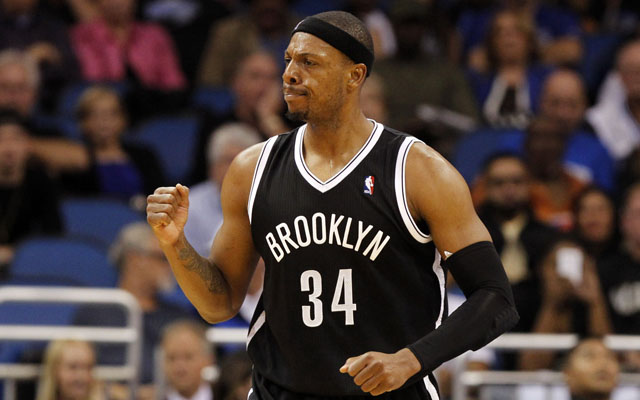
11. Paul Pierce – and not Deron Williams or Joe Johnson – will be the Nets’ best closer

Joe Johnson (32) and Deron Williams (29), both of whom are still at or near their primes, are the two highest scorers for the Nets. But when the chips are down and the team needs a hero, there will be a familiar old face closing out games for Brooklyn in the post-season. At 36, Paul Pierce is averaging career low points averages and minutes this season, but make no mistake, the limited minutes have only been a preservation tactic for the playoffs. While Williams is the team’s primary ball-handler and Johnson has a history of end-game heroics, the most effective member of the team against major rivals like the Heat or the Pacers will be ‘The Truth’, who will use his years of experience and smarts to create offense when most needed by his team.

12. We will question Erik Spoelstra’s decision-making

Heavy is the head that wears the crown. Despite guiding his star-studded Heat squad to three consecutive Finals and back-to-back titles, Coach Spoelstra still hasn’t earned the unanimous respect as a tactician that he deserves. That is chiefly because many believe that Spoelstra’s success has more been a factor of the brilliant talents that he coaches, and less because of his own talents. This is a major misconception: even a ‘superteam’ needs a super-coach, or at least, a good coach. We’ve seen several examples of big-name teams underachieving because the man at the top never figured out how to use the weapons in his arsenal. Spoelstra’s a tactical mastermind, and has done a marvellous job year after year at making the team an efficient offensive and defensive threat every post-season. That will happen again; but whenever Miami do lose games against teams that they should be better than paper (which is pretty much every other team in the league), Spoelstra will be faulted more than his players. That is his curse: a win is credited to the players, but a loss is the fault of the coach.

13. The Eastern Conference playoffs will be far closer than we originally expected

A few months ago, the Eastern Conference Finals were pretty much decided, and the other six teams to qualify for the playoffs were being mocked for being nothing more than practice rounds for the two giants of the conference, the Heat and the Pacers. The top two teams have held a lead over any other contender in the conference by a wide margin, and were barely challenged by any other Eastern side until recent weeks. But slowly, things have changed, and the margin between the top two and the rest has narrowed dramatically. Both the Heat and particularly the Pacers have suffered from worrying slumps at crucial junctures of the season. Meanwhile, the Nets have been the hottest team in the conference and are suddenly looking like a major second round threat to either of the top two. The Bulls – with the brave Joakim Noah leading the way – are a team never to be underestimated with the ability and will to upset anyone in a playoff series. The Raptors are a wildcard, play good defense, and will be an irritant for the contenders. And the other challengers aren’t looking as bad as they were earlier in the season. A Pacers vs. Heat Eastern Conference Final is still the most likely outcome; just don’t expect it to be an easy journey for either of the two.

14. This year’s Finals will not be as good as last year’s Finals

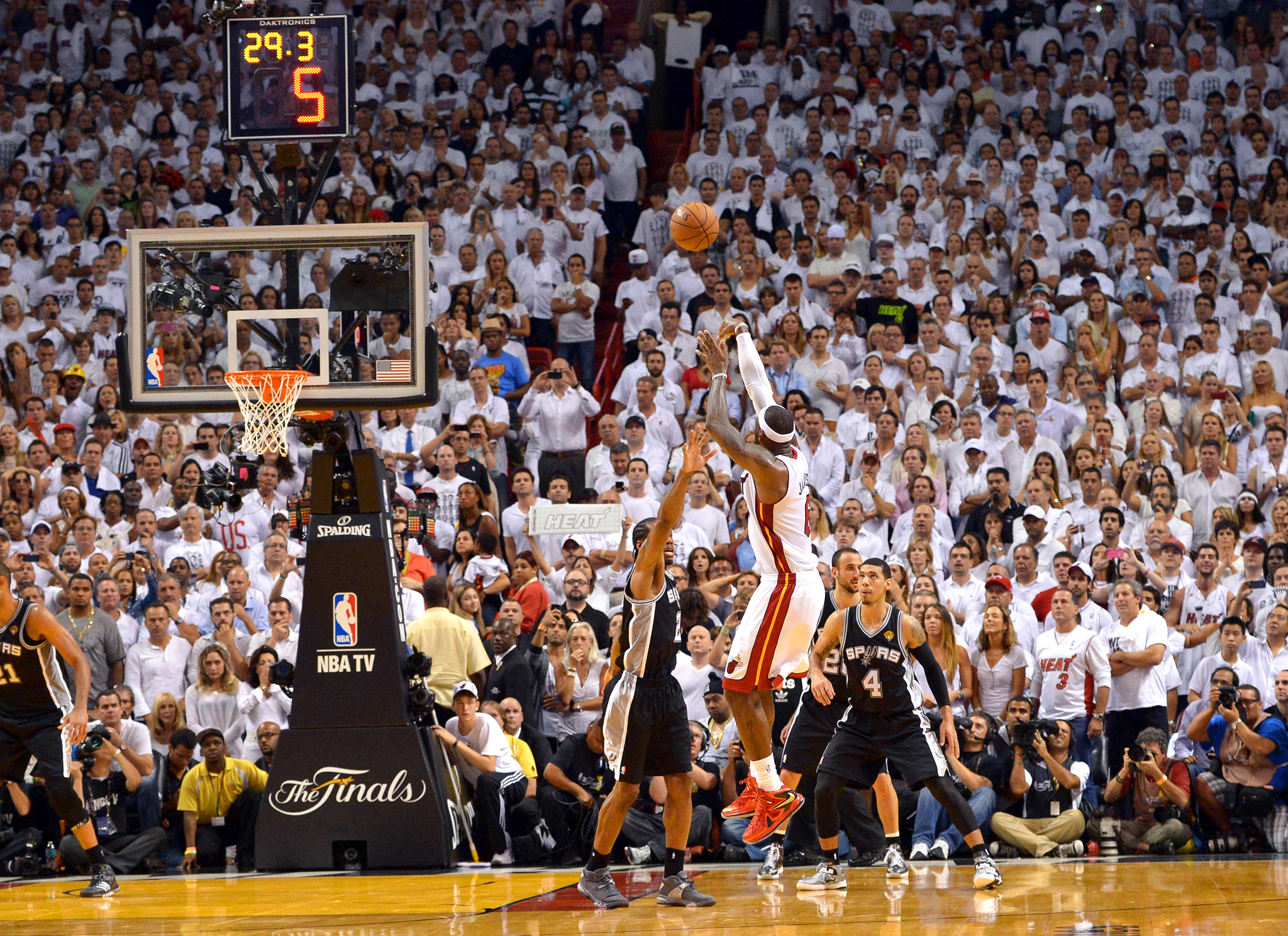
Sorry to disappoint everyone, but that is just a fact. Last year, we witnessed one of the greatest NBA Finals in recent memory. Two ultra-talented teams with opposing tactics and styles turned the game of basketball into athletic chess. Each move had a counter move, and each counter move was countered again. For seven games, the Heat and the Spurs were nearly inseparable. Both squads displayed the best of individual greatness and team chemistry, and in the end, only minor mistakes like missed free throws or a botched rebound, became the difference between a champion and a loser. In addition to all this, Ray Allen hit what will be remembered as one of the most important shots in the history of the game to tie up Game 6 and save the tile for Miami. It is near-impossible to repeat that kind of drama at the game’s highest stage again. The only exceptions are if a) LeBron and Durant face each other off to have 40-point triple-doubles every night, b) Every game of the Final is decided in overtime, or c) Bugs Bunny helps Michael Jordan dunk from halfcourt line to beat the Monstars at the buzzer and stop them from enslaving the Looney Tunes.

March 18, 2014

Garbage Time


For some NBA teams, the last month of the season can’t end soon enough

This feature was first published in the 125th edition (2014 - No. 4) of SLAM China magazine. Here is original English version of the story.
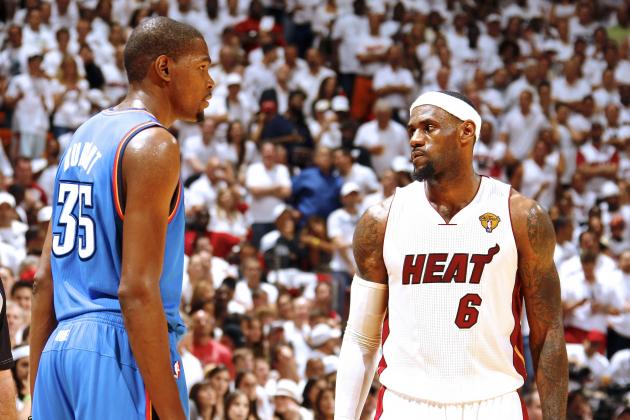
By halftime, the Lakers were already down 33 to their neighbouring Clippers, and the second half of the blowout game in early March essentially turned into ‘garbage time’. With the result of the game all but decided, nothing that happened in garbage time had any real significance anymore. The starters turned into bench warmers, Reggie Bullock hit some threes, and Clippers’ newcomers Glen Davis and Danny Granger hit double figures in scoring for the first time in their new jerseys.

But in the big scheme of things, it didn’t matter and both teams were ready for the game to end long before the final buzzer. Most of the fans in the Staples Center got up and left, and most of the fans watching at home changed the channel.

Blowouts are a part of the game for almost all teams from time to time, but what happens when an entire month turns into garbage time?

For the worst teams in the NBA who have no chance at a playoff spot, the present is already the past. By the last month of the regular season, most of these teams are already looking ahead at the next season and their last 15-20 games become nearly inconsequential. They throw in the towel a little early, ease their foot off the gas pedal, let the younger players gain more experience, and rest their best players to avoid injuries.

Meanwhile, team owners don’t really mind if their struggling team struggles even more: the worse they do, the higher their chances to rise up the upcoming draft lottery. So they trade their best players, clear out cap space, and horde up on future draft picks. The owners call it rebuilding and the fans call it tanking.

This season, the temptation to ‘tank’ may be greater than ever before. With a draft class for the ages looming ahead, any team to snag a top seven pick will be happy, and even other lottery picks could turn into valuable rotation players.

This season, injuries or ineptitude effected several franchises early, and by the time March rolled along, their fate had already been sealed. Their playoffs would be the draft lottery and their championship would be that number one pick. The Bucks, Magic, Celtics, Jazz, Lakers, and the Kings all showed flashes of energy, but as the season reached its conclusion, they decided to save that energy for the future. And then there were the 76ers, who turned tanking – or rebuilding – into an art form by trading away their best players and clearing cap space like never before.

After Derrick Rose’s injury and Luol Deng’s trade for virtually nothing, the Bulls attempted to get worse before getting better, too. Except that Coach Thibodeau and his squad of warriors – led by Joakim Noah – didn’t let it happen, and the team actually started playing better since Deng’s departure to stay in contention.

On the other side of the spectrum are the title contenders. Well, there are two kinds of title contenders: the young teams who haven’t regularly contended and are looking to make a statement, and the experienced teams who are now around almost every year and don’t take the regular season too seriously anymore. The Pacers, the Thunder, the Rockets, and the Clippers all feature star players who haven’t yet tasted championship success, and are young outsiders hungry to make a statement. And then, there are the Spurs and the Heat, last year’s reigning finalists, who use the regular season more as an experiment than a result.

For both the Heat and the Spurs – two contenders featuring star players who have all won multiple titles over the past decade – the real test begins in the playoffs. Regular season wins and losses don’t matter as much to these teams. The last, ‘garbage time’ month of the season is particularly cautionary. Coaches are sure to rest their star players or use them sparingly in this stretch to keep them healthy and rejuvenated for the post-season run.

Of course, there is one group to whom the regular season’s last month will be the most important period of all, who will treat it every game from now like Game 7 of the NBA Finals. These are the teams on either conference battling for the final playoff spots. The East is wide open, and multiple teams including the Nets, Bobcats, Hawks, Pistons, and Cavaliers will consider themselves to be in the running for the postseason. Out West, the real battle will between the last two spots, coveted by the Suns, Mavericks, Grizzlies, and perhaps even the Timberwolves.

So don’t be let down by the blowouts and the “rebuilding”, as long as there are playoff spots to fight for, you can be sure that there will be more than enough exciting, crunch-time play as end of the regular season approaches.

Tanking as an art form: the Philadelphia 76ers

In early March, after losing 14 games in a row, 76ers coach Brett Brown finally began to wonder if his team, suffering on defense and offense with equal horrendousness, could actually win again. This came after the 76ers had already plummeted to the second-worst record in the league in a losing streak that notably saw that drop back-to-back blowouts to the Clippers and the Warriors by a combined 93 points.

The 76ers are chasing infamy, and chasing it in style. While the players on the floor undoubtedly hope to go out and play as hard as possible every night, it can’t be argued that the squad that is representing the 76ers in their ‘garbage time’ has been assembled only with the future draft in mind.

What’s interesting is that the 76ers actually started off the season with some positive momentum, winning their first three games and actually giving their fans hope of a decent season. The starting five of surprising rookie talent Michael Carter-Williams, James Anderson, Evan Turner, Thaddeus Young, and Spencer Hawes shocked Miami in their first game and Carter-Williams went on to become the first player to win the NBA’s player of the week in his first week in the league since Shaquille O’Neal in 1992. Meanwhile, injured rookie center Nerlens Noel waited, recovering from his torn ACL.

But the optimism faded, fast. The 76ers had already stressed their intentions to rebuild when they traded away All Star point guard Jrue Holiday before the season began in exchange for Noel. And one by one, the rest of the team’s remaining talents were shipped out, too. Hawes was traded to the Cavaliers for Earl Clark, Henry Sims and draft picks. Turner and Lavoy Allen were sent to Indiana for Danny Granger and a second round pick. Days later, the 76ers cut ties with both Granger and Clark to be left with little return for their best players.

The 76ers lineup now symbolizes garbage time basketball at its best… or worst. By March, their rotation featured the likes of Carter-Williams, Sims, Anderson, Young, and Hollis Thompson, Tony Wroten, Byron Mullens, and Jarvis Varnado. There was still no sign of Noel, who isn’t likely to make his NBA debut till next season.

In terms of cap space, the 76ers could go down as the cheapest NBA team ever, giving them more flexibility than ever before. The only thing left to play for is Carter-Williams’ rookie of the year bid.

If the 76ers get lucky in the draft and fill their cap space wisely, would all this losing be worth it?

Cruising to the end: All that matters for Duncan is the postseason

Over a year ago, in a nationally-televised game against the Heat, Spurs’ Coach Gregg Popovich decided to rest four of his best players Tim Duncan, Tony Parker, Manu Ginobili, and Kawhi Leonard, which probably cost his squad an early season loss in Miami. While a subsequent fine brought nationwide attention to Popovich’s decision, the Coach was probably not too concerned; he was able to play Duncan and the rest of his aging core players big minutes in a deep playoff run that ended, ironically, in Miami in Game 7 of the NBA Finals.

Now, as Duncan and the Spurs prepare for another shot at the title, Popovich continues to closely monitor the minutes of his legendary big man. Duncan has played less than 30 minutes a game for three of the last four regular seasons, and as he approaches 38, he is primed to have the bounce in his step again for a playoff boost.

The Spurs – and now the Heat – begin to play their best basketball every season after the All Star break, revving up into top form right in time for the playoffs. But as the last few weeks of the season near, don’t be surprised to see star players like Duncan or Dwyane Wade skip games or play limited minutes, even if it costs their team a win or two.

Regardless of what their final regular season standing ends up being, both the Spurs and the Heat are guaranteed to be top contenders again. And after so many runs to the Finals they can be forgiven for looking ahead at the playoffs a little early.

In many cases, the end of the regular season might be an elongated garbage time for these squads. But don’t be fooled by the rare lackadaisical play or an off night; once the post-season begins, both the Spurs and the Heat will be motivated once again to make each possession of each game count like a Game 7.


February 28, 2014

Dear Mr. Silver…


10 Suggestions for the new commissioner to improve NBA and Basketball

An edited version of this feature was first published in the 124th edition (2014 - No. 3) of SLAM China magazine. Here is complete, original English version of the story.

For the past 30 years, David Stern shepherded the NBA to the new era. In 1984, he took over a relatively modest league with a small audience desperately in need of creativity and a transformation. Stern did just that, as he added seven expansion teams, helped the NBA become one of the most profitable corporations around the world, launched the WNBA, created the NBA Cares programme, expanded the league’s multimedia presence and, perhaps most importantly, opened up the international borders for players and fans like never before.

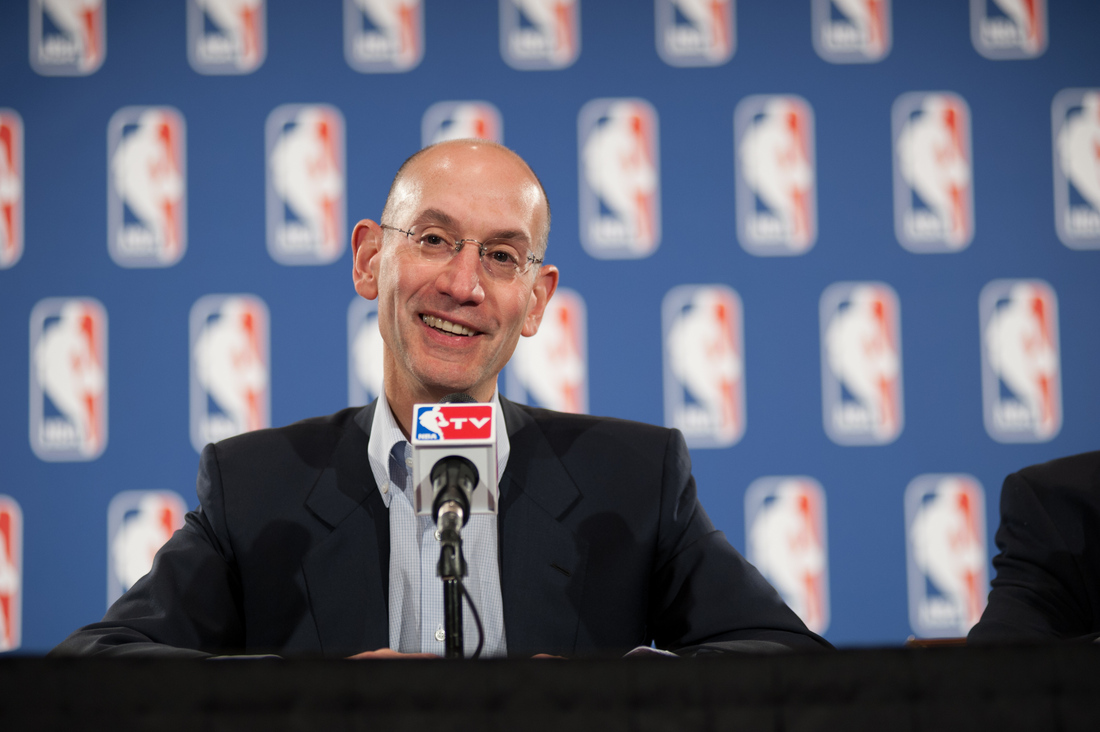
But now, we’re in the Silver Age. Stern has passed on the NBA Commissioner’s baton to Adam Silver and, for the first time in three decades, there will be a new face in charge of ‘basketball decisions.’

What will Silver’s legacy be? How will he impact the history of the sport? The NBA is still not perfect, and part of Silver’s job will be dedicated to transforming the sport to become a better product and reach a wider audience.

To welcome the new Commissioner, here are my 10 suggestions of how he can improve the NBA and influence worldwide basketball for the better:

1. 82-game season is way too long.

I understand that the arenas and markets who depend on a certain number of home games to boost their economy might protest this, but an 82-game season is an incredible strain on NBA players. There are too many injuries, too many unexplained DNPs, and a whole lotta lackadaisical play through major chunks of the season. If the season starts on Christmas Day and the number of games played per team is shortened, we would see teams rested and well-prepared to give in their full concentrated effort in every encounter, and every encounter would mean so much more.

2. Get rid of the Conference/Division Divide

Every year, undeserving teams from one conference (usually the East these days) make the playoffs and deserving teams form the other (the tougher West) don’t. This season, the third best team in the East wouldn’t even be good enough to make the playoffs in the West. This is especially surprising considering teams in the West play more often than other tough teams while teams in the East always have a softer schedule. With comfortable modern day travel options (and a shortened season as I suggested above), it’s time to end the conference and division divide and have all 30 teams in the same round-robin league, playing each other an equal number of times. 16 of the best, from any geographical location, will make the playoffs. Stop rewarding mediocrity with a post-season berth and punishing quality play for simply being in the wrong conference. Let’s make things fair and equal for all.

3. Change the draft lottery to give every team an equal chance

The lottery had good intentions, to spread the talent equally around the league by giving bad teams a chance to draft good players, but at the same time, make the likelihood of a higher pick depended on chance. Unfortunately, it has encouraged tanking around the league as GMs offer their fanbase a bad product in hope of getting lucky with a good player in the future. Too many franchises get stuck in the cycle of playing badly and then picking badly for years and the fans suffer. Meanwhile, teams who built upon smart thinking win a lot and never get a chance at drafting a good player. The best young players end up in losing teams with losing cultures. And the worst-sufferers are mid-tier teams who aren’t good enough to get past the First Round or bad enough to rebuild from the draft. So here’s my wacky solution: change the lottery radically to give everyone – including playoff teams – an equal chance in the draft order. The Miami Heat and the Philadelphia 76ers should have the same shot at the number one pick. This way, bad teams won’t be always rewarded, good teams won’t be always punished, and where a player ends up will depend on pure, equal luck.

4. Reward teams with flexible cap room for players they drafted

The NBA cap space is a great thing and it keeps – theoretically, at least – the rich from getting richer and the poor from getting poorer. Unfortunately, the cap space means that teams that have worked hard to draft talented players can sometimes end up losing those players because they become too talented for their budget after the rookie contracts. Case in point: the Thunder, who drafted brilliantly in getting Kevin Durant, Russell Westbrook, James Harden, and Serge Ibaka together on the same side. So it was a pity that, to stay in budget, they had to trade Harden and be punished for the very thing that should be celebrated – their superior scouting. My solution is this: every team should be allowed exceptions to go over the cap limit a little for the players that have played for them since their rookie contracts. It’s a good way to reward smart management, avoid the breakup of a young team, and build a long-term bond between a team, a city, and a star player.

5. Foresee and prepare to avoid future lockouts

With the current season in full swing, we might be forgiven for forgetting the chaos and emptiness that existed when the NBA locked out in 2011. David Stern’s NBA had four lockouts in the last two decades, and it will be up to Silver to end the costly and painful ordeal that leaves a bad taste for team owners, players, and fans alike. It’s not an easy task, of course, but Silver will need to foresee and try to get both sides to negotiate well in advance before players can opt out of the current CBA (June 30, 2017). Stern called the 2011 Lockout the ‘nuclear winter’ of the NBA. Silver needs to make sure that the sun always shines on basketball.

6. 1x1 Tournament at the All Star Weekend

It might be hard to convince the league’s best players – who will publically profess that basketball is a team game – to put their reputations and health on the line for an exhibition one-on-one tournament. But imagine how much fun it would be! The NBA can have fans vote for the eight players they want to see play in a knockout one-on-one tournament on All Star Saturday. First to 15 wins and moves on to the next round. And offer a cash prize for the player and a charity for the winners. Everyone can be convinced for charity, right? My choice eight players are LeBron, Durant, Paul George, Chris Paul, Carmelo Anthony, Derrick Rose (when healthy of course), James Harden, and Kobe.

7. Less Technicals, More Physical Play

Let them play! In recent years, the league has become too reactive to calling fouls on the slightest touch, especially to the super-duper stars, and sensitive to any and every show of passion and emotion by punishing it with a technical. Look, no one wants players fighting or Malice In the Palace style brawls, but NBA rules have gone to the other extreme. Minor face-offs, an angry bounce of the ball, an aggressive step or two, or a frustrated scream for a split second now all warrant technicals. Meanwhile, physical play and tough defense is being discouraged and offensive players are earning the benefit of the doubt. Basketball is a contact sport, and I think a little bit of contact is fine. Offense is fun to watch, but true fans enjoy the grind-it-down style of defensive basketball that the NBA playoffs bring.

8. More penalties to refs for blatantly bad calls

Too many games are decided on refereeing decisions, and in many cases these days, the NBA is admitting to those mistakes a day or two after the damage is done. Refs are human and shouldn’t be penalized for close calls that could’ve gone either way. But I think there should be a bigger penalty to the referees for truly blatant bad calls, especially those that decide the fate of the game.

9. An Off-season, international basketball ‘Champions League’

This will not be Silver’s initiative alone, but like Stern worked with FIBA’s Boris Stankovic to help realize the 1992 Dream Team and thus brought basketball more popularity globally, Silver should work with FIBA to bring together an innovative international club basketball tournament. Think of it like Euroleague Basketball, or Champions League Football, but on a global scale. Like the proposed FIBA World Club Championship with top NBA teams going against top teams from Europe, South America, Africa, Asia, and Australia play in a brief off-season tournament in meaningful games. Schedules don’t always align right now, but this can be worked out. Pit Miami Heat against Real Madrid, Olympiacos against Guangdong, Pinheiros against San Antonio Spurs, and more.

10. Make the Basketball World Cup the sport’s Holy Grail

Although FIBA will reinvent the World Championship as the World Cup in Spain this year, the tournament is still relatively minor in the basketball world. The best players in the world take the Olympic gold most seriously, and the World Cup second. But in the Olympics, Basketball is only one of the many events and can be lost in the shuffle of the other sports. The World Cup is about basketball and basketball alone. FIBA should learn from the footballing world, where teams usually send a second-tier team to the Olympics and save the best for the World Cup. The NBA’s and thus Silver’s role will be to take the first step in hyping up the World Cup. USA are by far the best team, and the NBA’s coordination in the event would help it reach the greatest audience. More importantly, if the world’s best basketball players – all of whom play in the NBA – can be sold on the idea that winning the World Cup for their country (like it’s in the Football world) is the biggest milestone of their career, even bigger than an NBA title, then Basketball can truly rival Football as one of the world’s biggest sports. For Silver and the NBA, it might sound like taking a step back at first, but I believe it will eventually lead them many steps forward.

The ball’s in your side on your court, Mr Commissioner. It’s up to you to dribble it ahead to a brighter future.