Showing posts with label ipl. Show all posts

October 13, 2015

Hoopdarshan Episode 18: Cricket vs. Everything with Jamie Alter‏


Hoopdarshan is back! On Episode 18 of India's finest basketball podcast, hosts Kaushik Lakshman and Karan Madhok catch up with Indian cricket and sports journalist extraordinaire, Jamie Alter. Alter, the Sports Editor of Times of India Digital, explains to us the popularity of cricket in India, what other sports like basketball can learn from cricket's success, and finds parallels between Sachin, Jordan, LeBron, and Yuvraj Singh.

Apart from his current gig for TOI Digital, Alter has previously worked for Cricinfo, All Sports Magazine, and Network 18. He's written/edited websites like cricketnext, IBNlive, and gocricket. He has also authored two books: History of World Cup Cricket and Field of Dreams: The story Behind Dr. DY Patil Sports Stadium.

We discuss a wide range of enlightening and entertaining issues in this podcast, including India's performances at the recent FIBA Asia Basketball Championship, the continuing political rift for leadership of the Basketball Federation of India (BFI), how the IPL model is inspiring other sports leagues, and if there is a real future for basketball in the country.


Hoopdarshan aims to be the true voice of Indian basketball, and since we're such hopeless fans of the game, it will become the voice of everything basketball related we love, from the NBA to international hoops, too. On every episode of Hoopdarshan, we will be inviting a special guest to interview or chat to about a variety of topics. With expert insight from some of the brightest and most-involved people in the world of Indian basketball, we hope to bring this conversation to a many more interested fans, players, and followers of the game.

Make sure to follow Hoopdarshan on Soundcloud or search for 'Hoopdarshan' on the iTunes Store! Auto-sync Hoopdarshan to your preferred podcast app NOW!

Hoopdarshan can be found on...

    April 29, 2014

    BFI-IMG Reliance School/College League National Finals to tip off in New Delhi


    For the past four to five months, the Basketball Federation of India (BFI) alongside their sponsors IMG-Reliance have organized inner-city school and college basketball leagues for both male and female teams in record eight cities around India: New Delhi, Mumbai, Hyderabad, Bangalore, Indore, Ludhiana, Chennai, and Kolkata. Now, with all the various leagues concluded, comes the final step.

    The men/women winners from each city in both school/college leagues have descended into New Delhi for the first-ever BFI-IMG Reliance School/College League National Finals. A total of 32 teams will be competing for Men's National College Champion, Women's National College Champion, Men's National School Champion, and Women's National School Champion. The tournament is being held at the Thyagaraj Stadium in the city from April 30 - May 4.

    "This tournament will provide new and promising talents from the grassroots level, which will develop and promote the sport, which is the endeavour of the BFI IMG-Reliance collaboration," said Roopam Sharma, the CEO of the BFI, "Competition at this stage will give much-needed boost to budding players who can catch the eye of the selectors and can use this as a platform to make their mark at the national level for their respective states."

    Winners of each category will receive Rs. 1 lakh while the second and third placed teams will take home Rs. 75,000 and Rs. 50,000 each.

    Sharma announced that next year, the school and college tournament hopes to expand to 24 Indian cities. Additionally, she added, a professional basketball league, in line with the IPL or football's ISL, will also be unveiled in India next year.

    April 21, 2014

    Indian Tamasha League: The ISL lays down structure for future Indian Basketball League


    By and large, sports around the world center around the individual stars playing and dominating at the highest level, instead of the teams they represent or the intricacies of the sport itself. Sure, the serious fraternity behind any sport and serious fans of any club/country will look beyond the individual faces at the top, but mainstream attention comes most from the big names. Virat. Ronaldo. LeBron. Mayweather. Bolt. Tiger. Federer. Manning. Jeter. These are the names that draw the big crowds, the names that sell merchandise, and the names that can create or combust the popularity of their sport.

    But a curious thing happened in India last week at the sale of the eight franchises which are set to become the backbone of the Indian Super League (ISL), the highest-profile attempt yet to launch a professional football league in the country. Few people were talking about the names of the stars that would actually play for these teams or the coaches that are confirmed participation. Past foreign footballing superstars like Dwight Yorke, Freddie Ljungberg, Robert Pirès, Louis Saha, and Hernán Crespo are all set to be 'auctioned' off to the various franchises, not to mention India's top football stars who will be entering their names into the fray, too. Peter Schmeichel, Marcel Desailly and Kenny Dalglish are rumoured to participate as the coaches masterminding some of the teams. But across the mainstream media reports of the ISL, these names were rarely mentioned.

    Instead, just like everything else in India, the big newsmakers came from familiar grounds: Bollywood and Cricket. Even as the country reached closer to the launch of a potentially game-changing football league, the ironic thing was that rarely anyone was actually talking about football or footballers. Instead, the names behind the league - the owners who brought shares of the teams - stole the show. Sachin Tendulkar, Salman Khan, Sourav Ganguly, Ranbir Kapoor, and John Abraham were among the celebrities who brought stakes in some of the ISL franchises, while big business magnates in India including the Sun Group, Den Network, Videocon, and more provided the big financial backing. The closest the ISL got to a footballing relation was the involvement of Spanish Primera Liga side Atletico Madrid with the Kolkata franchise. About $200 million has been spent on the bidding of the eight teams.

    The ISL is being launched by IMG Worldwide and Reliance - who together as IMG-Reliance have sponsorship stakes in several sports in India, including basketball - the All India Football Federation (AIFF), and Star India TV Network. The league is set to kick off in September this year and run for two months. The eight franchises are from Bengaluru, Delhi, Goa, Guwahati, Kochi, Kolkata, Mumbai, and Pune. It's format has already closely mirrored the successful T20 Cricket league IPL, and will continue to do so in the future.

    Football leagues have been in India for a long time, and so why is this one special? A National Football League started in 1997, but that folded up in 2007 and it gave way to I-League. which is running (not as successfully as expected) today.

    So far, the ISL has been, for the lack of a better word in my opinion, a dumbed-down version of the sport from the point of view of football purists, like the IPL has been for true aficionados of cricket. Team owners will be more popular then most players and there will be a lot of annoying tamasha on the side (ever tried listening to IPL 'experts'? Yeesh!).

    But here's the truth: in the long run, even the purists will be glad when they see that the money going into the league (and thus, into the sport in general) because of hype or celebrities. Like it or not, in India, you need hype to sell anything, and established themes like Cricket and/or Bollywood can be used to bring attention to non-so-established things (which include every other sport apart from Cricket).
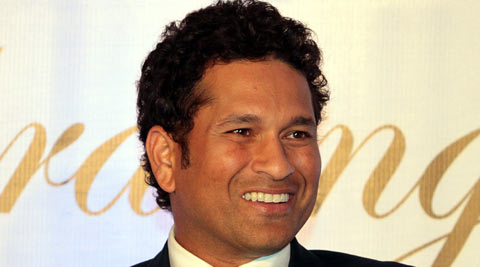
    In certain pockets in India (Bengal, the North-East, Kerala, Goa) Football is huge and can easily rival Cricket's popularity. But it is still relatively a poor sport unknown to the mainstream audience. The unconvincing performances of India's national teams is a major reason for this. Perhaps, playing in a big-money league among established foreign coaches and stars and the chance to finally be celebrated for their talents will give a ray of hope to Indian footballers and encourage more to take up the sport. If the popularity spills beyond ISL, football could finally begin to live up to its potential in India, and eventually, India's national team performances could see a major boost.

    There are critics of the ISL, of course. The CEO of Churchill Brothers (Federation Cup winners) Valanka Alemao has said that, "This league will harm Indian football. There cannot be two leagues in the country which is struggling to qualify for the World Cup... We should have been talking about building a team rather than having such a league. India should have a 10-year vision to qualify for the World Cup."

    Although he makes valid points, I don't fully agree with Alemao's opinion. If a sport is struggling in India, more money and interest poured into it can never be a bad thing. Yes, the AIFF needs to have a 10-year national vision, but that vision can be eased with the performances of Indian players at the ISL. There are also scheduling conflicts to solve, as the ISL currently clashes with FIFA dates and the I-League.

    But count me among the camp of those excited for the ISL. I'm a football fan who unfortunately knows much more about players from Real Madrid and Liverpool than I know about players from clubs in my own country. Hundreds of thousands of football fans in India feel exactly the same way. A well-produced league that brings the game closer to mainstream India is sure to pay huge dividends.

    On the day that the eight franchises and their owners were announced, Mike Dolan, the chairman of IMG, threw a curve-ball that sparked the interest of us over here at the 'India Basketball' camp. Dolan said that while the ISL has plans to grow aggressively and add 12 new franchises in the coming years, he also said that the model would be used to launch India's first professional basketball league next year. Remember, IMG-Reliance also hold marketing rights to basketball in India because of their partnership with the Basketball Federation of India (BFI). They have been in delayed talks to launch the pro league in India for several years now, but Dolan's public announcement with a set date (2015) right after the ISL's first season seems to be the surest sign yet that the basketball league which all hoop fans in the country have dreamed about for years could finally be here.

    The benefits of finally having a professional basketball league in India are many. In an earlier column that I wrote for Ekalavyas, I noted that such a league would change everything for the sport in the country. India's best players would finally have an assured, steady contract from the sport that they excel in, and many more will be encouraged to start taking basketball seriously. The league would eventually generated jobs for several others connected to the game, including coaches, referees, scouts, trainers, broadcast personnel, and more. And it might help in accelerating the rise of new, better basketball infrastructure around the country. Eventually, the rise in interest, talent, and financial support could lead to better results for India's national basketball teams at the Asian or global stage.

    Of course, Basketball is far less popular in India than Cricket or Football right now, but the same model as the IPL and ISL - at a smaller financial scale - could be successful here for the proposed Indian Basketball League.

    And so what if it takes a little bit of tamasha, hype, or celebrity culture? So what if cricketers, Bollywood stars, or big name billionaires are needed to get it off the ground? The NBA in India has already understood that the majority of casual fans only show interest when there is a celebrity or too involved, and recent NBA-India events (like the NBA Jam) always ensure to have glamour and lifestyle infused with basketball.

    Here is a possible list of things to expect in the Indian basketball league outside of basketball: corny cheerleaders, T-shirt throws, cameras zooming into the fringe Bollywood types (whattup Dino Morea!) on the sidelines, and too much attention on fashion or what they call 'glamour'. All of this already happens in the NBA anyways, but at least the high quality of basketball makes it all tolerable. This won't necessarily be the case in India. But if that is what takes to sell basketball to mainstream Indians, then so be it.

    Purists can call all of this a 'dumbing down' of the sport, but in the long run, it might end up being the smartest thing that the organizers could have possibly done.

    Perhaps, just like the ISL, on the day that the basketball league franchises are launched, the celebrity names might garner more neattention than the basketball players themselves. But, hopefully in the future, the real stars of the sport on the court will begin to speak and shine for themselves.

    April 11, 2014

    Just go out and play: To get serious about basketball in India, we have to first get casual


    This article was first published in my column on Ekalavyas on April 1, 2014. You can find the original post here.

    A scene from a casual basketball game being played near the Hari Parbat or ‘Durrani’ Fort in Srinagar, Jammu & Kashmir. Courtesy: Shahid Bhat

    Take me away from the gloss and glamour of the world’s finest arenas. From the sleek wooden floor with the fancy logos and the fiber-glass backboards with rims made out of the expensive nylon. It’s all too much for me. Take me away from referees, matching uniforms, and electronic scoreboards.

    Just give me a ball, some friends, and a rim. Now we can get started.

    I have a confession: despite the ‘proper’ standards of an indoor court with the right FIBA or NBA determined dimensions, painted lines, and world-class flooring, I much prefer shooting hoops outdoors. From childhood, something about the open air, the challenge of braving any weather and any court conditions (including concrete, clay, wood, grass, mud, or a broken combination of many), and the overall casual atmosphere has always evoked me more. Indoor basketball reminds of rules, regulations, technicalities, and statistics. Outdoor basketball reminds of poetry and unpredictability.

    I absolutely love playing pick-up ball, whether it’s with friends or with random people I’ve met on the day. It’s the purest form of the game. Any ring elevated to a height is your basket. Any round bounceable object is your ball. Anyone you meet when you show up to this temple of hoops is your teammate or your opponent.

    It doesn’t matter if you organize things perfectly. It doesn’t matter if there’s a shot-clock, or a game clock. We don’t need referees to call our fouls. We don’t coaches to make substitutions. We’ll fight and argue, high-five and fist-bump, adjust and accommodate, and for the love of the game, we’ll get through it.
    I’m not merely picking on organized and serious basketball. To rise in the world rankings, India needs as much high-level training, competitions, facilities, and infrastructure that it can get.

    But to get truly serious about basketball, we Indians have to first get casual about it.

    Does that sound like a paradox?

    Of course, it’s necessary to have organization and structure to create high-level athletes in India. But super athletes won’t change the nation’s culture towards basketball. Only changing the culture will change the culture. After all, India has won various Olympic medals in recent years in shooting, wrestling, and boxing, but apart from a dedicated few, the status of any of those sports among the common public has barely risen. As China’s model of collecting Olympic gold medals by concentrated focus on the best while sometimes neglecting grassroots development has shown, sporting excellence isn’t just determined by the few at the top but also by the many who dwell at the very bottom.

    For basketball, this means that, while the authorities running the show must continue to focus on the betterment of our national teams and the top national tournaments, they must also shift their attention to the grassroots and try to popularize the sport within the common Indian kid as well. The kid who might perhaps never get to play for his district, state or his country. The kid who may not even play for his school team. But the kid who loves the game nevertheless, and wants to take part, no matter the circumstance or the stage.

    As a model, the USA are the utopia of world basketball, a country which has FIBA’s number one ranked teams in the Men’s, Women’s, Boys’ and Girls’ divisions, who win the world title in nearly every competition they take part in, and who have the world’s most organized and talented professional, collegiate, and high-school leagues. But what makes American basketball even more special is that, in any urban city in the country, from coast to coast, you are likely to find public basketball courts with casual players – who have no future investment in the game – coming out to play for no other reason except that they simply like to play. In China, who are tops in Asia, the government has tried to recreate the same type of grassroots basketball opportunities for its citizens. They’ve had mixed results in different parts of the country, although the combination of grassroots encouragement, a popular professional league, and the success of Yao Ming has made the Chinese accept basketball as their favourie sport.

    India can also learn from the Philippines, a nation similar to India in population density, chaotically rising economy, and bureaucratic corruption. Despite the nation’s economic disparity and the lack of any breakthrough stars on the international stage, Philippines has long been a basketball paradise, where the game is played fervently and passionately from the grassroots to the professional level, and from poor street corners to international level arenas. The success and failure of the national team (they’ve qualified for 2014 Basketball World Cup) of course matters to the fan, but doesn’t affect the average Filipino hooper’s day to day love for the game.

    In India, the common complaint is that it is simply too difficult to find public-access, free-to-use basketball courts, especially outside of schools and colleges. I dream of seeing public outdoor courts built cheaply in major urban areas around Indian cities where casual players – young and old – can drop in for some pick-up hoops.

    India boasts of internationally known cricket stars and have some of the world’s best facilities to develop cricketing talent. Couple that with the world’s most fervent cricket fanbase and the game’s most expensive professional league, it’s no surprise to see that the game reigns supreme in the country. But the love for cricket – despite however much the advertisers or big money IPL auctions may dilute it – goes much deeper. Cricket is found in every nook, cranny, and gullie of the country. Only a few make a career out of it, but millions dream about it. Old men listening to their transistors in barbershops, auto-wallahs with their Kohli and Dhoni stickers, those annoying kids in your neighbourhood… they don’t need the IPL to tell them to love cricket. They love it regardless. Cricket is casual, it’s easy, it’s day-to-day lifestyle, and its’ the culture. Casual interest leads to serious fans, serious fans lead to a big market, and big market leads to more money invested in the sport. That’s what eventually makes us seriously good at it.

    It’s the same story with Football (Soccer) all around Europe and South America and, depending on which part of the country you’re in, Baseball and Basketball in the USA. The game and the local culture intersect naturally, making it an integral part of the daily life.

    So this is my bat-signal (or hoop signal) calling all basketball lovers in the country. Find your nearest court, don’t worry about how modern or archaic it is, and don’t worry if it’s indoors, outdoors, or whether or not the measurements exactly add up. Just go out and play. Don’t play because playing basketball makes you sound cool and alternative, or ‘western’. Don’t play because your fancy shorts and your brand new sneakers match. Don’t play because you want to impress the girls (or boys) watching.

    Go and play because you love how the bounce of the ball feels when it touches your palm and your fingertips. Go because you love the sound of the swish more than any other sound in the world. Go because you get an adrenaline rush being part of five individuals working as one, together in perfect symphony.

    It doesn’t matter if you’re a state-level player, the hot-shot star in your school, or that one guy whose only skill is to get on other people’s nerves (we all know someone like that!). It doesn’t matter if you are embarrassed on court or if you’re the ‘embarrasser’. It doesn’t matter if you’re an older player playing with athletic youngsters or a freshie on court with wily old veterans. If you’re a girl playing against boys or a boy among girls.

    This emotion, of basketball as a simple and accessible sport for all, has also been shared by Vivek Ranadive, the first Indian-born majority owner of an NBA franchise, who became the owner of the Sacramento Kings last year. Ranadive wants to popularize basketball worldwide by helping it grow in India. “[Basketball] is the kind of sport that can be played in a poor country like India,” said Ranadive, “It can be played by one person, by a few people, by boys, by girls, in villages, in cities, you don't need a lot of space for it like you do for cricket. So I fully expect it to be very very popular.”

    The highest level of the game are the NBA, FIBA or Olympic basketball events. But to become a serious player, and to grow serious fan culture in the country, one must first start from the bottom. From casual games that don’t require too much preparation, expectations, facilities, or rules. Only when lakhs of citizens fall in love with the game casually will we get to see the thousands who dominate it seriously. Only when we encourage a bigger casual fanbase will it eventually translate to popular growth and future public investment.

    So don’t worry about the details; when you’re out on the court and you truly love the game, just go out and play! 


    March 2, 2014

    How a professional basketball league could revolutionize hoops in India


    This article was first published in my column on Ekalavyas on February 18th, 2014. You can find the original post here.

    A scene from the Kerala Senior State Championship 2013 held at the Sree Kerala Verma College, Thrissur. In the absence of a national league, this is just one of India’s many autonomous tournaments. Copyright: Ekalavyas


    Sure, there’s some power to positive thinking. If you say something enough times, it can come true, or at least, you’d start to believe that it’s true. But until the day scientists refine our genes to give all of us psychokinetic powers, no amount of thinking or talking will equate to any physical results, till something is actually, physically, done.

    For years now, I’ve closely followed the developments and talk behind the launch of India’s first professional basketball league. When the Basketball Federation of India (BFI) and IMG Reliance signed a 30-year partnership agreement in 2010, one of the highlights of their agreement was the development of this pro league as a long-term plan. A couple of years later, it was reported that the NBA’s commissioner David Stern had held talks with IMG executives about establishing such a league. In May 2012, BFI’s CEO Roopam Sharma updated that the Federation was definitely ‘planning a league’.

    But nearly two more years have passed since without any clear further development. Every year, we seem to be nearly there, only to discover that there is at least another year to go. The best-case scenario as we stand is that the league has taken some theoretic steps into existence behind closed-door meetings between IMG Reliance, BFI, and with the NBA chiming in. But without any official work of the progress, we still might as well be stuck on square one.

    Those invested in the progress of basketball in India have many dreams. They dream of seeing an Indian play in the NBA. They dream of watching the Indian national team rise up the ranks in international competitions. They hope that the sport can catch the imagination of the nation’s mainstream which otherwise sleeps, eats, and dreams cricket. And they envision a day when a profession in basketball in India – as a player, a coach, a referee, a technician, consultant, scout, physiotherapist, journalist, and countless more – will reap real rewards.

    All of these dreams are connected, and none of them can be possible without the professional league. For years, India’s best players, from Geethu Anna Jose to Vishesh Bhriguvanshi, have stressed the importance of such a league, of how it could change their lives and the lives of future players around the country. But as their careers cross their peak and new names replace them, there is still no sign of their vision coming to reality.

    That reality – when it finally comes – will change everything. No, the pro league won’t become the new IPL and have millions of fans investing their lives around it. No, India won’t suddenly become a basketball-first country with every hoop star getting celebrity status like our cricketers do. We won’t be finding NBA talent or shooting up FIBA Asia rankings overnight.

    But what we will see is a goal, a bulls-eye, for every young ball player around the country, to realistically aim at.

    At this point, India’s most talented players are still semi-professionals, working in banks, railways, or state government, and taking part in small basketball tournaments either organized by the BFI itself or by local sponsors around the country. Their basketball ‘income’ is usually the measly sum they earn and divide after participation or a first, second, and third place result at any of these tournaments. The travelling basketball circus goes from Chennai to Mumbai to Delhi to Punjab with the same teams playing the same opponents. Without the professional incentive or discipline, many players cruise on their talent instead of striving to get better.

    The best amongst them are invited to national camps, receive decent training from high-profile coaches, and are selected for the Indian national teams before major FIBA tournaments. The results at the international level have been more or less the same for the past few decades. India dominates against South Asian opponents (Sri Lanka, Bangladesh, Nepal, Bhutan, etc.) to qualify for FIBA Asia’s top competitions, but are rarely able to compete with super-powers are China, Iran, Japan, Korea, etc. Even the international circuit and expectations become ‘routine’ until things become static, unchanging.

    Every once in a while, a player breaks cycle and aims higher. Geethu Anna Jose – the finest Indian player (of any gender) of this generation – has played professionally in Australia and Thailand (her Southern Railway teammate Anitha Paul Durai joined her in Thailand, too) and was even invited for trials with three WNBA teams. But Jose’s successes have only been an anomaly to that static energy around basketball in India.

    Our top players need that extra push, that incentive to break out of their cruising altitudes and aim higher. This is where a league would revolutionize things.

    Let’s say that the theoretical professional basketball follows the format of the IPL: held for around two months annually between 8-12 teams. For several years already, the BFI and IMG Reliance has been holding school and college leagues in various cities which have laid the groundwork amongst the youth. The same eight cities – Mumbai, Delhi, Ludhiana, Chennai, Bangalore, Indore, Hyderabad, and Kolkata – can serve as the flagship franchises of the basketball league, too. Each team can feature top local talent with a ‘draft’ (or IPL-like auction) for the top players. It would be difficult to attract foreign players to this league in the beginning, but if the money is decent, there are more than enough basketball vagabonds around the world looking for a two-month gig.

    With the motivation to play in a league that offers a steady, assured contract, India’s top players can start thinking about becoming full-time professionals with focus on basketball alone. There will be greater competition once foreign talents start trickling in, raising the overall skill-level. And most importantly, young Indians seriously considering basketball as a career will have a goal to shoot at. Thousands (if not more) quality players are lost every year because they quit basketball for (what the typical Indian parent would call) “real life”. With a league, basketball can become the “real life”.

    The league will eventually give rise to more jobs to coaches, referees, scouts, trainers, broadcast personnel, and more. Once things are privatized and taken out of the government’s hands, the competitiveness between teams and competition for jobs will raise everyone’s aptitude. More importantly, now with real repercussions for success and failure, everyone from the players to the trainers to the scouts will work harder in the training rooms. Young players will be groomed from an earlier age. The right training and right diet will start becoming a factor.

    In the US, the biggest professional league (the NBA) wouldn’t be where it is if it wasn’t for the most-organized High School and College athletics programme in the world. That is why it is important to continue developing the structure at those levels in India, too. The BFI-IMG Reliance leagues have been a positive start.

    Infrastructure in India is a big stumbling block and will need major upgrades. In recent years, new stadia have been built or upgraded in various major cities in the country. We are not looking for NBA-quality arenas; just something to start things off. At this point, every basketball event in India is free, and it will be a challenge to fill the seats in the arenas for a lesser-known game. But if the product is packaged and promoted right, I’m sure people will eventually start to pay a small fee to cheer on their hometown squads.

    None of this would be possible without the right broadcast partnership. The league would be meaningless without decent Television viewership, which will also require at least half-decent productive value (unlike the basketball tournaments shown on DD Sports in the past). Neo Prime took an important step forward last year when they became the first to broadcast Indian basketball on cable TV in India. Sony SIX already broadcast tonnes of hoops – from NBA to Europe and NBA India events – and could be interested too. Counting all the channels associated with Star Sports, Ten Sports, Neo, and Sony, there are a lot of potential partners for such a league in the future.

    Let’s be honest here: Indian sports fans are generally an impatient bunch. That is why T-20 cricket catches all the eyeballs while Test and (increasingly) One-Day Cricket falls behind. Basketball is a fast-paced, all action, and energetic game. It’s simple to understand for the newcomer and is relatively-short, perfectly suiting the modern viewership mentalities. Vivek Ranadive, the Indian-born owner of the Sacramento Kings, has often stated that he believes basketball can be sold to India easily because it is fast, simple, and accessible. Apart from creating better opportunities and organization in the basketball world, a pro league would give birth to a whole new set of fans looking for an exciting new sport to follow.

    India is a complicated country, and nothing that works elsewhere can work here the same way. Sports are a dark alley beyond cricket. But in recent years, the development of other pro leagues has been a positive sign. Joining the popular IPL, India now has leagues in Football, Hockey, Badminton, and even in American Football.

    Creating a basketball league would obviously not just be a quick fix that makes Indians into NBA stars and Asia champions. But it would be the most important project yet to improving the game in India, and could open doors to many other projects in the future. Basketball is one of the biggest sports in the world which Indians are familiar with; a pro league here should be the next logical step.

    April 23, 2013

    Started from the Bottom: David Stern makes his first trip to India


    I wrote this feature for SLAM Online, and it was originally published on their website on April 17, 2013.


    Streetball schedules in India change drastically in the summer. With temperatures soaring to unbearable heights, most players choose wisely to avoid playing when the sun is up at its harshest. Serious ballers wake up at dawn for an early run around 6-8 AM, and then, after a day spent at rest/school/work, they return as the sun sets for a few more hours in the cooler evenings. The brave souls who do venture out to play in the afternoons have to deal with dizzying afternoon winds (called Loo in Hindi), and cement courts so hot that they could burn shoe-soles and bare feet. Playing bare feet, of course, isn’t exactly out of the question in the poorer pockets of the cities.

    Mumbai is far from being India’s hottest city, but temperatures do begin to soar to uncomfortable highs starting from this time of the year and running into the humid pre-monsoon. And it was in one such April afternoon in the warm, humid city of Mumbai that the man who has single-handedly been most responsible for revolutionizing the game of basketball found himself on a basketball court.

    This is an image of NBA Commissioner David Stern, standing alone holding a basketball in a raggedy-looking court in the heart of Mumbai. That is the Mastan YMCA court in Nagpada, a mostly-Muslim minority neighbourhood in India’s financial capital, an overcrowded bustling area of slumdogs in the city of millionaires. This iconic basketball court is where some of the nation’s finest have honed their craft and where ambitious poor street children mingle with international-level players.  

    Officially in India for the launch of a NBA Cares programme, Stern’s belated visit to the world’s second-largest population means a lot more than charity. Entering the last of his 30 long years as the head honcho of the NBA, Stern has a revolution of the game back home – from Magic and Larry to Jordan to James – and a rapid popularization abroad – from Barcelona ’92 to China. Now, he finds himself, for the first time in his career, in one of basketball’s last international frontiers.

    By most accounts, basketball is only second to football (soccer) in its widespread popularity across the world. From the best in the game in North America to the passionate followers of the game in South America and Europe; from the far reaches of Australia and Africa, and the 1.5 billion in China, basketball has been accepted and it has thrived. But the 1.3 billion people – most of whom left completely untouched by the sport – have long stuck out like a sore thumb.

    Stern, who took over as Commissioner of the NBA in 1984, visited Russia for the first time in 1988 and China in 1991. In a recent interview with DNA India, he admitted that that the NBA has been late in their entry to the Indian market. But, he added, “We were basically responding to a built-up infrastructure system. India, we were watching. This market is growing at such a rapid pace and we know we have an opportunity (to grow) here. We decided to be here. We only go to (to a country) if we are committed. We have offices in India now.”

    The NBA’s has had a light presence in India for half a dozen years already, but it was only a year or so ago that the finally opened their first India office, in Mumbai. In the past recent years, the NBA sent current and former players to the country as league ambassadors (Dwight Howard, Pau Gasol, Brandon Jennings, Muggsy Bogues, George Gervin etc.) and held various grassroots programmes in the major basketball-loving cities in the country. Their presence grew online through NBA’s India website and social media and on the screen, with comprehensive broadcast deals bringing more live NBA games to the Indian household.

    But it seemed that India still wasn’t ready yet. In a country of a billion, India still can’t find a 12-man roster to become a basketball heavyweight. India’s national teams still finish in the lower rungs of Asian championships and are usually ranked between 40-50 in the FIBA World Rankings. India’s best players still don’t have a professional league to practice their craft in; instead, they are all semi-professionals who hold other government jobs and take part in federation or private invitational tournaments through the year. The infrastructure in India is still an issue, with few stadiums that can boast international basketball competitions and none that could satisfy the NBA’s high demands. Most players still play in outdoor courts, on cement, still wake up before the sun in the summer or suffer the wrath of the afternoon heat.

    The obvious example for Indian basketball to try and imitate are our friendly/frosty neighbours up north: China. Both are big countries with massive populations and a rapidly developing economy. China has accepted basketball with open arms: the game has trickled down from a fairly competent basketball league (CBA) to grassroots adoration into becoming the first-choice sport for most young Chinese. India knows that basketball will never upend Cricket in popularity, but those invested in the sport are interested in just capturing the attentions of a small minority. A minority of a billion is still a very, very large number. China got a head-start: the game has been played there for decades and started to become a bigger deal in the 90s. India may never get to that level, but Stern’s first visit could finally be the boost that it needs in the right direction.

    Stern, for his part, was more optimistic about Indian talent than most, claiming that an Indian could play in the NBA within five years. Unless we count Canadian-Indian New Mexico State’s Sim Bhullar or his younger brother Tanveer (and we won’t), this still seems like quite a far-fetched possibility. The NBA is an impossibly tough league, and India’s coaching, player development, and infrastructure still need a few more years before we can begin to hone an NBA-worthy player. The closest call is Satnam Singh Bhamara – the 7-footed teenager who was plucked out of a tiny Indian village and now finds himself developing at an impressive rate in the IMG Academy in Florida.

    Stern stated that he hopes to achieve four things in India: the right scale of adoption of the sport at school level, successful TV coverage, increased presence on digital and social platforms, and run a collegiate league.

    Here’s the thing: Basketball is already played in most schools in India. The challenge isn't to adopt basketball to schools, but to make it a serious option for students and not just a pastime. Most young basketball players - even the really talented ones - quit the game to focus on 'real life' as they get older. Indian kids (like other Asian kids) are pressured to focus on traditional academics over anything else. This is a bigger problem facing anyone hoping to venture into sports or arts. 

    TV coverage is definitely realistic, and the NBA has increased their coverage every year. Only problem with NBA in India on TV is that most live games are at around 5-8 AM in the morning, so it's tough to create the same game-watching atmosphere. The NBA is doing a great job with digital/social outreach in India, and this will continue to grow at a rapid pace.

    And in reference to Stern’s last point: more than collegiate or school leagues, the NBA in India has been involved in promoting grassroots level competitions for inner-city amateurs around the country.

    What India really, desperately needs, is a national professional basketball league. The type of league that will help create consistent basketball earnings for the best players in the game in the country and will encourage young talents to not quit on their hoop dreams too early. The type of league that if marketed the right way so casual fans of the sport – who know more about Kobe Bryant and LeBron James than home-grown stars like Vishesh Bhriguvanshi  and Jagdeep Singh – can become more aware of the Indian basketball talent. The type of league that can create jobs for referees and coaches, and assistants and managers, and agents and physiotherapists, and commentators and more. The league that could potentially would be the biggest push to improve on the basketball infrastructure across the county.

    India’s experiment with this type of league – Cricket’s Indian Premier League (IPL) – has already been in place for the past six years and enjoys a fanatic level of popularity. Private owners got involved and pumped in money into the IPL, and it has resulted in one of the richest leagues in the league. Other sports in India can’t expect cricket levels of success, but similar leagues in Field Hockey, football, and Badminton.

    A pro basketball league can’t be too far away. The incentive will have to come from the Basketball Federation of India (BFI), the sport’s governing body in the country, and IMG Worldwide, the international conglomerate who have been the BFI’s sponsors for the past few seasons.

    During his stay in Mumbai, Stern met with several current and prospective business partners for the NBA before enjoying an evening at an IPL game. Like the IPL learnt from the NBA in marketing cricket in India, Stern commented that the NBA will have to learn from the IPL to work in conjunction with the BFI and IMG to market basketball.

    Things will not be as glamorous as they are in the States, or even work as smoothly as they do in China, but Stern’s visit has definitely signalled that basketball in India is headed in the right direction. And if a small fraction of the world’s second-largest population can become further enamoured by basketball, it could help make a big dent in the game’s future worldwide.

    “India is totally unique,” Stern said, “We are starting from the bottom. And I must tell you we could not be more confident.”

    ‘The bottom’. As in the world’s largest youth population just waiting to be sold the game of basketball to become a real power. ‘The bottom’ are kids who play basketball in bare feet on hot days and kids who watch the NBA’s Commissioner promote a wonderful sport in their own backyard, near their own slums.

    ‘The bottom’, where money, fame, indoors, outdoors, hot and cold go out the window, and the only thing left is the player and the game. 

    September 26, 2012

    The Elephant, the Dragon, & the Basketball

    Two months ago, I moved base from New Delhi to Beijing, moving from my home nation - the world's second most populous nation India - to China, the most populous. Now able to experience first-hand the frenzy of hoops in China, I have tied up with the finest English basketball website in China - NiuBball.com - to produce some content that could be hopefully relevant to audiences interested in both nations.

    Here is my first feature for them: And I HIGHLY recommend that you browse over to NiuBBall to check out this feature and many more insightful articles on China Basketball.

    Friends and foes, brothers and rivals. China and India are two sides of the same magnet, forever connected yet forever repelling form each other. They are the world’s first and second largest populations. Each boasts of a civilization that is more than 5000 years old. Each is a country rich in culture, heritage, and personality. They are Feng Shui and Vastu Shastra. They are Tai Chi and Yoga. They are the Great Wall and the Taj Mahal. In recent years, they have been two of the fastest rising economies in the world. They are – respectively – the world’s largest communist and largest democratic nations.

    They are neighbours.

    Both China and India – in drastically different ways – have become global economic powerhouses and rightfully garnered serious attention from investors all across the globe. No matter the hardships back home, The Indian Elephant and the Chinese Dragon are here, and they are here to stay.

    And as the world’s two largest markets, both China and India have received special attention from the NBA and its commissioner David Stern in recent years. Stern has made no secret of the fact that he has been looking to expand the NBA’s worldwide brand, and the world’s two largest populations will be his major vehicle to carry out these ambitions. China has already more than compensated in their part of the bargain, accepting basketball as the nation’s most popular sport, seeing the rise of a well-oiled machine in the CBA, and seeing their national squad rise to participate (but not always competitively) against the world’s best. In China, basketball became much, much more than just the NBA – it became a lifestyle and a mainstream obsession.

    But the in Elephant – India – basketball has found an animal far tougher to tame to accept its ways. Sport in mainstream India means one word and one word alone: Cricket. Indians eat, sleep, drink, laugh, cry, obsess, and fully live embroiled in Cricket. The game is found in the country’s every nook and cranny. Like China, traditional Indian parents may still preach academics over sport, but for those who do have the courage and talent to seek out their sporting dreams, the overwhelming majority thinks just cricket, cricket, and cricket.

    It’s no wonder than that while India’s Cricket National team are world champions, the same country can’t field a basketball squad good enough to beat Syria. While India’s professional cricket league (IPL) is catching up to the NBA and English Premier League football as one of the most lucrative in the world, the country’s best basketball players are still only semi-professionals since a pro basketball league is still a long way away from realisation.

    In Asian basketball competitions, while China dominates the way that the USA dominates the world stage. A loss for China at any Asian level is sacrilege and anything other than first place is considered a disappointment. India has comparatively far humbler ambitions: While India does get to play the bully against its South Asian neighbours (Sri Lanka, Bangladesh, Nepal, Maldives), they are often the whipping boys themselves when they face Asia’s best – Japan, Korea, Chinese Taipei, or China. Although results have been slowly improving in recent years, India is still struggling mightily to break even the top 8 barrier in any Asian Men’s competition.

    I'm born and bred in India, and have been writing about basketball in India for my blog HOOPISTANI for nearly three years, a period in which I also worked as the communications head for the Basketball Federation of India (BFI). Less than two months ago, my life took me in a slight tangent and I found myself shifting base from New Delhi to Beijing: not the biggest shift geographically and culturally, but a whole new world and lifestyle in many other ways.

    Now in China, I’m getting the opportunity to view first-hand the hysteria of hoops and the influence that the game has had across the country. There are several lessons to be learnt for the Indian hoops observer. In many ways, China is the hoops model that India – like every other Asian country – would like to emulate. Unlike other Asian countries, India has the population, the market, and thus the potential heavy interest of investors to make it up.

    But as anyone who has dealt with business in each of the two nations perhaps already knows, there are vast differences between China and India. China is structured, and some would say, almost too structured, leaving little room for creative basketball minds and talents (on and off the floor) to thrive. India is almost the exact opposite, lacking any sort of consistent structure and thus a lot of basketball operations in the country are a few steps below the Western standard of professionalism. The growth of basketball in India is further hampered by poor infrastructure, slow bureaucracy, and just the general lack of interest, due to other ‘cricketing’ distractions.

    Although it may not be able to match the quality of Chinese basketball or the sheer number of fans in the country, India does have a lot of potential. India’s private sector has been a growing attraction for investors, and these include investors who are ready to help the sport grow independently of the support (or the harassment) of the government. Case in point: IMG Worldwide, a leading global sports/media management company, signed a deal with India’s richest conglomerate company Reliance to sponsor the growth of different Indian sports. IMG-Reliance became sponsors of the Basketball Federation of India two years ago and have been slowly charting out plans to improve both the status of the game and the quality of the national teams. If China got their big boost in basketball nearly 20 years ago with the inception of the CBA, India’s big boost has belatedly arrived now.

    Popularity of Chinese basketball skyrocketed when Yao Ming was selected first in the 2002 NBA draft and went on to become a superstar player. No player in India (or for that matter, China) in the near future has the capacity to match Yao’s talent, but Indian fans have been pinning their hopes on their own idols who could one day help popularise the sport back home. Chief among them is 16-year-old Satnam Singh Bhamara, a teenager born and bred in a small Indian village who grew to be 7 foot tall and develop into a star young player for India. Bhamara is still only a high-schooler, but as he trains and improves his game at the IMG Academy in Florida, all eyes will be upon the young giant to take the next big step for Indian hoops.

    Meanwhile, the NBA, who already have several offices and a well-run operation in China, have expanded their outreach into India in recent years. The NBA has been running several grassroots programmes in India since 2010 and opened their first India office earlier this year. They have been able to work closely with India’s best players, coaches, and basketball administrators in this period and have genuinely impacted the increase of basketball following amongst young Indians with their multi-city competitions and events.

    These are two countries with vastly different basketball aims: China dreams of being counted amongst the best teams in the world while India aims to move up the ladder in Asia first.

    These are exciting times for the future of the accumulated 2.6 billion people in the two countries, and also for the fraction of those billions who eat, sleep, and live basketball. I’m just glad to find myself somewhere in the middle of it.

    May 2, 2011

    The best-paid teams in all sports


    A year ago, I wrote about the results of the Global Sports Salaries Survey, a survey conducted by sportingintelligence.com that revealed the world's best paid teams... in all sports. On its way, the survey also went on the reveal the league's with the highest average salary.

    A few weeks ago, the results for the 2011 Global Sports Salaries Survey were revealed - and the results are interesting indeed. Some of the top football, basketball, and even cricket teams in the world are represented from league's like Primera Liga (football), NBA (basketball), and IPL (cricket).

    Baseball team New York Yankees of the MLB were the world's best paid team last year, but Spanish footballing duo of Barcelona and Real Madrid have since overtaken them for the top spot.

    The richest NBA team is the Los Angeles Lakers, who are fourth in the overall list behind Barca, Madrid, and the Yankees - no surprises there, since the Lakers are not only the most popular team worldwide but also two-time champions. What is surprising, though, are the next three basketball teams on the list - Magic (5), Nuggets (9), and Jazz (11) - I would've expected someone else to be ranked higher. The Celtics come in at 15th on the all teams list.

    And about our Indian cricket leagues? Well, they seemed to have fallen far behind. Last year, the Royal Challengers Bangalore of the IPL were 12th on the list. This year, they are still the richest IPL team, but have fallen to 26th.

    So here is the top 12 for 2011 - a detailed list of the top 200 is available on ESPN-The Magazine website:

    1. Barcelona (La Liga)
    2. Real Madrid (La Liga)
    3. New York Yankees (MLB)
    4. Los Angeles Lakers (NBA)
    5. Orlando Magic (NBA)
    6. Chelsea (EPL)
    7. Inter Milan (Serie A)
    8. Boston Red Sox (MLB)
    9. Denver Nuggets (NBA)
    10. Manchester City (EPL)
    11. Utah Jazz (NBA)
    12. Bayern Munich (Bundesliga)

    Any more surprises? Barcelona, the leaders, pay an average annual salary per of $7,910,737 per player. Manchester United, one of the most famous teams in football (real football, soccer football), rank 16th. Liverpool are 20th. The two best NBA teams, in terms of record this season, are 42nd (Bulls) and 43rd (Spurs).

    The NBA, who crowd the majority of the top half of the top 200, leads as the league with the highest average salary in the world, which is about an average of $4.79 million per year or $92,199 per week, sportingintelligence.com said.

    SportingIntelligence also did a survey of global attendances, to mark the best attended outdoor and indoor leagues in the world. Amongst outdoor sports, the top five are the NFL (American Football - USA), Bundesliga (Football - Germany), AFL (Aussie Rules Football - Australia), EPL (Football - England), and MLB (Baseball - USA). India's IPL comes in at 10th. The NBA continues to be the best attended indoor sports league in the world.

    The lesson from all this? Sport pays. And basketball is one of the richest. The IPL has shown that it has the lucrative backing to eke a space for itself amongst the top leagues, even though cricket isn't a worldwide sport like football or basketball is. India is just that crazy a market, and it's another sign that maybe, if basketball is marketed the right way, it could have a positive future in India.

    December 8, 2010

    FIBA 33: A boon or a curse for hoops?


    When the first ever Youth Olympic Games (YOG) took place in Singapore earlier this year, there was no sign of a proper basketball tournament. I use "proper basketball" deliberately, because the tournament showcased the large scale debut of FIBA's latest brainchild, the FIBA 33.

    Maybe I used correct the "latest brainchild" statement - after all, every ball player alive (no really, EVERY ball player alive) has played a less formalised version of FIBA 33. If you don't know, FIBA 33 is half-court basketball, played 3-on-3, first one to 33 in regulation time wins. Regulation time is just 10 minutes (with five minute halves), and if no team reaches 33, the one leading when time expires wins. Each team has three players plus one substitute. There is just a 10 second shot-clock, and like the international unspoken rules of basketball half-court play, if the defensive team gains possession of the ball, they have to first pass it outside the three-point arc before starting their offense.

    It sounds suspiciously like every pick-up game ever played, except with referees and timers - plus I'm not sure if FIBA would be too hot on the Shirts vs. Skins idea.

    Anyways, due to the fast-paced and exciting nature of the game, it was a roaring success at the YOG, capturing the largest (and loudest) crowds. Even India had a four-member squad present at the games - they failed to win any of their group games, but beat a couple of teams in the 17-20 classification to end at 18th spot.

    The success prompted FIBA to discuss the format at the FIBA World Conference in Istanbul during the World Championships. Now, FIBA are hoping to take the 3-on-3 format to a bigger stage.

    “We are all very excited about FIBA33, and in view of its popularity after just one day, it isn’t too far fetched to imagine it one day making it into the Olympics in its own right,” said FIBA Secretary-General Patrick Baumann.

    Baumann has even said: "The US will always be able to have 12 players of the same quality which India would not be able to have. But India can have three, four or five players who can play three-on-three and they will be at the same level as the US"

    FIBA president Bob Elphinston has added: "We want to use FIBA 33 to encourage more young girls and boys to play the game, to get started in basketball. We also want to create FIBA 33 as a separate discipline, not dissimilar to what we see at the Olympic Games with volleyball, in that we have beach volleyball and we have volleyball."

    Is there anyone else here who thinks this new concept sounds a bit too familiar? Let's see, what is that one sport in India that involves a lot of players and goes on for five days? There is a one-day version of that sport, too, but it goes on for hours and hours. People love this sport in our country but the organisers and some fans (but mainly, the advertisers) felt the show was too long and too slow to be enjoy / capitalised on fully. So they introduced a much shorter version of the game, inspired by the version played on the grass-root level, and gave it a nifty name with a two-digit number and soon, this version became so big and popular that those who fell in love with the original version of the sport said that the new version was killing it.

    I'm talking of course of cricket - After the Test format and ODI format was deemed 'too slow' for some fans, in came Twenty-20 cricket, with just 20 over games to satisfy all our cricketing needs in under three hours. T-20 has become a phenomenon since, and its league in India, the IPL, has become almost as lucrative as football's EPL and basketball's NBA.

    But T-20 critics are aplenty - many have complained that it has killed the soul of the game, or that it encourages pinch-hitting cricket without the classic technical skills, that it has become more of a spectacle than a sport.

    Whatever side you take on this argument, it is clear that T-20 is here to stay. Now, FIBA 33 is a similar story in many ways. Of course, basketball's long format is about the same length as cricket's short one, but the intention in both cases is to serve the needs of the our collectively shortening attention spans (I'd be surprised if many readers have actually attentively made it this far down in this article!). Just like T-20, FIBA goes back to the grass-roots of the game, thus perhaps encouraging more participation.

    But this is where we feel that FIBA needs to be careful. The 3-on-3 format encourages the one thing that many basketball purists detest - the 'I' not in 'Team'. Shanmugam Sridhar, the coach of India's 3-on-3 team that played in Singapore, said: "The 3-on-3 format made for very quick games. It especially helped in showcasing the talents of individual players."

    Just like cricket purists have complained that T-20 has "dumbed-down" the game, FIBA 33 critics too may claim that the new format might be a too simplistic version to feature on the big stage.

    On the positive note though, T-20 has been good for other formats of cricket in one way - by changing the player's attitude towards greater aggression, and of course, serving as a good platform for youngsters to prove their mettle for the "more respected" versions of the games.

    FIBA 33 scores big in the fact that it will be able to involve more countries, since they will be required to field lesser players. India's involvement in the tournament in Singapore proved just that. Also, quicker games would mean greater participation. And both T-20 and FIBA 33 have been great crowd-pullers, so why not just give the people what they want?

    Which side of the fence do you sit on with this issue? And while you mull over it, here is a video of the Indian three-on-three team at the Youth Olympics in their 27-11 win over South Africa.