Showing posts with label 2014 FIBA Asia U18 Championship. Show all posts

January 2, 2015

India's combined FIBA World ranking remains static at 51 at end of 2014


You may recall that 2014 was a pretty good year for Indian Basketball, particularly the Senior Men's team, who won gold at the Lusofonia Games, won the South Asian Basketball Championship, defeated China at the FIBA Asia Cup, and got the silver medal at 3x3 basketball at the Asian Beach Games. And yet, at the start of the new calender year, little has changed for India's overall ranking among the world's top basketball teams.

Despite their successes, India's combined FIBA ranking (Men, Women, Boys, Girls) has remained static at 51 - the same as last year - after the last update by FIBA on December 7, 2014. This is due to the fact that none of India's successes this year came in the big FIBA or FIBA zone championships, like the FIBA Asia or FIBA World championships. Tournaments like the Lusofonia Games, the FIBA Asia Cup, the Asian Games, the Asian Beach Games, etc. don't contribute to the final FIBA rankings.

FIBA – the world’s governing body of basketball – bases their world rankings on the major FIBA World Championships, the continental championships, and the Olympic Games. Rankings are made based on the performance of each country’s Men’s, Women’s, and Youth rankings where applicable. Youth rankings are based on the performances of the U19, U18, U17, or U16 teams in international competitions.

India's Men remain ranked 61st in FIBA worldwide.

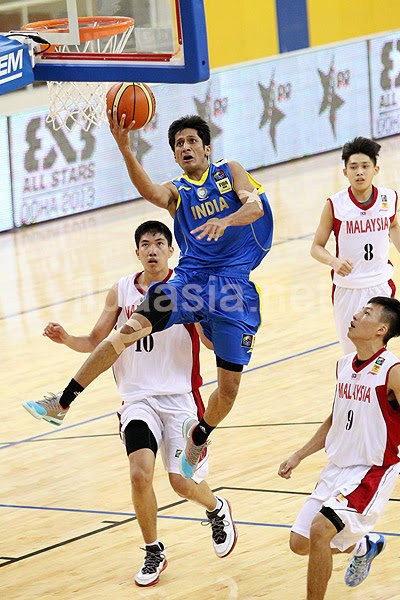
India's U18 boys and girls teams took part in the big FIBA Asia U18 championships but none of the squads improved on India's previous performances. After winning gold at the South Asian Basketball Association (SABA) Qualifiers, India headed to Qatar for the U18 FIBA Asia Championship. The boys' disappointed, finishing 13th (last), losing two of their three Preliminary Round games and failing to qualify for the next stage of the tournament. Their performance dropped them three spots to 51st in the world.

India's U18 girls once again played in the tougher Level I of the FIBA Asia U18 Championship for Women in Amman (Jordan). Thy lost all their preliminary group games but won the crucial Level I qualifier against Malaysia to finish sixth and remain in the higher fray of the competition for 2016. Despite this, India's FIBA ranking in this division dropped two spots to 39th.

India's Senior Women had a quiet and relatively underwhelming year, taking part in only the Lusofonia Games (bronze medal), the Asian Games (sixth place out of 11), and the Asian Beach Games (0-3, seventh place). Despite the inactivity, perhaps the falling performances of other world teams saw Indian Women rise one spot to 39th.

Once again, world champions in all the formats of the sport internationally, USA is dominating the FIBA World rankings, holding the number one spot in the Men, Women, Boys, Girls, and Combined sections.

What USA is to the rest of the world is what China is to Asia. The Chinese are ranked number one in all the various sections across the continent. India has risen one spot to eighth-place in the FIBA Asia Combined rankings.

2015 will bring back the big FIBA Asia Championships for Men and Women - both designated to be held in China - between August to October. The FIBA Asia U16 Championships will also be held, in July for boys and September for girls. India will be hoping to participate in all four competitions and have a chance to improve their world/Asia rankings. The world U19 FIBA Championships - for both Men and Women - will also be held in 2015.

India's FIBA Rankings at end of 2014
  • Combined: 51 (58.5 points; Change 0)
  • Men: 61 (6.9 points; Change 0)
  • Women: 39 (15.6 points: Change +1)
  • Boys: 51 (12.9 points; Change -3)
  • Girls: 39 (23.1 points; Change -2)

September 21, 2014

The Age Old Question


Age frauds hurt the present & the future of Indian Basketball

This article was first published in my column for Ekalavyas.com on September 8, 2014. Click here to read the original post. 

Illustration credit: Deepak 'Chuck' Gopalakrishnan for Ekalavyas.com


“Everybody does it.”

The first Indian national basketball tournament I closely covered were the Sub-Junior (under-14) nationals in Kangra, Himachal Pradesh, back in September 2010. The tournament featured the youngest members of the Indian basketball family from dozens of different states. While my first order of interest was obviously the result and the performances of the teams during the week-long tournament, it was also fascinating to wonder which of those young players could one day grow to become future stars of India’s Senior teams.

Scouting talent – especially among 12 or 13 year olds – is a wild and hugely unpredictable science. When a young player shows promise, the scout has to think more about their potential for growth over the next six or seven years instead of their performances in the present day. In many cases, the best performers at the sub-junior level can fizzle out and never reach their potential. In other cases, the converse could happen, and a wiry-thin bench warmer at 13 could enjoy an unbelievable growth spurt and become a superstar by 18.

There was one player in Kangra who stood head and shoulders above the rest, a player with performances so sublime that even the casual observer could bet that this young man was destined for stardom. He was taller, stronger, and quicker than the rest. He attacked the basket with ease and bullied his opponents on the way to a dominating performance. No matter who won the tournament, it was this individual that stole the hearts of all observers.

But then, like there always are in such cases, there were whispers. Whispers of cheating, of a lie. Whispers that said that there could be no possibility of this star player being under 14. Whispers of ‘age fraud’.

There is a reason why those whispers never turned into louder discussions in Kangra, and why, in every junior level national tournament in India (under-14, under-16, or under-18), there are similar whispers that go ignored. That is because most of those whispers come from guilty parties themselves. There are rarely any innocents in Indian basketball when it comes to age fraud. Only ones without sin could throw the first stone, and thus, there are no stones thrown at all.

And over and over, the whispers die down with the same sign and defeated acceptance. “Everybody does it,” they say.

That star player from Kangra – along with many of the other young talents I saw in 2010 – are now on the cusp of senior level in India. Many of those under-14s are at the under-18 level, and some of them were even part of the team that represented India at the FIBA Asia U18 Championship in Doha (Qatar) last week. India didn’t perform very well in Doha for a variety of reasons. India rarely performs well at the Asian/international level at all. Age fraud from a younger age isn’t the only ailment that hurts us at the national level, but a senior referee from Maharashtra recently told me that it doesn’t exactly help either.

“Our federations want better performances at international level,” he said, “But rather than focusing on our players getting better, they focus on trying to get better results from older players.  Meanwhile, the younger players don’t get a chance to shine and improve. The older ones only play for instant glory instead of long-term improvement.”

Because “everyone does it”, it has become the only way for various state teams at the National tournaments to remain competitive. At every national tournament, the Basketball Federation of India (BFI) appoints an Age Verification / Medical Committee to conduct a medical test. Every once in a while, a handful of players are adjudged to be older and barred from taking part. But this test – and its results – only hit the tip of the iceberg.

Frankly, the numbers of age frauds at these nationals are much larger than what the Medical Committee reveals. It is easy to forge documents for the kids at a young age, and unless they truly stand out in their muscular built, they are rarely suspected of age fraud. The result is that it becomes common to see 16-year-olds at the under-14 nationals, 18-year-olds at the under-16s, and 20-year-olds at the under-18s.

So how deep rooted is the problem truly? Experienced Indian basketball scout and development expert Jonathan Rego believes that around 80 percent – if not more – of participants in any junior level national tournament may be lying about their age.

“It is way too rampant and blatant for my comfort,” Rego told me, “It’s a problem so deeply entrenched in the system that those who cheat, continue to do so because those who don't have accepted it as part of the system. There are protests, but more often than not those protests are dismissed by verification of a birth certificate, which can be easily forged especially in smaller towns and cities which is where most of the better players come from.”

It might sound like a quick and easy solution to get a result by playing an older player at a younger tournament, but in the long run, age fraud hurts both the player involved and the teams he plays for, including India’s national teams. For the player, it keeps him or her at the lower level for too long, denying them the opportunity to practice and glean experience by facing off against more players of their own age group. A 20-year-old might dominate a field of 17-18 year olds, but by the time he’s 22, he is inexperienced against foes his own age.

“For players who aren't cheating, they constantly feel like they are going up against ‘better’ competition and that maybe they aren't cut out for the game,” said Rego, “This is also a big factor since juniors are easily impressionable and take their early victories and defeats to heart.”

Eventually, the problem hits India where it hurts most: the national team. "As younger talents are forced to play second-fiddle in the appropriate age group, age frauds deprive them of much-needed early exposure and the chance to develop in the appropriate way as they get to the senior level. Meanwhile, Team India stuffs up with players who had made a name for themselves domestically at a junior level before realizing that many of the same players peaked too early against younger and less developed talent.

A lie is like an errant pass: once you commit the turnover, it is difficult to recover the ball in the same possession. Once a player begins to falsify his or her records, it is difficult to undo the deed. Age fraud denies certain players who have the talent to play high-school or college basketball abroad from starting their development and education at the right age. While they pretend to be younger, they really get older, and are only wastefully repeating those years of their youth instead of improving (on the court as well as the classroom) with their own age-group.

The problem is beyond basketball or sports, and is entrenched as a systematic part of corruption in India. In smaller towns, registration offices will happily take a bribe to change birth certificates. District level or state level tournament organizers will gladly turn a blind eye to favoured coaches or teams that are fielding clearly older players.

It’s incorrect to only blame the players in this regard. All of them are influenced to make a decision about changing their age by an adult when they are only in their pre-teens, and thus may not understand the long-term consequences of their mistake. It could be a parent, the first coach at the district level, the coach of the state team, or the team manager who encourages the age fraud: and by the time the player is passed on from academy to academy and coach to coach, it gets murkier and hazier to identify the true culprit.

So how do we curb this rampant problem? In 2009, India’s Ministry of Youth Affairs and Sports – at least officially – set up the rules and consequences of age fraud. The ministry told state federations to ban any overage athletes for two years if caught cheating in first detection and for five years with any subsequent detection. The ministry also asked for mandatory ID cards for all athletes and conduct random age verification at regular intervals.

But these policies have been more talk and less action. As mentioned earlier, any type of age verification document is easy to forge. Secondly, despite the rule to ban overage athletes for two (or five) years, in practice, the ban ends up only applying to the player for the duration of the said tournament, before they are reinstated to be back in action the next time around.

As a solution, Rego suggested that players should be registered in a central database from the very first moment they play in a tournament that is affiliated or authorized by the Federation. Once registered, the centrally-managed database should be made available to all state federations and thus make tampering with age more difficult.  

He also believes that a more advanced physical test by the medical committee at the nationals could make a difference, too. “The bone density test is still a widely accepted and respected method of determining age,” he said, “There is argument against its high cost, but my counter is that, if administered and recorded properly, there is need to do it just once in a player's lifetime.”

“Nobody follows the rules,” said the referee from Maharashtra, “We need to hold both the state associations as well as the BFI accountable for letting this problem get worse. It shouldn’t be allowed to go haywire.”

Unfortunately, as of now, the problem has clearly gone haywire with no real resolution in the horizon. It will take a few brave and honest coaches, managers, or state associations to swim against the tide and refuse to play older players in junior tournaments – no matter the consequences. But, this being a circle of cause-and-effect, their efforts will only be recognized and emulated by others if they are able to be successful. With so many cracks in the system, it will ultimately come down to the honour of the coach to stick to doing the right thing.

Four years ago, I was in awe of that star player at the Under-14 nationals in Kangra as he dominated his competition with ease. Four years later, as the same star player reaches adulthood, I have begun to pity him a little: for the last few years, he was always the alpha dog in any team he played for or against. No doubt he was talented, but this was mostly because he also usually went up against those younger than him. Now he reaches an age where the difference of two or three years doesn’t matter as much anymore, but since he never learnt the ability to muscle past those as strong, fast, tall, or talented as him, he remains in grave danger of getting left behind. He might be a participant for India at the international stage but it’s unlikely that he’ll ever be a star.

Pity, because Indian basketball could sure use young superstars to peak at the right time. Hopefully, there is a steady change in the system so we can look past instant glory to ensure more long-term success.

If “everybody does it” then perhaps, together, everybody can stop, too. 

August 29, 2014

China win third successive FIBA Asia U18 Championship in Doha; Disappointing India finish last


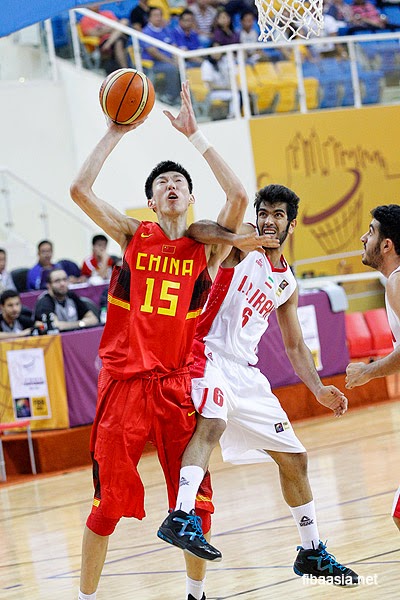
While at the senior level, Iran had replaced China as Asia's most dominant side in recent years, the Chinese showed another glimpse of why their future stars might be ready to reclaim their nation's hoops honour. For the third consecutive time, China won the FIBA Asia U18 Championship, hoisting the title in the tournament's 23rd iteration in Doha (Qatar) after a convincing victory over Iran in the final. China played fantastic basketball through the course of the 10-day tournament and made this their 11th victory overall in Asia's most prestigious junior basketball tournament.

China, who suffered a close call in winning the gold in Ulaanbaatar in an overtime game against Korea two years ago, had no such troubles this time around. They dominated the final early, breaking out to a 16-0 scoring run in the first quarter and holding on to a huge 36-19 lead by halftime. China kept their command on the game in the second half and had turned the game into a blowout before the beginning of the final quarter. China's most-accomplished young player Zhou Qi only made an appearance in the second quarter, by when his team had already grasped on to complete control of the game. Zhou still ended up with a game-high 16 points to lead his side to victory.

2012's silver-medalists Korea had to settle for Bronze as they bounced from an early deficit to beat Chinese Taipei 70-58 on Thursday. Korea's Kyongwon Kim was unstoppable, beasting his way to 26 points and 17 rebounds to lead his side to victory.

Earlier on the semi-finals, China exorcised the ghosts of recent senior-team defeats to Chinese Taipei by easily handling their neighbours 92-50. Chinese Taipei had no answer for China's duo of Rui Zhao (19) and Yuchen Zou (16), while Zhou Qi contributed 13 points and 17 rebounds off the bench. Only Yung-Cheng Sun (16) cracked double figures in scoring for Taipei. Iran were led by Navid Rezaeifar (18) and Mohammad Yousuf Vand (17) as they bounced back from a double-digit deficit at halftime to completely dominating the third quarter against Korea en route to a 78-60 semi-final win. Hyunwoo Jeon led with 16 points for the Koreans in the loss.

While the Chinese celebrated in Qatar, India's under-18 dream of continuing the same Cinderella success of their seniors was shot down early in the competition. After stuttering in qualifiers against Sri Lanka, India were placed in Group A of the tournament with China, hosts Qatar, and Malaysia. Despite the presence of the tournament's favourites China, there were hopes that good performances against the other two teams in the group could help see India go further than the past in the tournament.

Alas, India's performances dipped even further from their 10th place finish at the same tournament two years ago. India started off their campaign against the hosts Qatar. But despite a neck-to-neck first quarter, India were completely dominated in the second, being outscored 30-6 by their opponents. Down by 25 points at halftime, India pressed hard in the second half to make a comeback, but the damage had already been done. Qatar's Abdulrahman Mohammad Saad was unstoppable, tallying a breathtaking statline of 40 points, eight assists, and six rebounds against India. Abdelrahman Rehia Abdelhaleem added 26 and 10 rebounds as the duo paced the hosts to a 86-73 victory. Mahipal Singh had 20 points, six rebounds, and five assists for India in a losing cause.

India got their first and only win of the tournament against Malaysia early the next day. Although India started slow and turned the ball over several times, they bounced back from a small deficit in the first quarter to take control of the rest of the game. The duo of Gurvinder Singh Gill (24 points and 17 rebounds) and Mahipal Singh (22 points and seven rebounds) paced India to a 73-64 win. Yi Hou Wong scored 17 for Malaysia off the bench.

A month ago, China's Zhou Qi was part of the team which were surprisingly beaten in a historic win for India's senior squad at the FIBA Asia Cup. This time, Zhou Qi and the junior side were not messing around and went out to seek redemption. China dominated India on all fronts from the opening tip to the final buzzer, blowing out the Indians for a sixty-point victory. The final scoreline read 100-40 in China's favour, a lop-sided result that would come to haunt the Indians a few hours later. Zhou Qi paced the way with 21 points and seven rebounds for his side while Yuchen Zou added 19 and nine.

Right after India's loss to China, Malaysia played inspired basketball against the hosts Qatar to defeat them 78-70, and thus won their first-ever contest in the U18 FIBA ABC. This victory left India, Malaysia, and Qatar all tied in points behind China in Group A, with only two of teams able to progress and join the Chinese in the tournament's second round. Unfortunately, due to their worse point differential, India were the odd ones out. Despite their victory over Malaysia, India would finish fourth in their group and their tournament ended in sudden, heartbreaking fashion.

Because they didn't qualify for the Second Round, India played no further games and were adjudged to finish 13th in the tournament, tied with Iraq for last place (there was no 13/14th place playoff).

India also suffered some distraction when FIBA's 'No Headgear' policy sprung controversy again. India's Anmol Singh was made to remove his turban during warm-up of India's first game against Qatar. In their second game against Malaysia, Anmol was allowed to play with his turban for the first 10 minutes, before FIBA officials asked him to remove his turban again. The latest incident occurred a little over a month after FIBA forced two of India's senior team Sikh players - Amrit Pal Singh and Amjyot Singh - to remove their turbans during the FIBA Asia Cup. Back at home, the outraged Basketball Federation of India (BFI) once again complained to FIBA for this discriminatory policy and urged them to change the rules.

The tournament was a disappointing finish for a team which had the chance to prove that India's future could continue the optimism that basketball in the country had recently felt all around. While this team definitely had some talent, they showed a lack of maturity and experience, especially when they found it difficult to counter long periods of pressure and scoring runs by their opponents. There is no easy solution for this except the same thing that coaches and media in India have harped on for years: all our teams need more quality games to give them more experience of high-level play so they are better prepared for all international basketball situations in the future.

Captain Gurvinder Singh Gill (aka "Gary") finished as the team's leading scorer with 17 points per game and is a sure-shot to eventually graduate to the senior side in a few years. Another rising young talent - Narender - led the entire tournament fray in assists with 6.3 assists per game. He also finished top five in three-point percentage. Gill was a top five score in the championship. Of course, all of these numbers should be taken with a grain of salt since India only played three games.

Apart from the win over Malaysia, there won't be any other positive memories for Coach Jora Singh and his side to bring back from Doha. But just like we hope to use positive results as a pedestal to propel ourselves higher, let's hope that this negative result can be used as motivation for all the players involved to bounce back stronger in the future.

2014 FIBA Asia U18 Championship - Final Standings
  • 1. China
  • 2. Iran
  • 3. Korea
  • 4. Chinese Taipei
  • 5. Philippines

August 22, 2014

Return of the FIBA/Headgear controversy: India's Anmol Singh forced to remove turban at U18 FIBA ABC


The 'No Headgear' policy of FIBA (the International Basketball Federation) has sparked another controversy involving a Sikh basketball player for Team India. This time, the ruling effected Anmol Singh, the only turban-wearing player of India's junior squad that is currently participating in the FIBA Asia U18 Championship in Doha (Qatar).

The Times of India reported yesterday that under-18 rising star Anmol was made to remove his turban during warm-up of India's first game in Doha against Qatar. In their second game against Malaysia, Anmol was allowed to play with his turban for the first 10 minutes, before FIBA officials asked him to remove his turban again.

In a chat with TOI from Doha, national U-18 coach Jora Singh said, "Anmol was not allowed to play with a turban during our opening game against Qatar when the team was warming up. Today, he was allowed to play with the patka in the first quarter, but later on was told to remove it. Anmol then tied his hair with a small band and continued to play."
(via Times of India)

The latest incident occured a little over a month after FIBA forced two of India's senior team Sikh players - Amrit Pal Singh and Amjyot Singh - to remove their turbans in accordance with their 'No Headgear' rule in Wuhan (China) during the FIBA Asia Cup, a controversy that sparked the #LetSikhsPlay movement and since forced FIBA to review their ruling.

Currently, Article 4.4.2 of FIBA’s Official Basketball Rules states, "Players shall not wear equipment (objects) that may cause injury to other players," a list that includes headgear like turbans, hijab, etc.

The Basketball Federation of India (BFI) submitted a formal request to FIBA regarding the initial incident in Wuhan soon after, FIBA promised to review Article 4.4.2 during the FIBA World Congress, set to be held on 28-29 August in Sevilla (Spain) during the FIBA Basketball World Cup.

Unfortunately, until the 214 members of FIBA Central Board meet next week and decide on the future of this rule, FIBA's officials on the ground will be compelled to continue following the set rules.

But the BFI claim that there had been a misunderstanding regarding Anmol Singh at the FIBA Asia U18 Championship, which ultimately led Anmol removing his turban - or patka - particularly in Game 2 against Malaysia. "The FIBA Commissioner who was assigned to supervise the match initially had no objection and allowed Anmol Singh to play in the first quarter of the game with his patka, which is a religious right of the Sikh community," said the official BFI statement, "The basketball rule says that player shall not wear equipment or object that may cause injury to other players while playing. The patka is made of thin cloth which does not cause injury to anybody, as Sikh athletes are wearing in other team games. We are surprised that why this discrimination by FIBA Asia is being repeatedly imposed on Indian Sikh athletes representing the country at international level."

The Hindu has reported that India's Union Sports Ministry has also sought intervention from the International Olympic Commission (IOC) to resolve the issue.

The BFI questioned the discrimination in basketball when other team games like volleyball, football, hockey, handball and cricket had no restriction on Sikh players wearing the patka.

The BFI's CEO Roopam Sharma has been nominated to attend the FIBA Congress in Spain to resolve the issue once and for all and "avoid such humiliation in future".

6-foot-10 Anmol, who plays backup Power Forward/Center for India, scored 10 points in India first game loss to Qatar. The next day, he played 16 minutes against Malaysia and shot just 1/4 for two points in the game. Nevertheless, Team India overlooked the distraction to bounce back and defeat Malaysia 73-64 in the contest.

Unfortunately, a day later, India were whooped thoroughly by China by 60 points and Malaysia scored a surprise victory over Qatar. With India, Qatar, and Malaysia all tied for second place in Group A, it was India that were knocked out because of their inferior point differential.

On court, India's juniors will be disappointed by this early exit: Qatar were a beatable side and the margin of defeat to China shouldn't have been allowed to run that wide. Hopefully the young players can recover from the setback and bounce back stronger.

Off the court, hopefully FIBA can bring an end to this whole senseless controversy next week. We need common-sense prevails over rudimentary thinking, so we can get back to basketball instead of worrying about whether a little bit of cloth covering someone's head could ever be a "threat". Especially if that bit of cloth has such a deep-lying significance to the culture and religion of the targeted individuals.

August 4, 2014

India in Group A with China, Qatar, & Malaysia at 23rd FIBA Asia U18 Championship


The luck of the draw has placed India's Junior Men's Basketball team in Group A alongside holders China, hosts Qatar, and Malaysia in the Preliminary Round of the 23rd FIBA Asia U18 Championship, set to be held in Doha (Qatar) from August 19-28. The tournament will feature 15 total teams divided into four groups and will primarily be held at the Al-Gharafa Stadium in Doha.

India are the only representatives from South Asia at the tournament, and qualified after defeating neighbours Bangladesh and Sri Lanka at the South Asian qualifiers on home soil in Bengaluru last month.

A few days ago, India finalized the 12-member roster for this tournament, after Senior Head Coach Scott Flemming made some changes to the team that showed unexpected hiccups in the qualifier against Sri Lanka. But two of India's top junior players - Mahipal Singh and Gurvinder Singh Gill - figure to continue as the talisman to carry India's hopes forward at the tournament in Qatar.

While Qatar was chosen as the host for this championship months ago, the Qatar Basketball Federation (QBF) pulled out as hosts some days ago, leaving FIBA briefly in the hunt for a new location and possibly postpone the dates of the tournament. But a few days later, without further explanation, the QBF changed their minds and opted in again, with the tournament and the dates getting back to their earlier scheduled programme.

Here is the complete Preliminary Round draw for the 23rd FIBA Asia U18 Championship:
  • Group A: China, India, Malaysia, Qatar.
  • Group B: Korea, Philippines, Jordan.
  • Group C: Iran, Kazakhstan, Bahrain, Kuwait.
  • Group D: Japan, Chinese Taipei, Iraq, Hong Kong.
Three teams from each group will qualify for the Second Round of the tournament, where they will also carry forward their points from the preliminary round. All teams from Group B qualify; the 16th qualifying team in the tournament - Lebanon - have pulled out from participation.

Here is India's Preliminary Round Schedule All timings IST:
  • Aug 19, 2014 - 7:30 PM - India vs. Qatar
  • Aug 20, 2014 - 1:30 PM - Malaysia vs. India.
  • Aug 21, 2014 - 1:30 PM - China vs. India.
Photo courtesy: Ekalavyas
The previous edition of this tournament was held two years ago in Ulaanbaatar, Mongolia, where China won a thrilling finale by two points against Korea after overcoming a large deficit. China have won this trophy a record 10 times already and will count themselves among the favourites again. The top teams in all of the other groups - Korea, Iran, and Japan - will all have their eyes on the prize as well.

India finished 10th in Mongolia after qualifying from the preliminary group stage but being eliminated in the second round. The previous tournament will be remembered for several impressive breakout performances by India's Palpreet Singh Brar, who is now a member of the senior team.

China will of course be India's toughest early challenge. But head coach Jora Singh will be hoping that perhaps the under-18s can take inspiration from India's Senior Men's team, who performed a wonder at Wuhan a few weeks ago at the 5th FIBA Asia Cup, defeating China for the first time in their international basketball history, and did so on their home court. Even if India are unable to pull off another memorable upset, they have a legitimate chance of finishing at second place in this group. Neither Malaysia or Qatar - India's other two preliminary round opponents - qualified for championship in 2012, and India could have a slight edge over both teams at the tournament in a couple of weeks. Their opening game is against the hosts Qatar, and India will have to defeat not just the players on court but also overcome the home support.

12 teams will be divided into two groups of six in the second round, and if India can qualify for this group, they will play three more games within their new group. The top four teams from each second round group will then qualify for the Quarter-Final and into the knockout stage of the tournament.

Since 1972, India have only managed one top eight finish in the U18 FIBA ABC, 10 years ago when they finished seventh on their home floor in Bengaluru. A top two finish in the preliminary round group this time around could give India a good start for a potential Quarter-Final visit. India have a real chance at improving on their 10th place standing two years ago. The Senior team has already displayed that Indian basketball is on a rise and will continue to play confidently against all comers; now, it is the Juniors' turn to shine and to show that the future can be even brighter than the present.

August 2, 2014

India finalizes Junior Men's team for U18 FIBA Asia Championship


Nearly a month ago, India's Junior Men's squad trumped South Asian opponents Bangladesh and Sri Lanka on home soil to qualify for the U18 FIBA Asia Championship. The championship was scheduled to be held in Doha (Qatar) from August 19-29, and India's juniors were set to further hone their game through a preparatory camp at the SAI Center in Aurangabad, Maharashtra.

But a lot has changed over the past few weeks, and with a reshuffle at the training camp, India has confirmed several new faces to represent the national squad for the FIBA Asia championship. But now, the setting of the championship itself has been changed, creating a haze of uncertainty for the squad as they prepare for the tournament.

Photo courtesy: Ekalavyas
Head Coach of India's Senior Men's team Scott Flemming was busy with the seniors and wasn't involved in coaching the under-18s qualifying triumphs in Bengaluru last month. But after guiding the National Senior side to a seventh-place finish at the FIBA Asia Cup in Wuhan a few weeks ago, Flemming lent some of his time to the juniors, attending the camp in Aurangabad, and contributing to several changes in the final roster.

As Amit Sampat reported on the Times of India yesterday, Flemming's changes to the squad came as a reaction to India's performances in the qualifiers, particularly their struggles in the win over Sri Lanka. After a strenuous seven-day session with the probables - reported Sampat - Flemming along with other national selectors finalized the team with four new players.

Here is India's U18 Roster for the FIBA Asia U18 Championship
  • Samson Sandhu Singh (Maharashtra)
  • Narender (Delhi)
  • Gaurav Ohlan (Delhi)
  • Sunil (Delhi)
  • Gurvinder Singh Gill (Punjab)
  • Anmol Singh (Punjab)
  • Akashdeep Hazra (Punjab)
  • Dildar Singh Brar (Punjab)
  • Arshpreet Singh Bhullar (Punjab)
  • Pardeep (Haryana)
  • Akhil AR (Kerala)
  • Mahipal Singh (Rajasthan)
  • Head coach: Jora Singh
  • Coach: Paramdeep Singh
Via The Times of India:
On the seven-day work out Flemming said, "I was able to work with our U-18 national team last week. There are some good individual players in this team. It is a matter of continuing to work together and becoming one unit on both ends of the floor. We are trying to find a good balance of fast break basketball while still being patient in our half court offense."
Satisfied with the progress he added, "As with our senior team, defense is the key though. When the shots aren't falling they can always play good defense and rebound the basketball. I think they are making some good progress."
Samson Sandhu Singh, Akhil AR, Arshpreet Singh Bhullar, and Akashdeep Hazra are the new names added to the squad. Prudhvi Reddy - the trail blazer who honed his game in Barcelona, Spain before returning to India for the U18 SABA Qualifiers - was omitted from the squad. Top performers like Mahipal Singh and Gurvinder Singh Gill returned to the final 12 and will have the responsibility of being the team's leaders.

But instead of heading out to Qatar next week, the team will now undergo one more preparatory camp. This is because Qatar Basketball Federation pulled out as hosts of the tournament a few days ago, and now, FIBA Asia is in search for a new host for before announcing a new location and dates for the championship.

September 28, 2013

BFI announces national training camps for U16 Girls & U18 Boys


The Basketball Federation of India (BFI) has announced that they will be hosting training camps over the next month for both India's U16 girls' and U16 boys' national squads starting from Monday, September 30th. In addition, the BFI has also released the list of probables who will be attending both these camps.

U16 Girls

The U16 Girls' camp is scheduled to be held from September 30 - November 3, 2013, at the SAI Training Center in Gandhinagar, Gujarat. 16 probables have been called up for this camp, out of which 12 will be chosen for India's U16 team that will take part in the 3rd FIBA Asia U16 Championship for Women in Colombo, Sri Lanka, from November 18-25. Upon completion of their training camp in Gujarat, the squad will be traveling to Dongguan, China on 6th November to participate for an exposure trip to compete against various Chinese Club teams.

Here are the probables called up for India's U16 Girls' camp, chosen based on their performances at the 30th Youth National Basketball Championship in Kolkata in May:

  • Vandana Arya (Chhattisgarh)
  • Vimmy Varkey (Kerala)
  • Riya Verma (Chhattisgarh)
  • Bhandavya HM (Karnataka)
  • Lopamudra TK (Karnataka)
  • Anreeta PV (Kerala)
  • Sandhya CR (Karnataka)
  • Gagandeep Kaur (Punjab)
  • Sakshi Pandey (Madhya Pradesh)
  • Sakshi Arora (Maharashtra)
  • Mayukha KT (Kerala)
  • Mughda Amraotkar (Maharashtra)
  • V Srividhya (Tamil Nadu)
  • R Selvamithra (Tamil Nadu)
  • MG Shinu (Tamil Nadu)
  • Pallavi Kumar (West Bengal)
    Head Coach: TD Biju
    Coach: Abhay Chawan
    Foreign Coach: Francisco Garcia
U18 Boys

The U18 Boys' national camp is scheduled to be held at the SAI Training Center in Aurangabad (Maharashtra) from September 30 - October 19. 25 probables have been called up for this camp, which is being held in preparation to build India's U18 boys roster that will take part in SABA Qualifiers in 2014 to attempt to qualify for the 23rd FIBA Asia U18 Championship next year.

Here are the probables called up for India's U18 boys' camp, chosen based on their performances at the 64th Junior National Basketball Championship earlier this month in Cuttack:
  • G Sai Sri Harsha Reddy (Andhra Pradesh)
  • Kanipi Shiv Kumar (Chhattisgarh)
  • Tarendra Kumar Yadav (Chhattisgarh)
  • Rajesh (Chhattisgarh)
  • Gaurav Ohlan (Delhi)
  • Narender (Delhi)
  • Nilesh Chaudhary (Delhi)
  • Pradeep Chauhan (Haryana)
  • Sourav Kumar Sinha (Jharkhand)
  • Sowkin Shetty (Karnataka)
  • Akhil AR (Kerala)
  • Sugeeth Nath A (Kerala)
  • Bhrigendra Pratap Singh (Madhya Pradesh)
  • Lalit Singh (Madhya Pradesh)
  • Samon Stephen Sandhu (Maharashtra)
  • Mihir Manoj Joshi (Maharashtra)
  • Dildar Singh (Punjab)
  • Hemant Sabharwal (Punjab)
  • Anmol Singh (Punjab)
  • Gurwinder Singh Gill (Punjab)
  • Devendra Kumar Khatik (Rajasthan)
  • Nikhil Pandian (Tamil Nadu)
  • M Harish (Tamil Nadu)
  • Sagar Joshi (West Bengal)
  • Jowakim Lakra (Odisha)
  • Head Coach: Jora Singh
  • Coach: Paramdeep Singh
  • Foreign Coach: Scott Flemming