Showing posts with label Chander Mukhi Sharma. Show all posts

March 25, 2019

K. Govindaraj re-elected as Basketball Federation of India president


Basketball in India is set for a little bit of the same in the near future... and a little bit of something different, too.

K. Govindaraj, the incumbent president of the Basketball Federation of India (BFI) was unanimously re-elected to his post as president at the federation's Annual General Meetin (AGM) in Bengaluru on Sunday. The executive committee alao re-elected Chander Mukhi Sharma to his post as Secretary-General.

Govindaraj is a former player and also serves as the secretary of the Karnataka State Basketball Association (KSBBA).

Other elected officials in the executive committee include:
- Senior vice-president: Teja Singh Dhaliwal.
- Vice-presidents: Seema Singh, Om Prakash, Ajay Sud, Gautam Ganguly, Ajeet Singh Rathode.
- Treasurer: V. Raghothaman.

According to a report by The Hindu, Govindaraj and Sharma discussed several new schemes to help push forward basketball in India, which had been stagnating under their help over the past few years. These include the launch of a six-team women's league and plans to restructure the national championship.

"We intend to have a zone-wise competition before the final round," said Govindaraj. "We will have more matches, which will give us a chance to look at more talent."

During the AGM, the BFI also announced that Serbian coach Velesan Matic has been hired as the head coach of India's narkonal men's basketball team.

March 24, 2019

Veteran coach Veselin Matic named head coach of India's Men's Basketball team

India were grouped in the preliminary round of the 2019 FIBA World Cup Asia Qualifiers with Jordan, Lebanon, and Syria. The former two - higher ranked sides with notable star players - began as favourites over India even before the players took the court. But there was hope that India could finish ahead of Syria, a country with sporadic and limited basketball experience relative to India's, and without the perceived quality of some of the top players that India could potentially field for the matchup.

Alas, India's qualifiers campaign was a disaster, as the team lost all six of their home and away games to finish bottom of the group and missed the opportunity to step into the next round. The most disappointing of these losses came against Syria, to whom India fell 74-57 at home in Bengaluru in November 2017, and then again 81-76 on the road in Zouk Mikael in June 2018. 

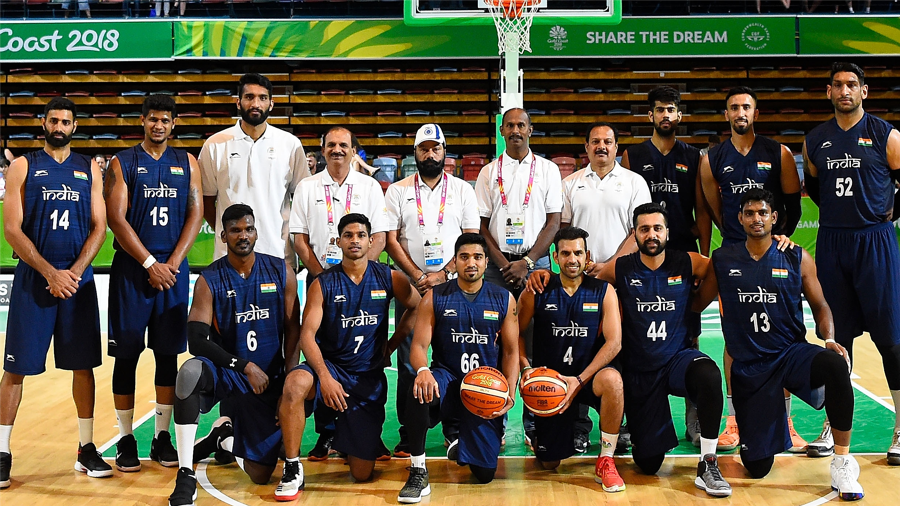
The losses, and the backroom turmoil that accompanied them with the Basketball Federation of India (BFI), were part of one of the worst stretches of results in recent Indian men's basketball history. India lost every game in every major tournament for nearly two years, including the FIBA Asia Cup, the aforementioned World Cup Qualifiers, and the Commonwealth Games. The team was helmed by a carousel of head coaches during this stretch without finding long-term stability with any single one. 

In contrast to India's failure stood the surprisingly emerging Syrian side. Coahed by veteran Serbian coach Veselin Matic, Syria were able to move on to the second round of the World Cup qualifiers, and despite losing all the games at this tougher stage, they managed to put the Asian basketball fray at notice.

And noticing from the far end of the bench were Syria's disappointed victims: India. Nine months after they were knocked out by Matic's men, India have turned to a new saviour to help turn around their basketball fortunes: Matic himself.

At the most-recent Annual General Meeting of the BFI in Bengaluru, the federation's Secretary-General Chander Mukhi Sharma announced that Matic has been appointed as the new head coach of India's senior men's basketball team, replacing a series of interim/temporary coaches. Sharma stated that Matic is expected to begin his stint in India by the end of April.

The annoucement came during the BFI's AGM elections where K. Govindraj was again elected as the Federation's president. 

According to a report by Sportstar, Govindraj was confident of improvement under the new head coach. "We will have aggressive camps. We have already appointed a foreign coach (Matic). We will do much better in the coming years."

Matic (58) is a veteran of European and Asian basketball and arrived in India with a wealth of successful international experience. Originally from Belgrade in Serbia, Matic spent his professional playing career as a guard for the Serbian club OKK Beogard. He even applied for the NBA Draft in 1982 but went undrafted. After retirement in 1988, Matic turned his attention to coaching, starting with his team Beogard. Over the next few decades, he held coaching roles for clubs in Germany, Poland, Estonia, Lebanon, and more, while also becoming a part of the national basketball coaching/scouting structure of the former Yugoslavia and the Polish national team. He was an assistant coach for Yugoslavia's squads that won the 2001 EuroBasket and the 2002 World Championship. 

Matic served as the head coach of Iran's national team from 2009-2011, and during this stretch bagged the gold medal at the 2009 FIBA Asia Cup and bronze at the 2010 Asian Games. He served brief stretches as the head coach of Lebanon, and most recently, of Syria. Since 2012, he has been an official FIBA scout for the FIBA Men world championships. 

Matic's wealth of experience is sure to be invaluable for the federation and players in India. Over the past 30 years, he has been a part of nearly every type of basketball situation. Although no details of his contract are yet confirmed, the BFI should retain him for the long-term to give the entire basketball framework a chance to grow and develop under his wing. The country's top players like Amjyot Singh, Amritpal Singh, Vishesh Bhriguvanshi, Satnam Singh, and more should benefit under his tutelage and be able to use his network to propel their individual careers to new avenues. 

Indian basketball has seen some dark days in recent years. The Matic hiring isn't an instant game-winning shot, but it is a sign of a positive rebuild that should bring the sport back to its proper trajectory. 


November 14, 2018

Hoopdarshan Episode 70: Palpreet Singh Brar on his G-League journey, BFI suspension, and more


It's Diwali season, and Hoopdarshan has brought the fireworks. In Episode 70 of the podcast, we feature special guest Palpreet Singh Brar, the first Indian to be drafted directly by the NBA G-League, an important member of the Indian national team, and the man embroiled around a controversy that got him suspended from Indian basketball this year. Brar bares his all, giving his side of the story, and providing more details of his incredible journey. Additionally, co-hosts Kaushik Lakshman and Karan Madhok catch up on other news in Indian basketball and the NBA.

Brar is from originally from Punjab's Sri Mukhtar Sahib district, and like many other Punjabi basketball prodigies, got his basketball training under the legendary late Dr. Subramanian of the Ludhiana Basketball Academy. After impressing for India's junior levels and national team, he won the NBA's ACG Jump Challenge in 2016 and went to train for the NBA's G-League. The same year, he became the first Indian to be drafted into the G-League by the Long Island Nets, before he was cut from the team. Brar has since been a regular for India's national team in important FIBA tournaments, played in the now-defunct UBA league, and in 3x3 competitions. Last year, Palpreet was handed a controversial 1-year ban by the Basketball Federation of India.


Hoopdarshan is the truest voice of Indian basketball, and since we're such hopeless fans of the game, it will become the voice of everything basketball related we love, from the NBA to international hoops, too. On every episode of Hoopdarshan, we will be inviting a special guest to interview or chat to about a variety of topics. With expert insight from some of the brightest and most-involved people in the world of Indian basketball, we hope to bring this conversation to a many more interested fans, players, and followers of the game.

Make sure to follow Hoopdarshan on Soundcloud or search for 'Hoopdarshan' on the iTunes Store! Auto-sync Hoopdarshan to your preferred podcast app NOW!

Hoopdarshan can be found on...

June 25, 2018

Bengal Tigers (Men), Ludhiana Sparx (Women) win FIBA Asia Quest 3x3 – India Qualifiers in Bengaluru


In a first-ever iteration of the FIBA Asia Quest 3x3 - India Qualifiers - held on June 23-24,2018 - dozens of teams in both the men and women's divisions from around the country descended to Bengaluru. Organised by the Basketball Federation of India (BFI), the event concluded on Sunday evening at Bengaluru's Sree Kanteerava Stadium with the Bengal Tigers (Men) and Ludhiana Sparx (Women) emerging as champions.

In the Men's final, Bengal Tigers of West Bengal defeated Punjab's Ludhiana Steelers 22-17 to win the tournament.

In the women's section, Punjab's Ludhiana Steelers defeated the Tamil Nadu Tigers 16-10.

Both winning squads were rewarded Rs. 75,000 while the two runners-up got Rs. 50,000 each. All the four finalists will thus represent India in the South Asian Basketball Association (SABA) Quest stop. The SABA Quest stop carries a total prize money of USD 10,000 with the top teams going on to the Quest Final.

Third place was won by Tamil Nadu Tigers (Men) in a 22-13 win over Hyderabad Tigers. Bengaluru Wings (Women), the team with the local support, defeated Bengal Tigress 10-6 to win the women's bronze. Both bronze-medallists were rewarded Rs. 25,000 each.

T. Suneel Kumar, Bengaluru City Police Commissioner was the chief guest and gave away the prizes along with BFI's president K Govindaraj, MLC and Secretary-General Chander Mukhi Sharma.

Complete results of the event and player profiles of the FIBA Asia Quest 3x3 - India qualifiers are available here.

June 22, 2018

FIBA Asia Quest 3x3 India Qualifiers to be held in Bengaluru this weekend


The Basketball Federation of India (BFI) affiliated national 3x3 event will be taking off this weekend. The FIBA Asia Quest 3x3 - India Qualifiers are scheduled to be held in Bengaluru's Sree Kanteerava Stadium on June 23-24, 2018. This FIBA 3x3 event, organised under the aegis of the BFI, will feature 12 city-based teams in two categories (men and women) representing the BFI's affiliated units around India.

The winners and runners-up of the FIBA Asia Quest 3x3 – India Qualifiers will represent India at the South Asian Basketball Association (FIBA Sub-Zone) Quest stop. The SABA Quest stop carries a prize money of USD 10,000, with the top teams going on to the Quest Final.

BFI's president K Govindaraj said that the FIBA Asia Quest 3x3 – India Qualifiers were the ideal opportunity that the BFI were looking for to tip off the FIBA 3x3 movement in India. "FIBA 3x3 is a great concept is a boon for Indian basketball on many counts," said Govindraj. "It not only helps us widen the base for basketball thus increasing the popularity of basketball in India, but also is a fantastic opportunity to increase the number of the organisers for basketball events in India."

"The ultimate aim for BFI is to take the Indian team to the Olympic 3x3 competition."

This, of course, is not the first major 3x3 event in India. The YKBK Enterprise launched the 3BL, a FIBA-recognised 3x3 basketball league in India, two weeks ago in New Delhi. 3BL's first season is being held in six Indian cities - Mumbai, Delhi, Aizawl, Kolkata, Chennai and Bangalore - from June 9 to August 26 this year with twelve teams. This weekend, while the BFI's Asia Quest event takes place in Bengaluru, 3BL's second round will be in progress in Aizawl.

The BFI's launch of this 3x3 event doesn't come without controversy. On the same day as the 3BL announced their launch, the BFI announced a ban on all 3x3 players in India from playing in national 5x5 events, and vice versa. More recently, the BFI banned two players associated with the 3BL's launch - Amjyot Singh and Palpreet Singh Brar - from federation's national events for one year.

Now, the BFI is entering the competition with their own 3x3 event. The BFI's secretary-general Chander Mukhi Sharma said that the FIBA Asia Quest 3x3 – India Qualifiers will tip off their long-term FIBA 3x3 project.

"BFI has chalked out a long-term FIBA 3x3 program with a competition structure that will involve more than 500 games across India every year," said Sharma. "We do believe that the FIBA 3x3 is certainly the way forward and are certain that it will act as a catalyst in improving the standard of basketball along with increasing the popularity of the sport."

Games at the FIBA Asia Quest 3x3 – India Qualifiers are scheduled to tip off at 4 pm on Saturday June 23, 2018 and through the whole of Sunday at the Sree Kanteerava Stadium outdoor courts.

June 21, 2018

With unnecessary bans on two star players, Basketball Federation of India has once again proven to be its own enemy


This article was first published in my 'Hoopistani' column for The Times of India Sports on June 10, 2018. Click here to read the original feature.

Last month, the Basketball Federation of India (BFI) banned all players hoping to participate in an upstart 3x3 basketball league—the 3BL—from participating in full, five-on-five basketball activities at the domestic or international stage. A few months before that, India’s best players Amjyot Singh and Amritpal Singh were removed from the national team-list because of “trust” issues. Two years ago, the BFI slapped a ban on 122 players, coaches, and staff taking part in the UBA professional basketball league in the country.

In 2010, the BFI attempted to bar the country’s best player Geethu Anna Jose from playing pro in Australia. Ten years ago, the ban was on India’s best point guard TJ Sahi for alleged indiscipline. In 2006, it was India’s best player at the time—Sozhasingarayer Robinson—banned for missing a training camp. In 2005, one of India’s greatest basketball players Jayasankar Menon was handed a “life ban” for participating in an on-court fight between players.

And earlier this week, the BFI banned Amjyot Singh and Palpreet Singh Brar (both former NBA G-League draftees) for one year for “indisciplinary activities”.

We’ve seen this movie before, and its ending is easy to predict: losses all around for everyone involved in Indian basketball—the players, the federation, the fans, and the sport in itself.

In a stunning decision on Monday, the BFI handed Amjyot (26) and Brar (24)—Punjabi players who have been lynchpins of the national team—one-year bans for alleged indiscipline before and during the Commonwealth Games in Australia in April. Brar’s ban was handed because he abused the national team while drinking on social media. Amjyot—the most-talented player in India—was banned for allegedly striking a teammate and causing division among players in the team.


The federation revealed that both the players’ objectionable actions had rendered them unfit to represent the national side and even be a part of the national team.

“A national basketball player flaunts a picture on social media application Snapchat, abusing the nation after consumption of hard liquor. Is he really fit to be the part of the national squad?” Chander Mukhi Sharma, the secretary-general of BFI, said while sharing the information about suspension of two players from national side.

“Just before the match at the Commonwealth Games, Amjyot had also slapped his teammate and compatriot Arshpreet Bhullar. Moreover, there had been complaints against Amjyot of misbehaviour with the national coach. They did not report to the camp for three days. They were causing trouble at the camp, indulging in groupism. A disciplinary panel was constituted which decided the punishment,” said Mukhi.

…Amjyot was part of the team that went to Gold Coast. Amjyot again tried to break up the team into factions in Gold Coast. As a result, it cost us all the matches in Gold Coast,” he added.

The decision to ban the two players was taken by the BFI’s disciplinary committee, which included India’s interim men’s head coach Rajinder Singh. A disciplinary committee member said that Amjyot and Brar reported late to the national camp in Bengaluru and “disrupted the atmosphere”.

This is a surprising set of allegations, particularly on Amjyot. Sharma is essentially blaming India’s losses at the Commonwealth Games in Gold Coast on him. Furthermore, even if the allegations on Amjyot are true, Sharma and the federation have announced an unnecessarily severe punishment—one year—for relatively minor issues like rifts between the team and Snapchat insults. 

But then again, Sharma, the current federation, and even the BFI of the past have a history of overreacting to errors made by athletes, the same athletes who are the backbone of India’s national team structure and are the only reason that India were even considered a rising power in Asian basketball.

I used the past tense above—“were considered”—deliberately. By continuously shooting themselves in the foot, the BFI are becoming Indian basketball’s worst enemy, stunting the growth of the sport with the intention of ensuring that they have absolute power over all players and other entities in Indian basketball. They punished Amjyot and Amritpal over a baseless “trust” issue in the FIBA World Cup Qualifiers, tried to hurt competing leagues like 3BL and UBA by disallowing players to take part in both events, and unofficially blackballed star players like former women’s captain Prashanti Singh for being absent for a few days. They have had issues with Geethu, with TJ, with Robinson, with Menon.

And with countless more to chose to remain silent in fear that angering the federation would rob them of their only opportunity to make a living through basketball.

Amjyot is among the “Big Three” of Indian basketball and has been the country’s top scorer in every international tournament he has participated in over the past five years. Brar was also a major contributor to the national squad until recently. In 2016, Brar became the first Indian to be drafted directly into the NBA’s G-League by the Long Island Nets, although he was cut before the final roster. Amjyot, who played professionally in Japan in 2016, was drafted into the G-League by the OKC Blue in 2017 and appeared in 30 games.

The exploits of Amjyot and Brar, plus of other important players like Amritpal Singh who played in Australia’s NBL last season, are an exciting, new phenomenon for Indian basketball. The BFI have seemingly been unprepared to have an appropriate reaction to these athletes having their own professional independence. Until recently, nearly every Indian basketball player had to rely on India’s national teams and domestic events for basketball opportunities. But changing times have offered new avenues, and the BFI have responded negatively to this independence. The strange case of Amjyot and Amritpal summoned to India for February’s FIBA World Cup Qualifiers only to find their names off the team list showcased the federation’s troubling attitude towards its top players.

For Amjyot and Brar, the bans might be about a bigger issue than the alleged misconduct. Both players were involved in the build-up of the upcoming 3BL, a first-of-its-kind 3x3 basketball league in India. But on the same day that the 3BL was announced, the BFI released a memo to all secretaries of India’s affiliated basketball units, giving an update on their own 3x3 event and banning all players hoping to participate in opposing 3x3 leagues from 5x5 basketball in/for India (and vice versa). Amjyot has since been back in the US with hopes to train for a call-up to the G-League again, while Brar—already cut from the national squad—committed to the 3BL.

The 3BL launched on Saturday, June 9 in New Delhi. The BFI’s latest ban on these two players came earlier in the same week.

On Friday, Amjyot released a statement while in Philadelphia in regards to the BFI ban. “I am disappointed with this action from the BFI,” he said, and added that the altercation between him and Bhullar at the Commonwealth Games occurred in the “normal course of practice”.

“I am the last person to indulge in any alleged violence and my reaction was only in self-defence… I feel that my actions do not even remotely warrant a one-year ban as imposed by the BFI.”

Amjyot also denied Sharma’s allegations that he was trying to break the team up in factions. “I strive to be selfless and a complete team player both on and off the court and I am confident that majority of the players who have interacted or played with me will tell you the same.”

“This one-year ban has taken away the opportunity to represent my country at the international level… I am always ready to play for my country and will be privileged to do so if called upon by the BFI in the future.”

On the same day as Amjyot’s statement, his father in Chandigarh told TOI that the family would consider legal action if his ban is not lifted by the federation. 

Regardless of how this messy situation untangles, one thing is for sure: the years of over-reaction has proven that the BFI has to mature and react appropriately to competition—like the 3BL—and small infractions. But for now, the federation’s ban will hurt the team’s immediate future and push young players and outside investors from losing faith in the system.

For years, those outside the Indian basketball world have wondered how a country with such a large population has never reached its potential in basketball (and many other sports). Part of the reason for this failure has been on display in this saga. The federation needs to realise that basketball growth will not be a simple lay-up; it will be messy and unpredictable, it will be full of hiccups, and it will sometimes happen without their permission. Sometimes outside competition will spur on this growth, and sometimes our star players will find new opportunities for themselves that might clash with the federation’s path. For basketball’s sake in India, the BFI has to get used to this unpredictability instead of trying to control or suppress it.

If Amjyot and Palpreet truly deserve to be discipline, then they should definitely be handed a reasonable punishment. The players need to keep the federation happy, and the federation needs to do the same for the players.

A reaction like this, however—a groaning repeat of history—is only going to suppress the sport. The sport is bigger than the federation, and all sides must get over their infighting and work together to help India reach its hoops potential.

June 13, 2018

Hoopdarshan Episode 64: EXCLUSIVE - Amjyot Singh opens up about BFI ban and his disillusionment with Indian Basketball


Last week, the Basketball Federation of India dropped a bombshell, banning Indian basketball players Amjyot Singh and Palpreet Singh Brar for 1-year based on alleged indiscipline by both players. On Episode 64 of Hoopdarshan, Amjyot Singh tells his side of the story to Kaushik Lakshman and Karan Madhok, addressing all of the federation's allegations, his relationship with his coaches and teammates, and his state-of-mind looking forward as he prepares for the NBA Summer League workouts.

Originally hailing from Chandigarh, Amjyot Singh has been one of India's top players for the past six years, has been the national team's captain in the past, and played professionally abroad with the OKC Blue of the NBA G-League and with the Tokyo Excellence of Japan's D-League. He most-recently represented India at the 2018 Commonwealth Games in Gold Coast, Australia in April.


Hoopdarshan is the truest voice of Indian basketball, and since we're such hopeless fans of the game, it will become the voice of everything basketball related we love, from the NBA to international hoops, too. On every episode of Hoopdarshan, we will be inviting a special guest to interview or chat to about a variety of topics. With expert insight from some of the brightest and most-involved people in the world of Indian basketball, we hope to bring this conversation to a many more interested fans, players, and followers of the game.

Make sure to follow Hoopdarshan on Soundcloud or search for 'Hoopdarshan' on the iTunes Store! Auto-sync Hoopdarshan to your preferred podcast app NOW!

Hoopdarshan can be found on...

May 3, 2018

BFI plans a 3x3 Basketball India tour; bans 3x3 players of opposing league in 5x5 events and vice versa


It's 3x3 basketball season in India, and everyone is about to get the fever.

On April 25, YKBK Enterprise announced the launch of the first-ever 3x3 basketball league in India, the 3BL. Although this league was being organised by an independent company, they reached out to the international basketball federation - FIBA - to win 3x3 exclusive rights contract for South Asia. The opening ceremony featured many of India's top players like Amjyot Singh, Amritpal Singh, and Satnam Singh. Over the past few days, 3BL announced the names of 12 city teams to take part in the first season of the league, which is set to begin in Delhi from June 9.

But YKBK's effort and FIBA rights came at the expense of India's official governing body of basketball, the Basketball Federation of India (BFI). On the same day as the 3BL announcement, April 25, the BFI sent out a memo to the secretaries of all of India's affiliated units giving an update of their own 3x3 event. The letter detailed that a BFI 3x3 India Tour will be launched "soon" (details to be shared later in May) with the aim of building teams for India's participation in international FIBA 3x3 competitions, including the Olympics, which will feature 3x3 Basketball for the first time in 2020.

So far, so good. But the BFI's memo, signed by General Secretary Chander Mukhi Sharma, went on to detail that, in their Annual General Meeting in Chennai on January 23rd, the federation had come to a decision that no 5x5 basketball player would be allowed to play 3x3 basketball, and no player that takes part in the 3x3 competitions (which means, the 3BL, and perhaps the BFI's own 3x3 tour) would be allowed to participate in any state, national, or international championship. The message was sent, presumably, so that the state/district secretaries can warn their players with 5x5 ambitions against taking part in the 3BL.

For those of us long familiar with the BFI's tactics to control/smother Indian basketball talent, this seems like another absurd decision, following other recent head-scratching moments like the ban on players taking part in the UBA League in 2016 and the ineligibility of stars Amjyot Singh and Amritpal Singh in February's FIBA World Cup Qualifiers. The BFI missed out on their chance to get FIBA's 3x3 rights to the 3BL and have reacted by making life difficult for any player that now opts for the exciting new league.

BFI's decision is directly against the FIBA guidelines. Both BFI and 3BL have FIBA affiliation, and it is unlikely that FIBA will allow the BFI to continue this "ban" on a league that it has affiliated with. But if the ruling stands, a number of players with ambitions to star in the 3BL as well as contend for a spot in the national team could be potentially affected.

The good news is that there will be competing 3x3 basketball leagues in India soon, and although 3x3 isn't a platform as prestigious as the full-form of the game, the opportunity it presents in India will help so many more players gain hoops experience, draw fans to the sport, and hopefully help India's overall performances overseas in both versions of the game. The bad news is that, instead of believing in growing together, the BFI is again trying to block basketball opportunities for Indian athletes. There will be a lot more to this story in the coming weeks - so stay tuned!

February 18, 2018

India announce squad for next window of FIBA World Cup qualifiers against Jordan and Lebanon in Bengaluru


India began the campaign for the 2019 FIBA World Cup with disappointments in the first window of their First Round games. In two games in November, India played uninspiring basketball, losing to Lebanon on the road, and then to Syria back home. The losses have put the team at the bottom of Group C and complicating any chances for India to qualify for the next stage.

If that course has to be corrected, however, the hard work has to start now. FIBA Asia's second window of 2019 World Cup qualifiers will begin next week. India will play two home games - against Jordan and Lebanon - at the Sri Kantaveera Stadium in Bengaluru. India will face Jordan on Friday, February 23rd, and Lebanon on Monday, February 26th.

This is the first time that FIBA - the international basketball federation - is holding their new qualifying format for the World Cup. India was drawn in Group C for the First Round of the 2019 World Cup’s Asian Qualifiers, along with Syria, Lebanon, and Jordan. To qualify for the Second Round, India have to finish within the top three of their group.

A short-handed Indian squad lost to Lebanon 107-22 in Zouk Mikael in November, and came home for a more disappointing loss against a weaker Syrian team, 74-57. Jordan has won both while Lebanon and Syria have lost one and won one match each.

To prepare for the upcoming important games, India played in the 2018 Asian Games Test Event's basketball tournament in Indonesia last week, finishing with a silver medal.

The good news for India going ahead for the next two home games is that two of the country's top players - Amjyot Singh and Amritpal Singh - will return from professional obligations for the Oklahoma City Blue (NBA G-League) and Sydney Kings (NBL Australia) respectively to rejoin Team India next week. Also playing for the team will be Aravind Annadurai, star for India at the Asian Games Test Event in Indonesia, and Satnam Singh, the first Indian to be drafted to the NBA. Rajinder Singh will serve as India's coach for these match-ups. The Basketball Federation of India's (BFI) President K. Govindraj and Secretary-General Chander Mukhi Sharma announced India's roster in Bengaluru on Saturday,

Team India
  • Ravi Bhardwaj
  • Arvind Arumugam
  • Satnam Singh
  • Arshpreet Singh Bhullar
  • Aravind Annadurai
  • Akilan Pari
  • Justin Gnanaraj
  • Jeevanantham Pandi
  • Yadwinder Singh
  • Joginder Singh
  • Amritpal Singh
  • Amjyot Singh
  • Loveneet Singh Atwal *injury replacement
  • Head Coach: Rajinder Singh
  • Assistant Coach: GRL Prasad
  • Assistant Coach: RH Lalding Sanga

The Basketball Federation of India (BFI) has announced free entry to all fans hoping to attend the games in Bengaluru. The city hosted three major FIBA events last year: the 2017 FIBA Asia Championship for Women, the 2017 FIBA Asia U16 Championship for Women, and India's FIBA World Cup Qualifier against Syria.

"After looking at the enthusiasm of the fans in the previous events we have decided to open up the gates for all the basketball fans," said Govindraj. "Providing free entry will be a great opportunity for all the school children in Bangalore to witness basketball played on the highest level."

July 28, 2017

Sports Ministry grants recognition for Basketball among India's National Sports Federations


The Basketball Federation of India (BFI) has been having a busy week. While organising what has arguably been the biggest basketball event ever hosted in India - the FIBA Asia Women's Cup 2017 - the BFI received some good news. A year after the Indian government's Ministry of Youth Affairs and Sports removed BFI from the list of National Sports Federations (NSF) of the country, they have reinstated recognition to the basketball body, announced the BFI itself on Thursday.

If you recall, this whole ridiculous drama began when the BFI split into two separate executive committees, each competing to be the rightful BFI body in India. The committee led by president K. Govindraj were eventually able to gain recognition by FIBA (the international basketball association) and continue to hold domestic and international basketball events over the past two years. But because of political backing, the Indian Olympic Association (IOA) and the Sports Ministry both backed away from this committee as a favour to the other.

Two weeks ago, the IOA finally granted affiliation to this "new" BFI, and this week, the Sports Ministry did the same, as the BFI has fulfilled all the conditions laid down by the National Sports Development Code of India, 2011 for grant of recognition. This is a major step forward as the committee which has been working to develop basketball in India without official national support can now move forward with the government in hand, instead of being at odds with it.

Speaking about the ministry's decision, BFI's Secretary-General Chander Mukhi Sharma said, "This positive step is in recognition of the continued service to the game under the leadership and guidance of our President Shri K Govindaraj. I’m thankful to all the stakeholders who have stood by us and supported us in the last two and a half years. We will take the game to new heights."

Since the election of Govindraj, Sharma, and V. Raghothaman as President, Secretary General and Treasurer, respectively, of the BFI in March 2015, the committee has been federation has kept the ball bouncing in Indian basketball. The Indian national teams have participated in 16 prestigious international competitions across various age groups in both the men and women sections. In terms of competitive events, BFI has hosted two South Asian Basketball Association (SABA) Championships and important FIBA gatherings such as the FIBA Asia Central Board Meeting and the FIBA New Competitions System Workshop. The BFI has also been conducting regular National Championships and various FIBA Coaching Certification courses. This year, the BFI has been entrusted to conduct two major FIBA Asia events: the ongoing FIBA Asia Women's Cup and the future FIBA Asia Championship for U16 Women.

Glad to see a chapter in this long, nasty soap opera finally come to a close. Basketball needs all federations and associations working together to grow in the country. Hopefully, the BFI can now move forward and secure funding to develop the game at all levels.

June 17, 2017

Serbian Zoran Visic appointed head coach of India's Women's Basketball Team


The biggest date on India's basketball calendar is approaching this year - the FIBA Asia Women's Cup - and this year's tournament is going to be extra special: India will have the privilege and pressure of hosting this prestigious championship on their home soil, in Bengaluru, and this will be the first time that the FIBA Asia Women's Cup will incorporate the top teams from the Oceania region, too. Two years ago, India fell to lower level of this championship after a forgettable performance in Wuhan, China: now, playing on home soil, they will be hoping for extra motivation to rise back up the ranks of Asian basketball.

To help complete that complicated task, the Basketball Federation of India (BFI) officially announced the appointment of seasoned Serbian Coach Zoran Visic as the new Head Coach of the Indian women's national team. Visic took over Team India at the national camp from June 1 and will serve his contract until the end of July. The FIBA Asia Women's Cup is scheduled in Bengaluru from July 23-29, 2017. Before the big tournament, Visic and the squad will get a chance to play in preparatory games as they will also participate in the William Jones Cup in Taiwan from July 5-9. The BFI says that Visic's term may be extended after the end of July if mutually agreed by both parties.

Although he had already been working with the national team for two weeks, the BFI only made the announcement of Visic's appointment in a press conference at Bengaluru on Friday, June 16. BFI's President K Govindraj, Secretary-General Chander Mukhi Sharma, assistant coach Shiba Maggon, and senior-most player Anitha Paul Durai were present for Visic's official introduction.

"India has done a lot to improve in both the women’s and men’s sides [in the last few years]," Visic said at the press conference. "We are now in Division B. So for sure our target is to be once again in Division A. This is a new age for Indian basketball and I believe the girls have the confidence and pride necessary to deliver a good result."

India have been drawn in Division B's Group A at the tournament, along with Sri Lanka and Uzbekistan - the fourth team in their group, American Samoa, has backed out of the championship. India's aim will be to top the entire division make it back up to the hither Division A for the next iteration of this championship.

Visic will be the first foreign coach with the national team since the departure of Spaniard Francisco Garcia in 2015. Although incorporating his leadership skills and experience with Indian coaches like Paramdeep Singh and Shiba Maggon should definitely assist the national team, it is still a pity that the BFI waited so late - less than two months before the championship - to bring in a new coach. Every coach has a different philosophy and system, and to truly make a change in the basketball programme, needs to understand the structure of the sport, recruiting, facilities, and other options thoroughly. Visic, unfortunately, will not have the time to pick his own preferred team for his preferred system, and will instead have to make do with the probables available.

Which is, of course, not to say that the available probables aren't top notch. India will feature a great mix of youth and experience at the championship this year, including the aforementioned Paul Durai, star player Jeena Scaria, Shireen Limaye, Poojamol Kochuparambu, Poonam Chaturvedi, Kavita Akula, Barkha Sonkar, and more. Unlike 2015, India will also get a chance to prepare for the big tournament at the William Jones Cup this year, and hopefully, the team is able to find some chemistry in this short period of time before the FIBA Asia Women tips off.

Visic (61) has been the head coach of Yugoslavia's Women's national team, Serbian junior national team, and has coached professionally in Serbia, Russia, and most-recently, in Romania, over the past 22 years. If he does a good job in India, I hope for some continuity at the top and for him to spend a longer time in developing the national basketball programme here.

June 4, 2017

2017 Junior National Basketball Championship tip off in Greater Noida


If you want to catch the future of Indian basketball, head over this week to Greater Noida for the best under-18 players that the nation has to offer. The 68th Junior National Basketball Championship for Boys and Girls is set to be held at the Shiv Nadar University from June 4-11, 2017. The Championship will feature 25 men’s teams and 24 women’s teams in the U18 age group, from various Indian States and Union territories.

Tamil Nadu boys and Karnataka girls are the defending champions from the previous edition held in Puducherry in May 2016.

The fixtures and groupings of the 2017 Junior Nationals were announced on Saturday at a press conference at Shiv Nadar University, presided over by Chander Mukhi Sharma, Secretary General, BFI; Seema Sharma, President, UP Basketball Association (UPBA); Bhupendra Shahi, Hon. Secretary, UPBA and Alok Sharma, Additional Director General, Sashastra Seema Bal.

Participating Teams

Men
  • Group A: Tamil Nadu, Punjab, Haryana, Rajasthan, Chhattisgarh.
  • Group B: Kerala, Delhi, Chandigarh, Maharashtra, Telangana.
  • Group C: Madhya Pradesh, Himachal Pradesh, Jammu and Kashmir.
  • Group D: Uttar Pradesh, Jharkhand, Gujarat, West Bengal.
  • Group E: Uttarakhand, Bihar, Karnataka, Tripura.
  • Group E: Goa, Andhra Pradesh, Odisha, Puducherry.

Women
  • Group A: Karanataka, Chhattisgarh, Kerala, Delhi, Gujarat.
  • Group B: Tamil Nadu, Maharashtra, Haryana, Punjab, Rajasthan.
  • Group C: Madhya Pradesh, Himachal Pradesh, Jharkhand.
  • Group D: Uttar Pradesh, Chandigarh, Odisha.
  • Group E: Goa, Bihar, Telangana, West Bengal.
  • Group E: Andhra Pradesh, Assam, Tripura, Uttarakhand.

Tamil Nadu, with one of India's best youth basketball development structures, will be a threat in both the boys' and girls' divisions again this year. Kerala and Delhi Boys will be hoping for another return to the medal rounds. In the girls' division, reigning champions Karnataka and Maharashtra will be some of the top teams to watch.

May 18, 2017

FIBA Asia Women's Cup 2017: India drawn in Division B, Group A


The last time India's Women's squad played in a major FIBA Asia tournament, they returned in failure. India lost all of their preliminary group games in Level 1 and then lost their playoff game, too, to fall down to the lower Level 2 of the tournament. It was a difficult time for our national team, and the last two years have been spent with the mission to return to the higher rung of competition.

In a few months, India will have some extra motivation for success: home court. For the first time since 2009, we will be hosting not one, but two major FIBA Asia events - the FIBA Asia Women's Cup and the FIBA Asia U16 Championship for Women - over the next few months. The former of these will be held in Bengaluru from July 23-29.

As the competition dates loom nearer, the Basketball Federation of India (BFI) and FIBA took the next major step in preparation: On Wednesday morning in Bengaluru, the official draw for the FIBA Women's Asia Cup 2017 was held at the city's Krishna Hall. This year's list of squads, for the first time, include teams from the Oceania region in the Asian competition, too. The expanded fray of participants also presented a changed format in the tournament, with two groups in each "Division" (instead of Level). India were drawn into the lower Division B, Group A, along with Sri Lanka, American Samoa, and Uzbekistan.

Results: FIBA Asia Women's Cup 2017 Draw
  • Division A, Group A: New Zealand, Chinese Taipei, North Korea, China.
  • Division A, Group B: South Korea, Philippines, Japan, Australia.
  • Division B, Group A: Sri Lanka, India, American Samoa, Uzbekistan.
  • Division B, Group B: Lebanon, Singapore, Kazakhstan, Fiji.

Japan, the champions from 2015, will be among the favourites again, but will have to contend with a couple of strong sides in Australia and South Korea in their group. China and Chinese Taipei will be the strongest squads in Division A's Group A.

In terms of FIBA's World Rankings, India is still the fifth-highest ranked team in Asia, and should be able to top their group easily. India's main threat is likely to be Uzbekistan. If India can top Division B, they will be promoted to Division A for the next iteration of the championship.

The draw ceremony in Bengaluru on Wednesday was attended by BFI President K Govindaraj, BFI Secretary-General Chander Mukhi Sharma, Karnataka Chief Minister Siddaramaiah, his Sports Minister Pramod Madhvaraj and Minister for Bengaluru Development and Town Planning KJ George.

August 15, 2016

EXCLUSIVE: Basketball Federation of India responds to UBA League ban


Last week, the Basketball Federation of India (BFI), who are the governing body of the sport in India, dropped a bombshell when they named one hundred and twenty-two players, coaches, and officials who would be banned from participating in all Indian basketball activities. The individuals banned all participated in season 3 of the UBA Basketball League, a short, independent competition, which took place in Pune last month. The BFI deemed this league an 'unauthorized competition' and their circular listed several individuals who would now not be permitted in any All India tournaments, International and National competitions within India and abroad.

The reaction to this announcement in Indian basketball circles was swift and savage. Players and fans criticised the BFI for hampering the growth of the game in India. A Change.org petition was created to urge BFI to stop the ban on UBA participants and signed by hundreds of supporters in a few days.

To tell their side of the story, I was able to connect with the BFI's Secretary-General Chander Mukhi Sharma - who had signed off the controversial circular last week - and ask him several questions via email about the reasoning behind his ban, the relationship between the BFI and the UBA, the future of the banned individuals, and the future of Indian basketball. Here is my exclusive Q-and-A with Sharma as he responds to some of the most pressing concerns of the Indian basketball family.

Hoopistani: Why did the BFI decide to revoke permission from all the players, coaches, and officials who played in the 'unrecognised competition', the UBA League?

Chander Mukhi Sharma: The BFI never revoked any permission, because we did not give permission to any participants. In a circular dated 26th June 2016 sent to all our affiliated units, we made it clear that players, coaches and officials should not participate in any unauthorised league. As the governing body of basketball in India, it is our responsibility to ensure the long-term health of the game in India.

Hoopistani: Why has the BFI not given recognition or affiliation to the UBA League even though it features several top players and coaches of India?

Sharma: The UBA never asked us for any recognition or affiliation.

Hoopistani: Does the UBA League hamper or harm BFI's vision of Indian Basketball in any way?

Sharma: The BFI does not recognise the UBA, and considers it a non-entity. We do not know the purpose and motive of the UBA, who their promoters are, and to my knowledge, they are not sports professionals. They failed at creating a professional American Football League (EFLI) in India and they came here only for their commercial venture without following any norms/procedures. An ad-hoc league with one week or less preparation of teams/players created solely with the purpose of generating television revenue will end up harming the game in the long run.

Now some of the players has made a complaint to the BFI regarding how non-transparent the UBA is, particularly they entered into the contract with the players and not given them the any copy of the contract for their record.

Hoopistani: Is the ban permanent? What do the players or officials have to do to reverse this ruling for themselves?

Sharma: The ban is not permanent. Most of the players have approached us and informed us that they went on mistake or not having the knowledge of the entire situation. Moreover, some of them feel cheated we they didn’t get the copy of their contract. Some of the players/participants had approached us through their respective state associations for revoking the ban. We will take a decision on a case-by-case evaluation of each of the players/participant.

Hoopistani: What about Indian players who play in professional leagues abroad, like Amjyot and Amrit Pal in Japan or Satnam in the USA - will they face a similar ban to those who choose to play basketball professionally in India?

Sharma: No, in their cases the players and respective promoters/teams have taken prior approval from us by submitting formal requests as well as copies of their contracts.

Hoopistani: Will the BFI refuse to recognise independent competitions like the UBA League or others in the future, or is there any chance of an agreement between the BFI and the UBA?

Sharma: If organisations follow the proper procedures we will not refuse any competitions. Regular private tournaments are held regularly throughout India and are approved via the proper channels. For example, All-India Tournaments are held by Arise Steel, Vijaya Bank, and other organizations. Most recently, PSG Club in Coimbatore held an All-India Competition who’s approval was sought through the proper channel and approved.

Hoopistani: There are several players who were caught in the political tug-of-war following the breakup of the BFI's executive committee. What should their course of action be if they want to continue making a living through basketball with the UBA but still have hopes to play in official BFI events domestically and internationally?

Sharma: There is no break up of the BFI’s Executive Committee. The BFI will not allow any player, coach or technical official who participates in any un-recognized or un-authorized competition/event, to participate in any BFI Event.

Hoopistani: Does the BFI have support from the IOA and the Indian government? If not, what are the challenges that the federation is facing as it works independently to help basketball in India?

Sharma: The BFI is an autonomous body, who runs its operations without the interference by the IOA or the Government of India. This is the same situation for all National Federations.

Over the past year and a half, the following milestones have been reached by the BFI:

- Conducted a FIBA Level 3 Certification for the first time ever, under the guidance of FIBA Instructor Nelson Isley, from the USA.
- Hundreds of FIBA Certified Grassroot basketball trainers across the country.
- Launched the Indian School Basketball League in 16 states
- Reached the Quarterfinals for both Senior Men and U-18 Men in their respective FIBA Asia Championships (first time for both in 12 years).
- Invited to numerous International Events, namely Dubai International Invitational, William Jones Cup, and Super Kung Shueng Cup.
- Senior Men won its first ever William Jones Cup game.
- In two consecutive years i.e. 2015 and 2016, FIBA has provided the BFI with the opportunity to conduct the Senior Men’s South Asian Basketball Association Championships / Qualifying Rounds in India.

Hoopistani: Will the BFI launch its own professional basketball league? If so, when, and what will be the league's specifics?

Sharma: Yes, we will be starting our own professional basketball league. Once the Indian School Basketball League is completed, we will announce the details at the appropriate time.

Hoopistani: What more can we expect from the BFI for the future of basketball in India?

Sharma: The BFI is committed and dedicated to improving the development of the game across the country. Major objectives include:

1. Create a transparent working for the basketball fraternity
2. Continue Coaching Education Programs under the guidance of FIBA Instructor Nelson Isley (USA), including identifying and training Level 3 coaches across the country.
3. Create a unified coaching structure and system
4. Continue to expand and develop the Indian School Basketball League to become the feeder system to National Teams and eventual Professional League
5. Improve the basketball infrastructure across the country
6. Already started the Talent Hunts across the country for all levels.

August 8, 2016

BFI bans 122 (!!) UBA League players, coaches, and staff from participating in official India Basketball competitions


Last weekend, one hundred and twenty-two of India's finest basketball players, coaches, referees, and support staff woke up to the bitter news that they were going to banned from participation in all official basketball activities in India and abroad. The news has since shook up the basketball fraternity in India to the core and created another fissure within the divided sport.

A month ago, the Basketball Federation of India (BFI) sent out a warning message that all players, coaches, etc participating in 'unauthorised competitions' won't be allowed to take part in official national or international basketball events. The BFI is the governing body of the sport in India and has affiliation from FIBA internationally. The primary target of their warning was the UBA Basketball League, an independent basketball competition launched a year ago and completed their third season last week.

Now that UBA's Season 3 is over, the BFI sent out another circular following up with their threat, and this time, named 122 individuals - many of whom are legends of the game or can strengthen India's current basketball programme - who will not have permission to participate in basketball activities in India or abroad.

On Thursday, August 4, BFI's Secretary-General Chander Mukhi Sharma sent out a circular to all presidents and secretaries of the BFI's affiliated units with the subject: 'No permission to the listed Players & Officials to participate in any Basketball activities in India and abroad'. The circular stated that, "You are hereby notified to ensure that the attached list of Players, Coaches, Support staff & Referees are not permitted in any All India tournaments, International and National competitions within India and abroad as they have played in an unrecognized Championship/Competition of the Basketball Federation of India."

The 'unrecognized Championship/Competition' obviously refers to the UBA. Attached to the circular was a four page list of the 122 names. These include 95 players, 17 coaches, and ten technical staff.

PDF: Here's the circular with full list of banned individuals.

Some of the Indian players now barred from representing their teams in All India championships or trying out for the national team include talents like Season 2 UBA MVP Vinay Kaushik (Delhi), Kaif Zia (Karnataka), Jagdeep Singh Bains (Punjab), Gurvinder Singh Gill (Punjab), Loveneet Singh (Punjab), Ajay Pratap Singh (Indian Railways), Akashdeep Hazra (Indian Railways), Gopal Ram (Services), Jai Ram Jat (Services), Joginder Singh (Services), and UBA Season 3 MVP Narender Grewal (Services). Interestingly, the BFI even named foreign players (who couldn't represent India in domestic/international competitions anyways) in their list, too, including Australia's Eban Hyams and Mahesh Padmanabhan and Nigeria's Chukwunanu Agu.

Well-respected and accomplished Indian coaches Prasanna Jayasankar, Ram Kumar, Jora Singh while technical staff members like Vinod Vachani are among the others now banned by the BFI. Many of the players, coaches, and staff named above have already represented India at the international level.

This was a massive step taken by the BFI and a risky power-play by their President, K Govindraj. Indian basketball is already a divided land; the BFI has broken it into further fissures and created more animosity among the fraternity.

The story behind BFI's current state is a complicated tale that would look the Triangle Offense look like  a playground shootaround. A year and a half ago, the BFI split into two executive committees - a group led by Govindraj and one led by Poonam Mahajan - in conflict for control for the governing seat of Indian Basketball. Team Govindraj eventually wrested control once they won the support of FIBA - the international basketball federation - and have since been holding both national and international events. However, the Indian Olympic Association (IOA) and the Ministry of Youth Affairs and Sports of the Government of India favoured Team Mahajan, and the Govindraj-led BFI hit several roadblocks over the past 16 months. The conflict eventually led to basketball at the 2016 South Asian Games getting de-recognised by FIBA since the teams India sent were affiliated to the IOA but not the BFI. In turn, in April this year, the Government of India didn't recognise basketball among the country's National Sports Federations.

Without the support of the government, the BFI has had to raise funds and hold national/international events independently. Also, the Govindraj-led BFI were cut off from IMG Reliance, the sponsors who had signed a deal to support the original BFI several years ago. As they started over, Team Govindraj and the BFI lost IMG Reliance and the Government's help to launch India's first professional basketball league.

And so came in the UBA, a company that is a partnership between foreign investors and Indian management who decided to get eight teams together out to a couple of destinations for three quick seasons of short, professional basketball. Each season has only lasted a few weeks and several of India's top male players and all women have been missing from the UBA's talent pool. Nevertheless, they were able to provide an alternative source of work to Indian players, specially those suffering in the political infighting between the warring factions of the BFI, and create hype for the game in India through televised games on the Ten Network and a strong social media presence. Most importantly, they provided struggling Indian sportsmen with their most important priority: payment.

The UBA has filled in a gap of league basketball action that the BFI weren't able to implement themselves. Instead of embracing and recognising their efforts, the BFI has instead reacted with hostility.

27-year-old Narender Grewal is an Indian sporting hero. Known for his awkward jump-shot and the ferocious appetite to score on the court, Grewal's skills earned him a spot with the Indian Air Force, the national Services basketball team, and eventually, with the Indian national squad that defeated China in the 'Wonder of Wuhan' at the FIBA Asia Cup two years ago. He played for around six years for India in various important international competitions.

Grewal joined the UBA Basketball League, played for the Pune Peshwas, and his excellent performances as the league's leading scorer earned him the Season 3 MVP trophy. However, his actions will now see him miss out on a chance to represent the country again.

"Basketball is growing in India, so it should be supported, not stopped," Grewal told me over the phone on Monday. "The UBA is not doing anything wrong. They are giving people an opportunity to play. Every season, the league is getting better. Players are making a name for themselves in India, getting exposure, and making money. It's a good thing for Indian basketball."

Grewal, who originally hails from Bhiwani District in Haryana, added that he knew very well the warnings from the BFI about playing in the league, but the political infighting between the two-opposing factions of the BFI had already hurt his career and that of many other basketball players in India over the past one and a half years. With the UBA, he could get back to what he knew best - basketball - instead of being bogged down by the politics.

"We already have problems that their are two federations in India," he added, "and if we play for one, we are annoying the other. So the biggest problem is, where do I play? So I decided to play for the UBA. I'm a player, and playing is important for me. With them, I got exposure and I got a job. BFI wants to ban all of us, but first, they need to fix their own two federations issue. Once they launch their own league, of course I would like to play for them."

Grewal brought up the example of India's stars Amjyot Singh and Amrit Pal Singh who played professionally abroad in Japan's D-League last year. They were, of course, not banned, and currently make up for Team India's formidable international frontcourt.

"I love what Amrit Pal and Amjyot have done for India and how they have made us proud abroad," said Grewal. "But if the BFI doesn't have a problem with them, then why us? Not all of us can play in leagues abroad; at least the UBA offered us an option to play in a basketball league at home in India."

Now, despite his heroics for India in the past, Grewal's future with the national team seems bleak. "As long as I'm fit and I'm given a chance, I want to play for my country. Hopefully, I get a chance again."

Grewal is just one of the over hundred individuals affected by the BFI's decision. This ban hurts all parties involved. While our national team is showing some progress at the international stage, we will miss a chance to have a deeper talent pool to provide competition for spots and lose the expertise of many experienced and talented coaches at the domestic and national stage. The ban will hurt Indian domestic basketball championships as each team will be missing several star players and the quality of basketball on-court will eventually suffer. Of course, the ban hurts the players themselves, who have had to choose between earning through basketball and having a shot at their state/unit or national teams. The next generation of young Indian players will see this conflict and be wary of making a career in the game altogether: if Indian Basketball is going to create animosity within itself every few years, then why take the risk of such an unstable and unpredictable career?

The Govindraj-led BFI has done remarkably well for itself and for basketball in India over the past year, especially in light of the antagonism they've faced from the Indian government. But in turn, their own antagonism towards the UBA is a major misstep. Waiting for a BFI Basketball League isn't enough for players/officials searching for an opportunity. Hopefully, a compromise can be reached for all basketball to peacefully coexist in the country.